

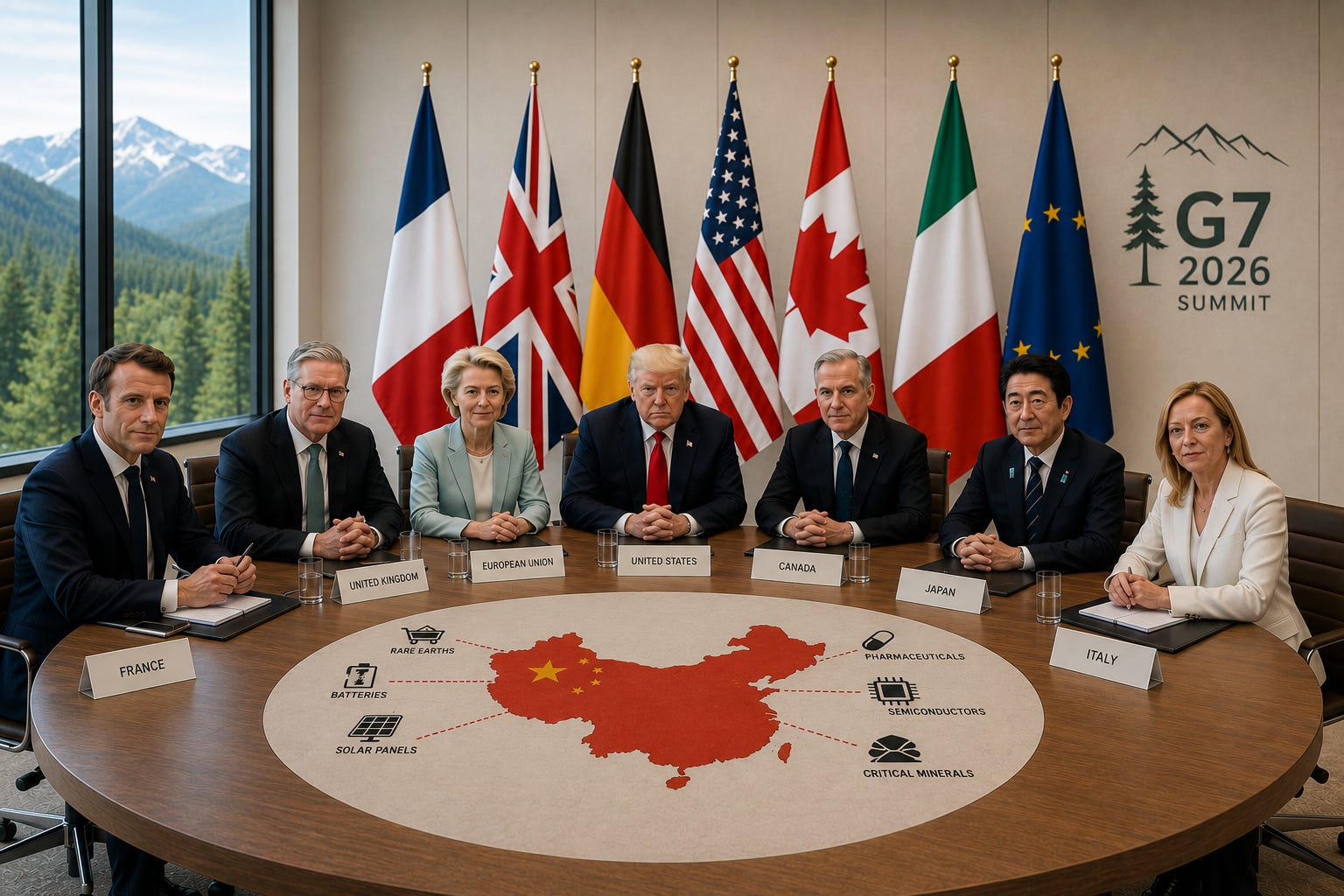
China controls 90% of rare earths. The G7 just launched a $74 billion plan to break it. Your portfolio needs to pay attention.
The US, UK, Germany, France, Japan, Canada, and Italy just launched a Critical Minerals Alliance to cut reliance on China for materials powering electric vehicles, fighter jets, and tech.
This isn’t politics. This is about your money.
China processes 60% of the world’s lithium and nickel. That concentration creates massive risk for tech, clean energy, and defense investors. The G7’s plan is straightforward: they want to spread out supply chains, build processing plants outside China, and double down on recycling mineral waste. All of this will happen over the next 10 years.
What the alliance actually plans to do
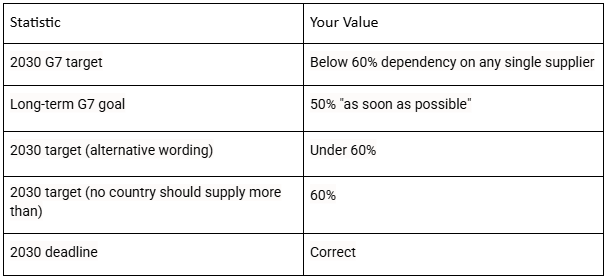
The G7 laid out clear targets this round. They want to cut reliance on any single supplier outside the group for rare earths and permanent magnets to below 60% by 2030. The longer-term goal is to hit 50% as soon as possible.
Initial cooperation will focus on lithium and nickel, two minerals that are absolutely essential for battery manufacturing and clean energy technologies. These are the backbone of electric vehicles and the energy storage systems that keep renewable power grids running. The framework will expand gradually, adding several new minerals each year with particular attention on rare earth elements used in everything from smartphones to military aircraft.
A new coordination platform will monitor supply disruptions, improve information sharing between member nations, and coordinate policy responses when shortages hit. The International Energy Agency will provide market analysis and early warnings about potential shortages before they become crises.
For investors, this means more stability in sectors you likely already hold. But it also means new opportunities in companies building the infrastructure that will make this transition possible.
G7 Alliance: The Money Behind the Mission
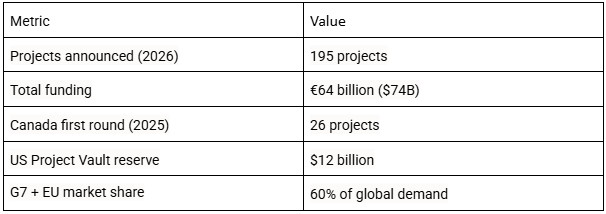
The G7 isn’t just making promises, they’re backing this alliance with serious funding. Canada kicked things off in October 2025 with 26 projects, and now the full G7 has announced 195 projects worth $74 billion total.
China’s dominance isn’t going away overnight
Before getting too excited about diversification, let’s be realistic about what we’re dealing with. China’s grip on critical minerals is deeper than most people realize. They control refining capacity, not just mining operations. Even if Western countries start extracting lithium in Australia or nickel in Canada, the processing often still happens in China. That’s the bottleneck.
The alliance is trying to fix that gap, and G7 leaders are aware of it. They stressed the need for greater investment across the entire supply chain, from mining and processing to manufacturing and recycling. France, which holds the 2026 G7 presidency, is pushing for multilateral development banks to support responsible critical mineral projects in partner countries. They’re not just talking about building mines. They’re talking about building the whole system.
What this means for investors: The transition will take years, possibly the full decade they outlined. Companies building processing capacity outside China will be the real winners, not just the miners. Don’t just look at companies extracting raw materials. Look at the companies building refineries and recycling facilities. Those businesses will capture more value as the market shifts.
Which sectors will get the biggest boost
Three sectors are directly tied to critical minerals and will see the most impact from this alliance.
Electric Vehicles and Battery Tech: Lithium and nickel are battery essentials. Companies developing EV batteries, those mining these materials, and manufacturers building battery production facilities will see increased demand as G7 nations rush to build domestic supply chains. This is the clearest opportunity.
Defense and Aerospace: Rare earth elements are critical for jet engines, radar systems, missile guidance, and satellite technology. Defense contractors with exposure to these materials could benefit significantly from government-backed supply chain investments. When governments prioritize security, defense stocks tend to move.
Renewable Energy Infrastructure: Wind turbines, solar panels, and grid equipment all require rare earths. Clean energy ETFs and individual stocks with mining exposure may outperform as the alliance scales its pilot programs into full operations.
For mutual fund investors in India: Consider funds with exposure to materials, technology hardware, and clean energy sectors. These will be first movers as the alliance implements its initial programs.
Investment opportunities in friendly mining nations
The G7 isn’t just investing internally. They’re actively partnering with resource-rich countries outside the bloc who share their strategic interests.
Australia controls significant lithium reserves and has been expanding refining capacity aggressively. Canada has led a Critical Minerals Production Alliance since 2025 to secure transparent, democratic supply chains free from geopolitical pressure, and the new G7 framework builds directly on that groundwork. . Chile holds the world’s largest lithium reserves and is negotiating partnerships with G7 nations to build processing facilities.
For Indian investors who want global exposure: Consider ETFs or stocks with exposure to these markets. Companies like Pilbara Minerals in Australia, Lithium Americas in Canada, or SQM in Chile offer indirect exposure to the alliance’s goals while maintaining some diversification.
Domestically, India’s own mining and space sectors are expanding rapidly. While India is not a G7 member, the country has been deepening critical minerals cooperation with the bloc through bilateral agreements. Watch for Indian mining companies securing partnerships with G7 nations over the next year. These deals could signal strong growth potential.
What this means for tech and IPO valuations
If supply chains diversify successfully, tech companies could see cost stability for the first time in years. Right now, many hardware manufacturers face tremendous uncertainty around rare earth pricing. A coordinated alliance reduces that risk significantly.
For IPO investors watching the market: This is bullish for companies in the battery, EV, and semiconductor sectors. When supply chain risk decreases, valuations become more predictable and investors price in less uncertainty. Companies IPOing with exposure to critical minerals like battery tech firms, EV manufacturers, or semiconductor companies using rare earths could see stronger demand from institutional investors.
The flip side matters too: Tech companies heavily dependent on Chinese processing might face restructuring costs in the near term. Watch for earnings calls mentioning supply chain transitions. Those costs could temporarily pressure margins even if the long-term outlook improves.
Risks investors should watch closely
Not everything will go smoothly, and smart investors need to be aware of the risks before committing capital.
Geopolitical Backlash: Beijing has already signaled opposition to the alliance. China could restrict exports or impose retaliatory measures on G7 nations, creating short-term volatility in commodity prices.
Timeline Reality: The 2030 target is ambitious. Building mining operations and processing facilities takes years of permitting, construction, and regulatory approval. Expect delays that could create supply gaps before the new infrastructure is ready.
Price Volatility: As demand for non-Chinese minerals increases, prices could spike temporarily. That’s good for miners but bad for manufacturers who face higher input costs.
Environmental Concerns: New mining projects face intense scrutiny from regulators and communities. Companies with strong ESG practices will have easier access to capital and fewer permitting delays.
For your portfolio strategy: Diversify across mining, processing, and recycling companies. Don’t overweight one segment of the supply chain. And keep an eye on quarterly earnings reports for supply chain updates that could signal shifts in the timeline.
What This Means for Your Portfolio
The G7’s Critical Minerals Alliance represents a long-term bet on supply chain stability and geopolitical independence. For investors, it creates opportunities across materials, technology, defense, and clean energy sectors. The transition will take years, but the strategic direction is clear: Western nations are decoupling from Chinese critical mineral dominance.
If you’re building a portfolio for the next decade, consider exposure to companies building mining capacity, refining infrastructure, and recycling technology outside China. These are the businesses that will power the alliance’s goals and capture value as the market shifts.
Stay informed about policy developments. Stay diversified across the supply chain. And keep watching how this unfolds over the next few quarters.
Lingo of the Week:
“Supply Chain Diversification”
Supply Chain Diversification is the strategy of sourcing materials, manufacturing, or services from multiple countries, suppliers, or regions instead of relying heavily on a single source. It helps businesses reduce risks from geopolitical tensions, trade restrictions, disruptions, or shortages.
Pocketful isn’t just another trading platform - we’re your partners on the journey to financial freedom.
Thank you for reading!
👀 Stay tuned. Stay diversified.
Until next time,
Team Pocketful.
Follow Us: Website
Download Our App: Available on Google Play & Apple App Store