

Stock News Highlights
KEC International (+2.34%): Stock gained after the RPG Group company secured ₹1,476 crore T&D orders across India, Middle East, Africa and Americas; FY order intake ₹22,800 crore.
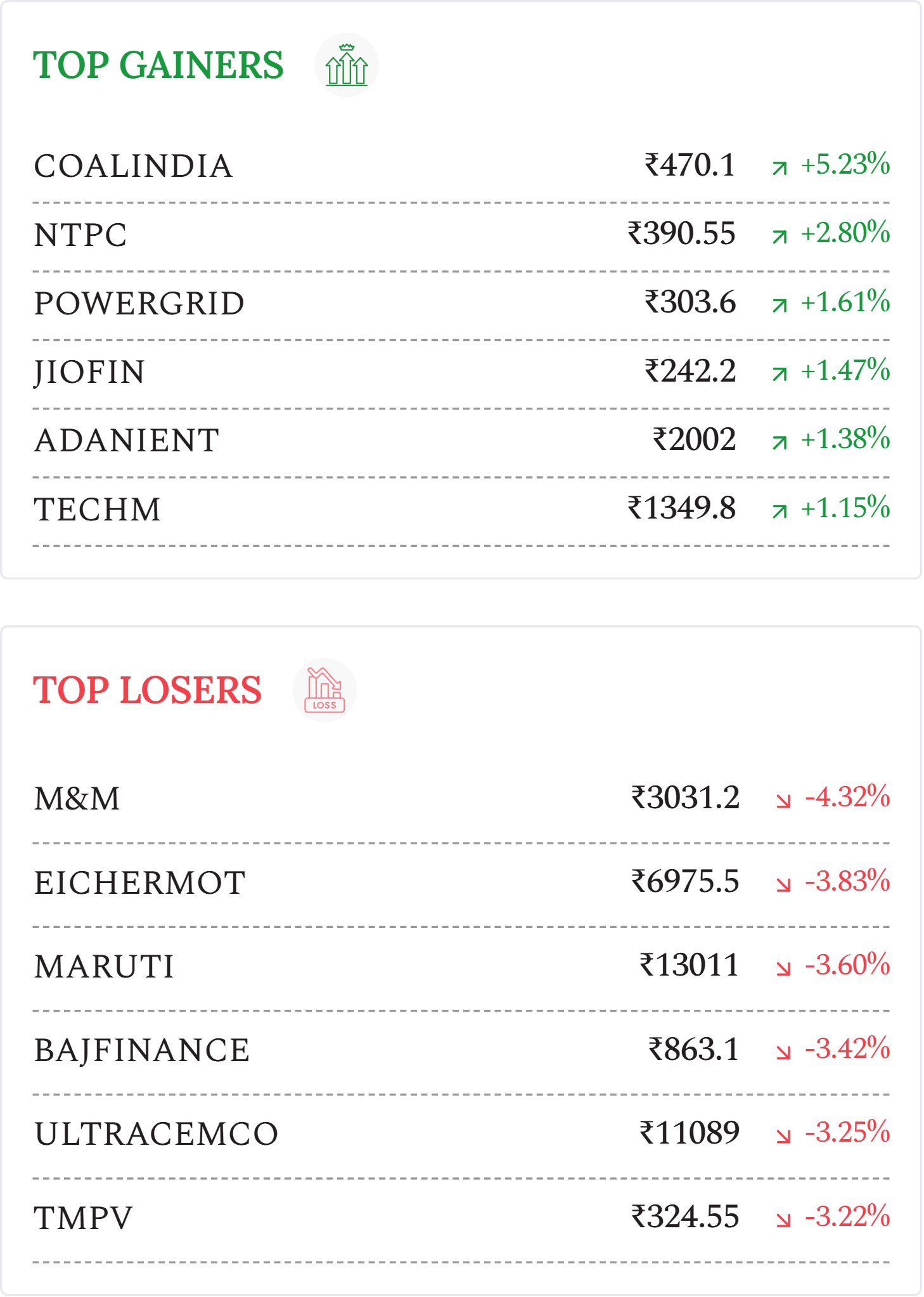
Adani Enterprises (+1.38%): Stock in focus after the company’s subsidiary Adani Defence Systems & Technologies acquired an additional 14.2% stake in Air Works India, increasing its total holding to 99.98%.
Omnitech Engineering (+5.46%): Stock in focus after the company secured a ₹920 crore five-year contract from Weatherford Products GmbH under a Master Purchase Agreement.
Samvardhana Motherson International (-1.01%): Stock declined despite the company signing an agreement to acquire a 100% stake in Yutaka Autoparts India as part of its broader Yutaka Giken transaction.
Stock News Highlights
Energy | Nifty Energy (+1.93%): The index moved higher with 29 stocks rising and 11 falling, as buying was seen in oil, gas, and power stocks. Strong crude prices and improved market sentiment supported the energy sector today.
PSU | Nifty PSE (+1.52%): The index gained as strong buying was seen in PSU energy and power stocks, led by Coal India, NTPC, and Power Grid, amid improved investor sentiment.
Auto | Nifty Auto (-3.19%): Index declined sharply with 2 gainers and 13 draggers amid rising crude oil prices due to escalating US–Iran geopolitical tensions, which increased cost pressures and margin concerns for auto companies, while persistent FPI selling and profit-booking after the recent rebound added further pressure on the sector.
FMCG | Nifty FMCG (-1.77%): Index declined as rising input and crude-linked packaging costs pressured margins, with most losses in ITC, Varun Beverages, and HUL, while cautious consumer spending weighed on the sector
Market Insights
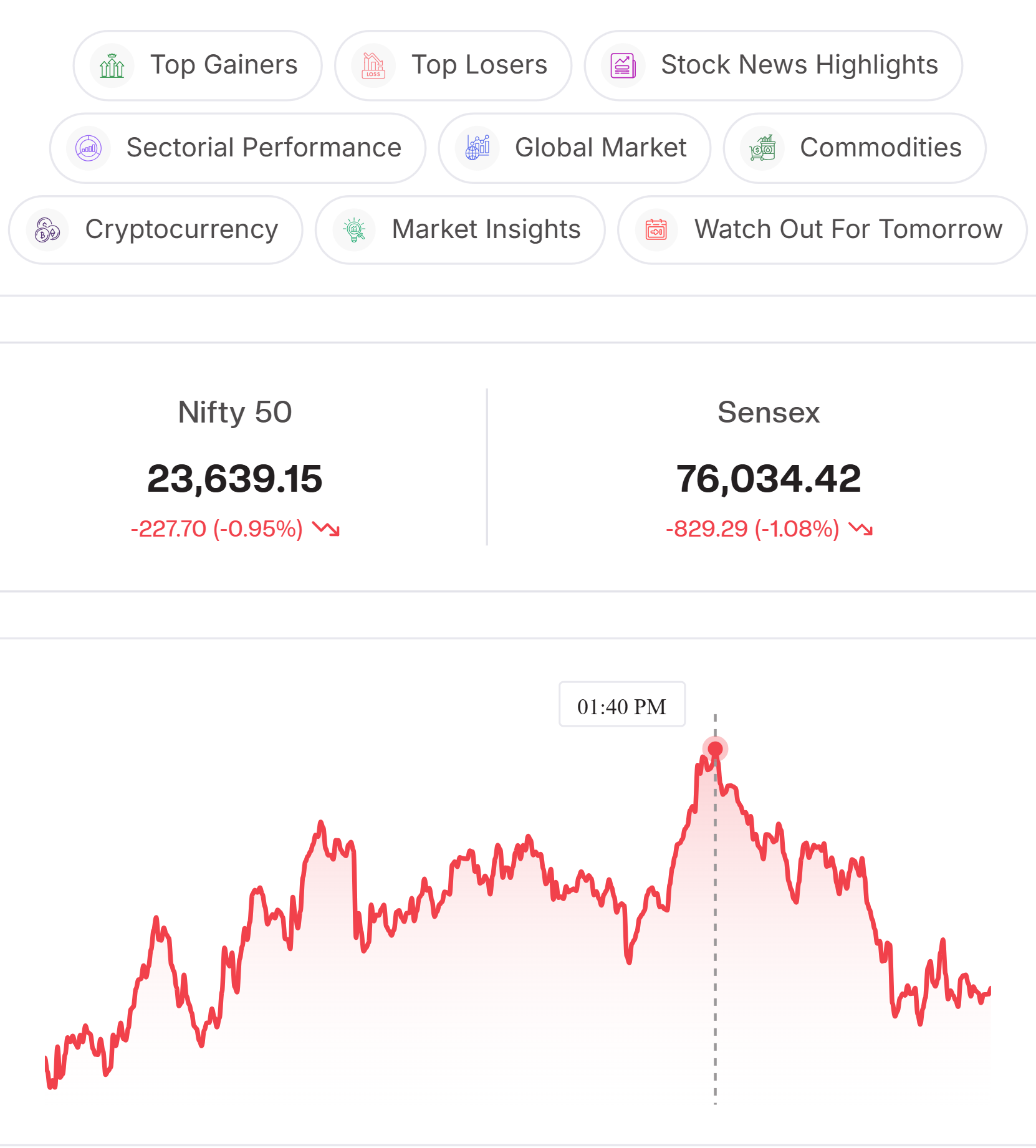
Technical Level: Nifty opened with a gap down, formed support in the morning session, and moved upward to face resistance near 23,830. In the second half, the index fell back and traded in a range throughout the session, reflecting cautious sentiment in the market.
Advance-Decline Ratio: Market breadth remained negative, with 1,237 stocks advancing against 1,963 declining, indicating broader selling pressure across the market.
The Big Picture: India’s retail inflation rose to 3.21% in February from 2.74% in January, mainly due to higher food prices. Food inflation increased to 3.47%, while rural inflation stood at 3.37% and urban at 3.02%. Garlic, onion, and potato prices declined, whereas jewellery, tomato, copra, and cauliflower recorded sharp inflation.
FII/DII Activity (Mar 11, 2026): DIIs remained net buyers, purchasing equities worth ₹4,965 crore, while FIIs were net sellers, offloading ₹6,267 crore, reflecting cautious sentiment in today’s session.
Watch Out For Tomorrow
IPO Corner: Apsis Aerocom SME IPO is set to close tomorrow, giving investors the final opportunity to bid for the issue before the subscription window ends.
Macro: UK GDP MoM (Jan) & USA GDP Growth Rate QoQ 2nd Est (Q4) data are scheduled to be released tomorrow , which may influence global market sentiment.
Index Watch: Nifty opened with a gap down, extending its third consecutive day of decline, reflecting deeper correction in the market. The index is approaching the next key support near 23,300, which was indicated earlier as a possible downside level. No strong rebound is visible so far, suggesting continued selling pressure. If weakness persists, the next support levels are around 23,300 and 23,000, while resistance is placed near 23,800–24,000. A sustained break below 23,300 could trigger further downside in the near term.
5-Day Course
Theme: Understanding Bonds (Learn → Evaluate → Use for Stability)
Day 4 - What Determines Returns from Bonds
Bond investors earn returns primarily from two sources: regular interest payments and price changes in the secondary market.
The first component is the coupon payment, which provides steady and predictable income during the life of the bond.
For example, a ₹10,000 bond with a 7% coupon rate will generate ₹700 per year in interest payments.
The second component is capital gain or loss, which occurs if the bond is bought or sold in the market at a price different from its face value.
Several factors influence these returns:
Interest Rate Movements
When interest rates fall, older bonds offering higher coupons become more valuable, pushing their market prices upward.
Credit Quality of the Issuer
If a company’s financial condition improves, its bonds may become more attractive to investors.
Time Remaining to Maturity
Longer-term bonds are generally more sensitive to changes in interest rates.
These dynamics explain why bond markets often react strongly to RBI policy decisions and changes in economic conditions.
Word of the day
Credit Rating: A credit rating measures the probability that a bond issuer will repay its debt. Agencies like CRISIL, ICRA, and CARE assign ratings such as AAA, AA, or BBB.