

🗞 Stock News Highlights
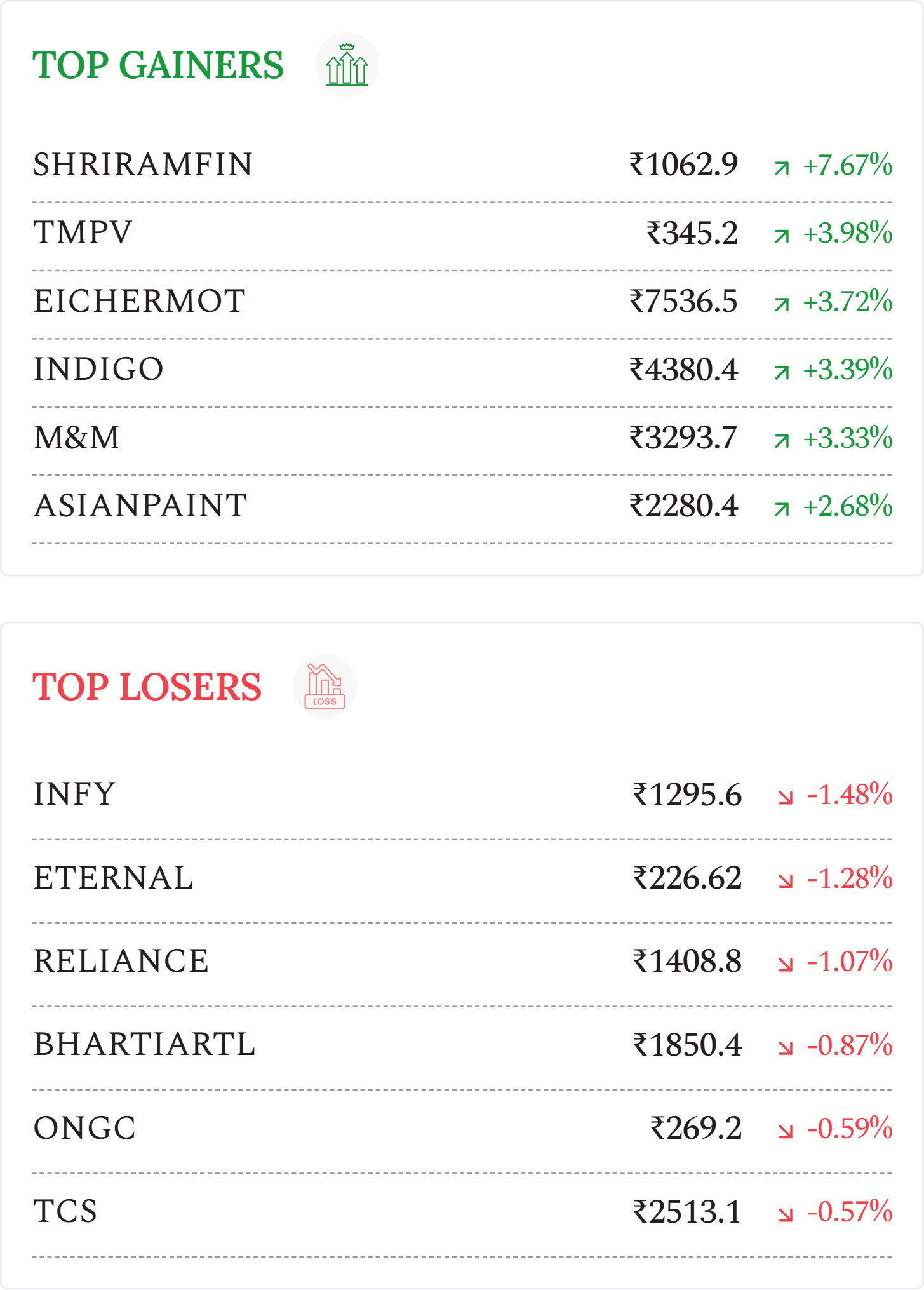
Dixon Technologies (+11.26%): Shares rose after the government approved its joint venture with HKC Overseas to manufacture display modules in India. The partnership is expected to expand Dixon’s manufacturing capabilities, reduce import dependence and strengthen growth prospects.
Arvind Smartspaces (+5.90%): Shares gained attention after Godrej Properties Executive Chairperson Pirojsha Adi Godrej acquired nearly 1.8% stake through a block deal.
Park Medi World (+1.47%): Shares rises as Board approves Panchkula Multispecialty Hospital and 150-Bed Expansion in Mohali, strengthening healthcare capacity across tricity region
Polycab India (-6.14%): Shares declined as surging copper prices raised worries about input-cost pressures while investors booked profits across the sector and weakening sentiment in the sector.
🏢 Sectoral Performance
Auto | Nifty Auto (+3.10%): Index rose as easing crude oil prices improved sentiment for automobile stocks. Lower fuel costs reduce inflation concerns and support demand outlook. 13 of the 15 constituents ended in the green, with Samvardhana Motherson International and TVS Motor leading the gains.
Consumer Durables | Nifty Consumer Durables (+2.67%): Sector moved higher as easing crude oil prices and improving market sentiment boosted buying in consumption-oriented stocks. Dixon Technologies and PG Electroplast led the gains, reflecting optimism around stable demand and stronger consumer spending outlook.
IT | Nifty IT (-0.46%): Index declined as cautious global cues and profit-booking weighed on major IT stocks. Weak sentiment in heavyweights like Coforge, Infosys and Tata Consultancy Services dragged the sector lower.
Oil and Gas | Nifty Oil and Gas (-0.39%): Index declined as falling crude oil prices weighed on upstream energy companies. Lower crude prices reduce potential realizations for producers like BPCL and Oil India, prompting profit-booking and dragging the sector lower.
🔍 Market Insights
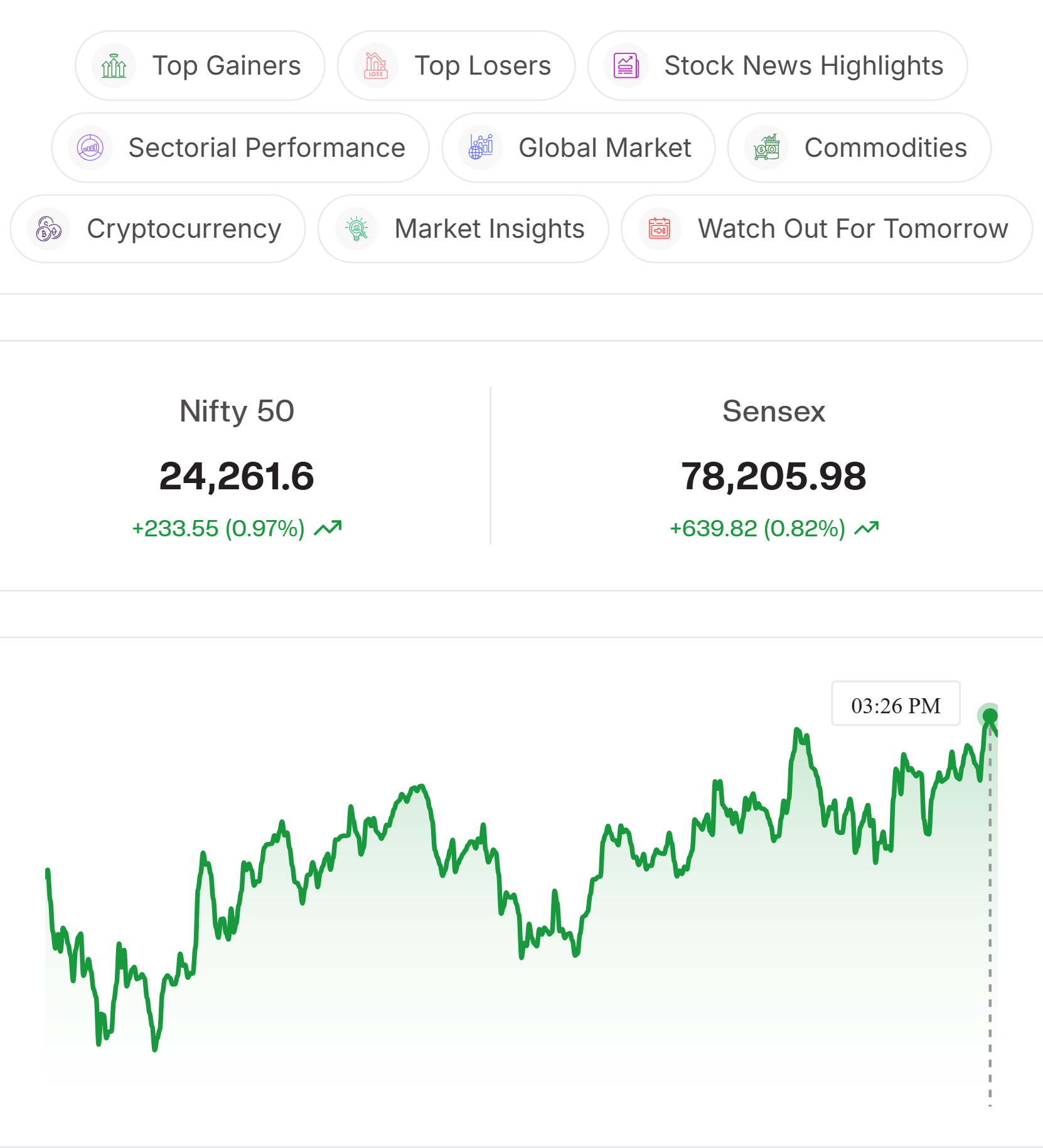
Technical Level: Nifty traded with a positive bias but faced resistance near the 24,300 zone, where selling pressure capped further gains. The index found intraday support around 24,200, indicating buyers remain active on dips.
Advance-Decline Ratio: Market breadth remained positive for the whole session, with 2545 advances against 672 declines, indicating broad-based buying opportunity across the market.
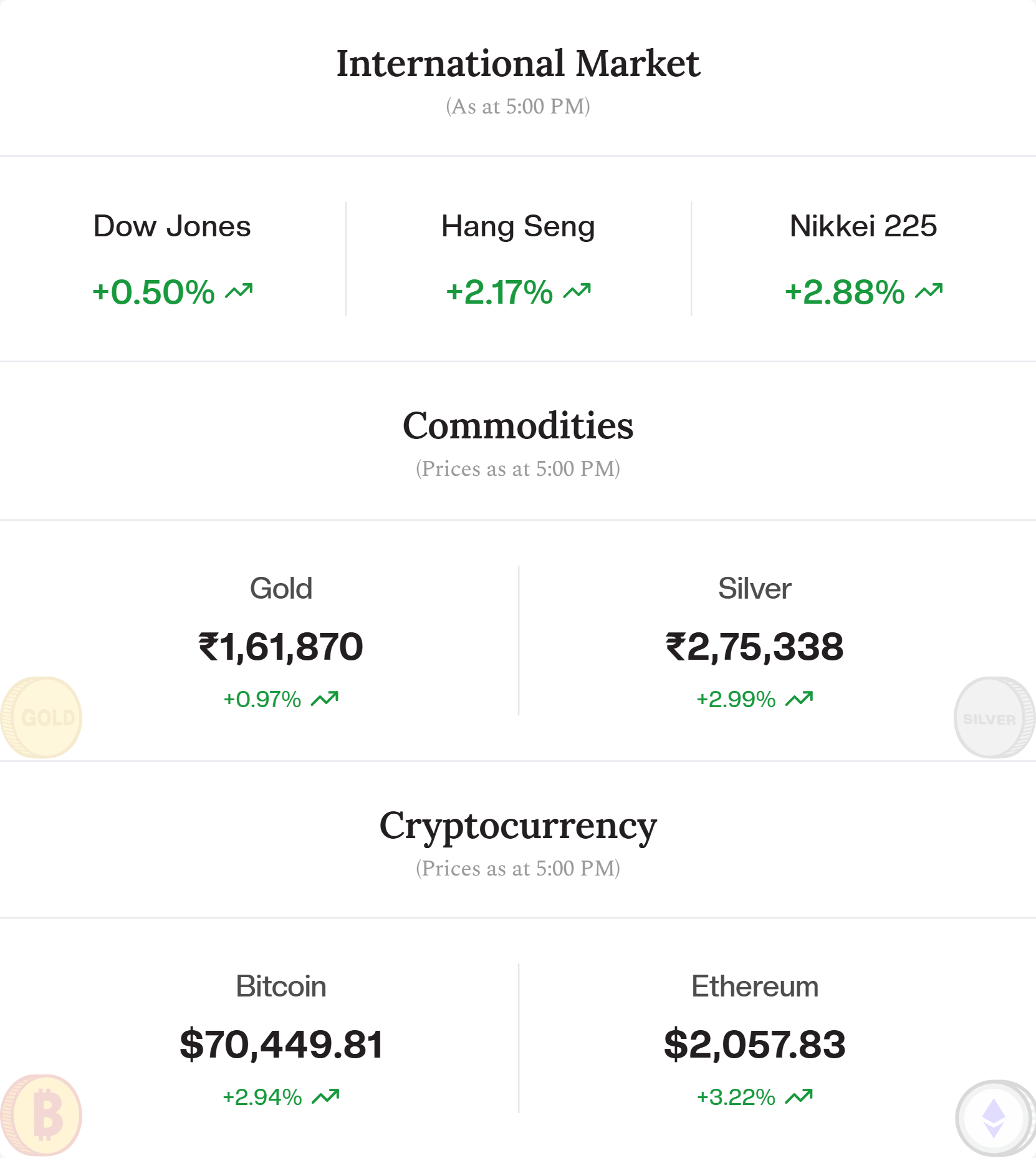
The Big Picture: Iran said it will continue blocking oil shipments from the region until U.S. and Israeli attacks stop, warning Iran will decide when the war ends. U.S. President Donald Trump threatened far heavier military strikes if Iran disrupts oil flows through the strategic Strait of Hormuz.
FII/DII Activity (March 09, 2026): FIIs remained net sellers with outflow of ₹6,345 crore, while DIIs were net buyers with inflows of ₹9,014 crore.
🔮 Watch Out For Tomorrow
IPO Corner: Rajputana Stainless IPO closes tomorrow, offering investors a final opportunity to bid.
Macro: USA’s Inflation Rate MoM (Feb) & Crude Oil Inventories are scheduled to be released next week.
Index Watch: Nifty ended the session on a strong note and is approaching the key 24,300 resistance zone. A decisive move above this level could push the index toward 24,400–24,450. On the downside, 24,200 remains immediate support, followed by 24,100. Traders may see volatility near resistance as markets react to global cues and profit-booking.
5-Day Course
Theme: Understanding Bonds (Learn → Evaluate → Use for Stability)
Day 2 – Types of Bonds in the Indian Market
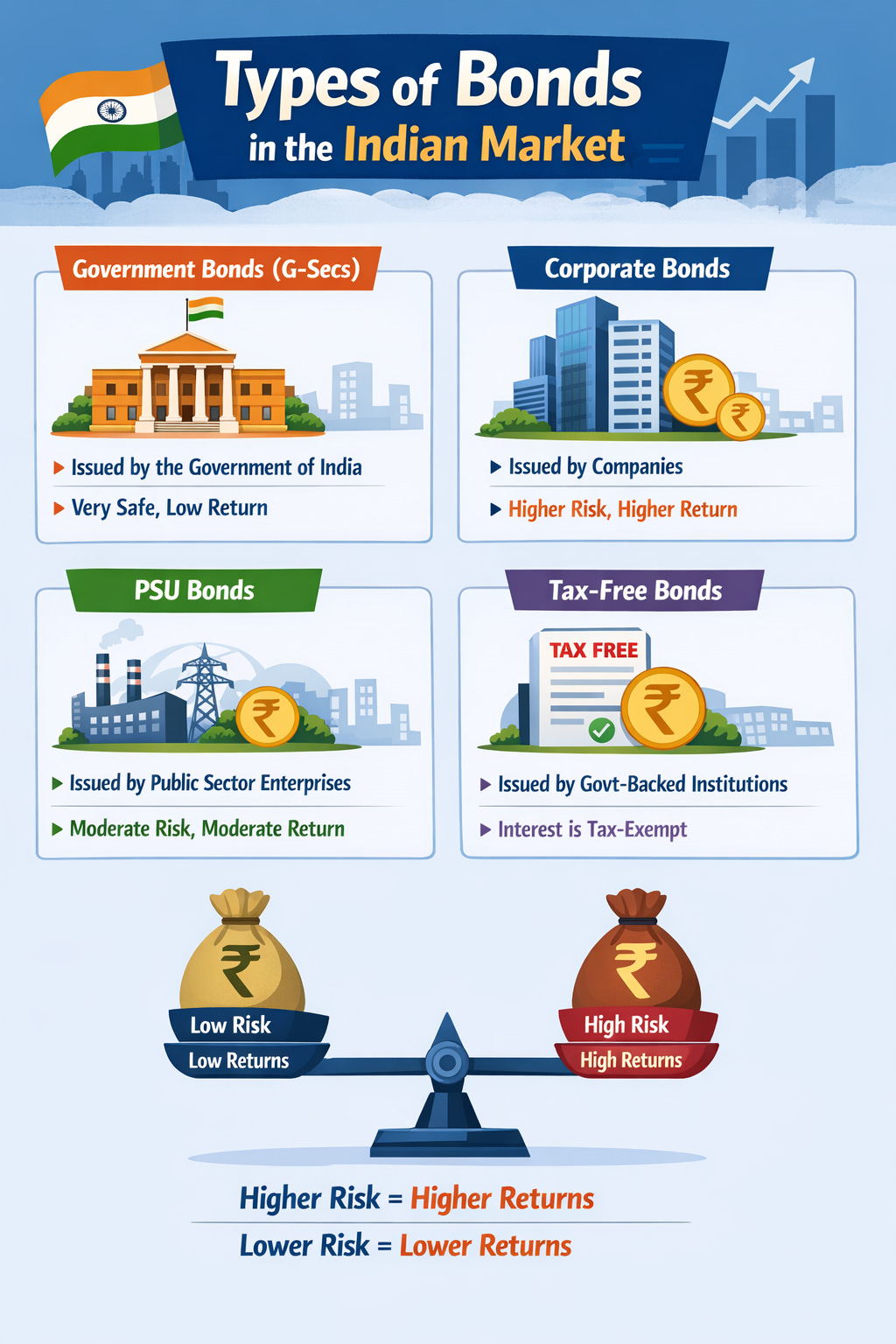
The Indian bond market offers several types of bonds, each differing in risk, return, and the nature of the borrower. Understanding these categories helps investors evaluate where to lend their money.
Government Bonds (G-Secs) are issued by the Government of India to finance infrastructure projects, welfare programs, and other public spending. They are considered very safe because the government has taxation and monetary authority.
Corporate Bonds are issued by companies to raise funds for expansion, working capital, or new investments. Since companies carry higher default risk than governments, these bonds usually offer higher interest rates.
PSU Bonds are issued by government-owned enterprises such as power, oil, or infrastructure companies. They generally carry moderate risk, positioned between government bonds and private corporate bonds.
Tax-Free Bonds are issued by certain government-backed institutions. The interest earned is exempt from income tax, making them attractive for investors in higher tax brackets.
In bond investing, the core rule remains simple: higher safety usually means lower returns, while higher risk often brings higher interest income.
Word of the day
Credit Rating: A credit rating measures the probability that a bond issuer will repay its debt. Agencies like CRISIL, ICRA, and CARE assign ratings such as AAA, AA, or BBB.
👀 Stay tuned. Stay diversified.
Until next time,
Team Pocketful.