

Stock News Highlights
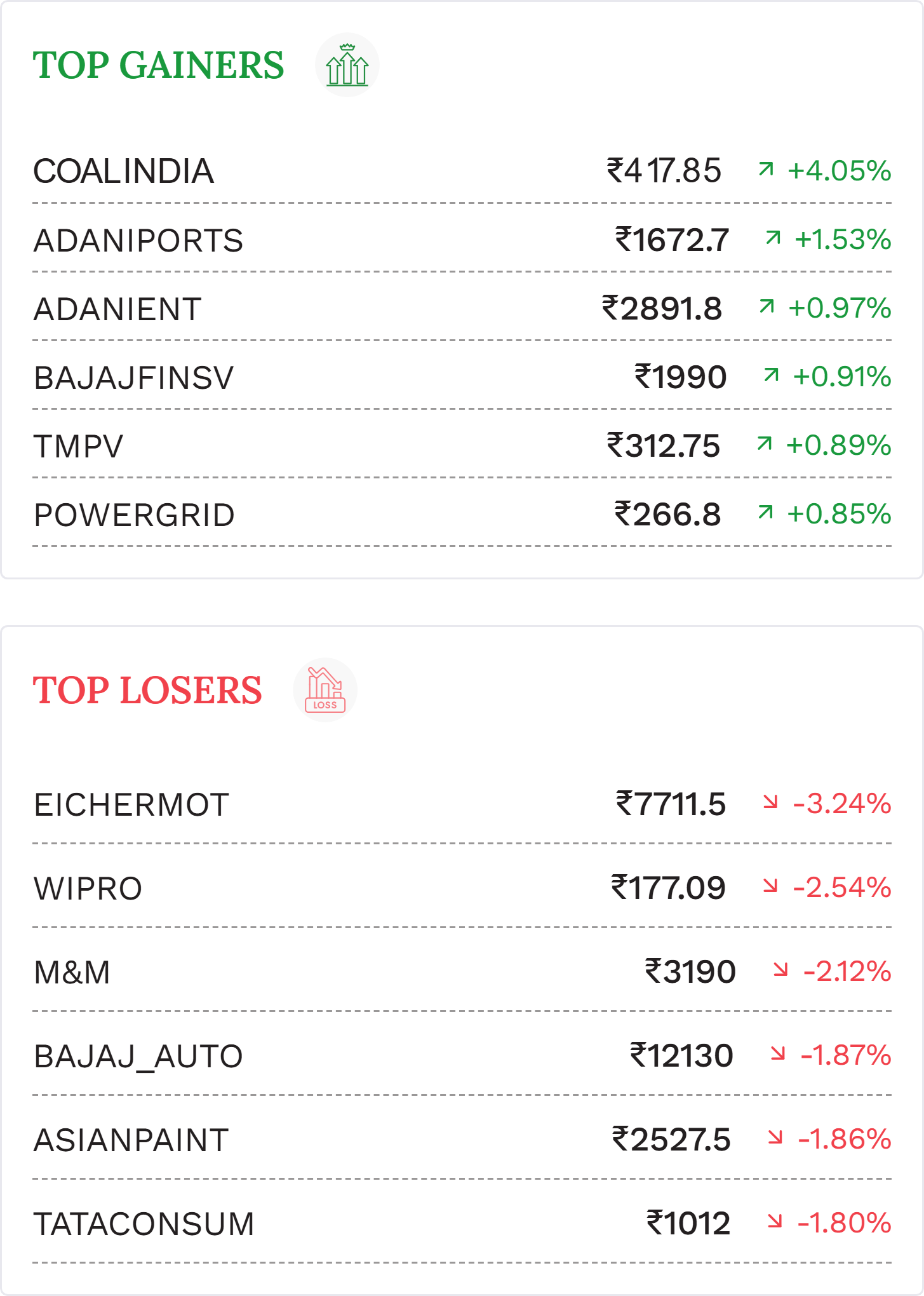
Ashiana Housing (+1.28%): Shares rose after the company reported 1.67 lakh sq. ft. of area bookings worth ₹165.93 crore in August, signalling healthy residential demand and improving sales momentum.
Wipro (-2.54%): Shares declined despite the company renewing its long-standing Digital Workplace Services contract with ABB, as broader market weakness and cautious investor sentiment outweighed the positive deal announcement.
Sical Logistics (+4.99%): Shares advanced after the company secured a ₹534.73 crore, five-year contract from Central Coalfields for overburden removal and coal extraction, strengthening its order book and improving long-term revenue visibility.
Welspun Corp (-1.18%): Shares fell despite signing an MoU with Perma-Pipe and Jordanian authorities to develop pipe manufacturing and advanced coating facilities, as investors booked profits after the stock’s sharp recent rally.
Sectoral Performance
Nifty Energy (+0.59%): Index rebounded after five consecutive sessions of decline, with 24 of 39 constituents advancing and 15 declining, reflecting broad-based buying interest. Gains in key heavyweights supported the index as investors rotated toward energy stocks amid elevated crude prices and renewed geopolitical uncertainty.
Nifty Commodities (+0.54%): The index bounced back after recent weakness, led by Coal India, Reliance Industries and Tata Power. Buying interest in key heavyweight constituents supported the sector, while a recovery in commodity-linked stocks and improved sentiment across energy and raw-material counters helped the index outperform the broader market.
Nifty Auto (-1.79%): Auto stocks emerged as the worst-performing sector, with all index constituents trading in the red. M&M, Eicher Motors and Hero MotoCorp were among the biggest losers as mixed August sales and month-on-month volume moderation at companies such as Maruti Suzuki, Hyundai Motor and TVS Motor triggered selling pressure amid broader market weakness.
Nifty Media (-1.75%): Media stocks declined sharply, with all constituents trading in the red, amid broad-based market weakness, heightened geopolitical uncertainty, rising crude prices and a broader risk-off sentiment weighing on investor appetite.
Market Insights
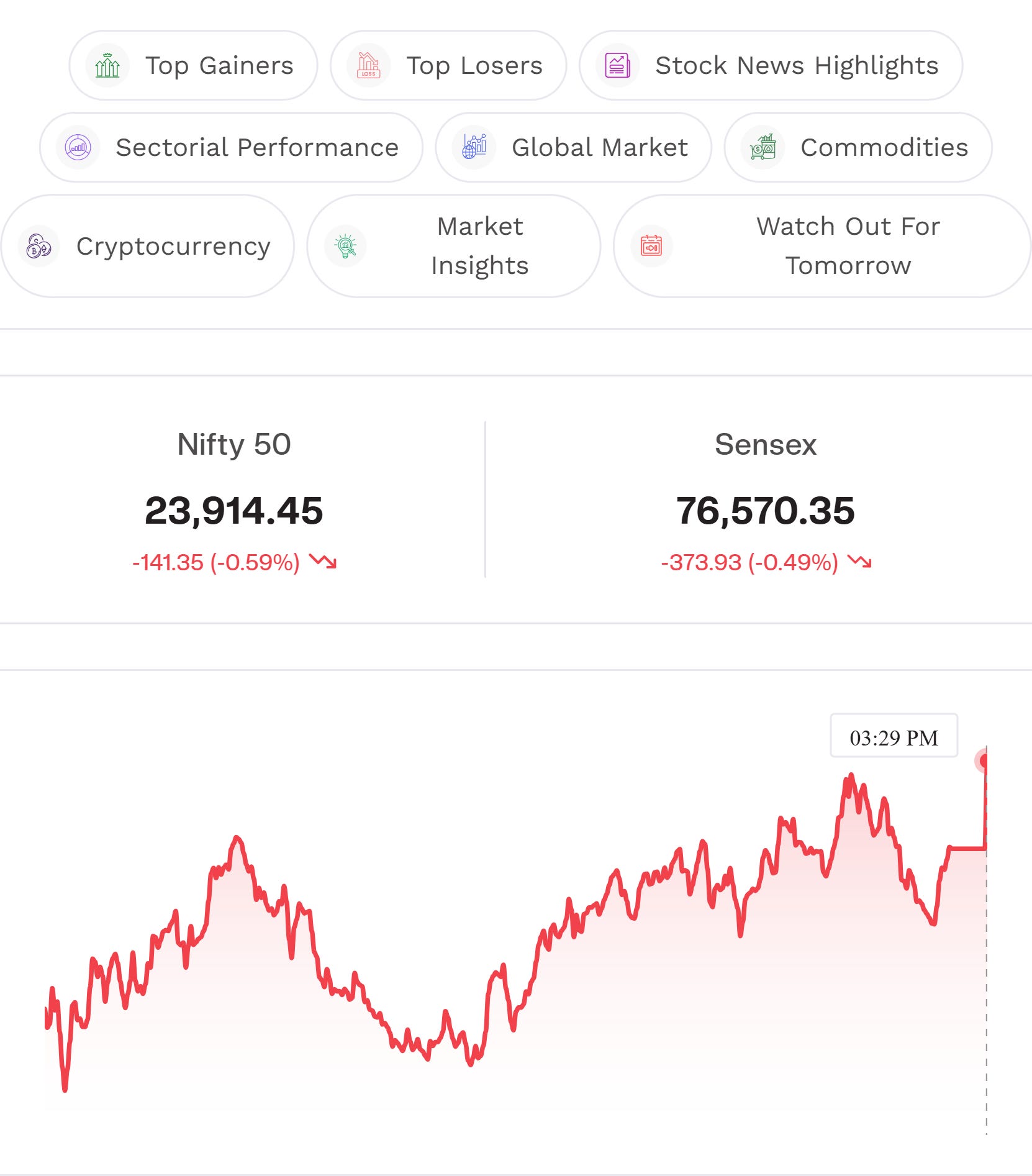
Technical Level: Nifty opened with a gap-down, followed by selling pressure at the start of the session, finding support near 23,790. The index then traded in a narrow range with a minor recovery toward the close, facing resistance around 23,910. Overall, Nifty remained under pressure.
Advance-Decline Ratio: Market breadth remained negative, with 1,445 stocks advancing against 2,072 declining, resulting in an A/D ratio of 0.70, indicating broad-based selling pressure across the market.
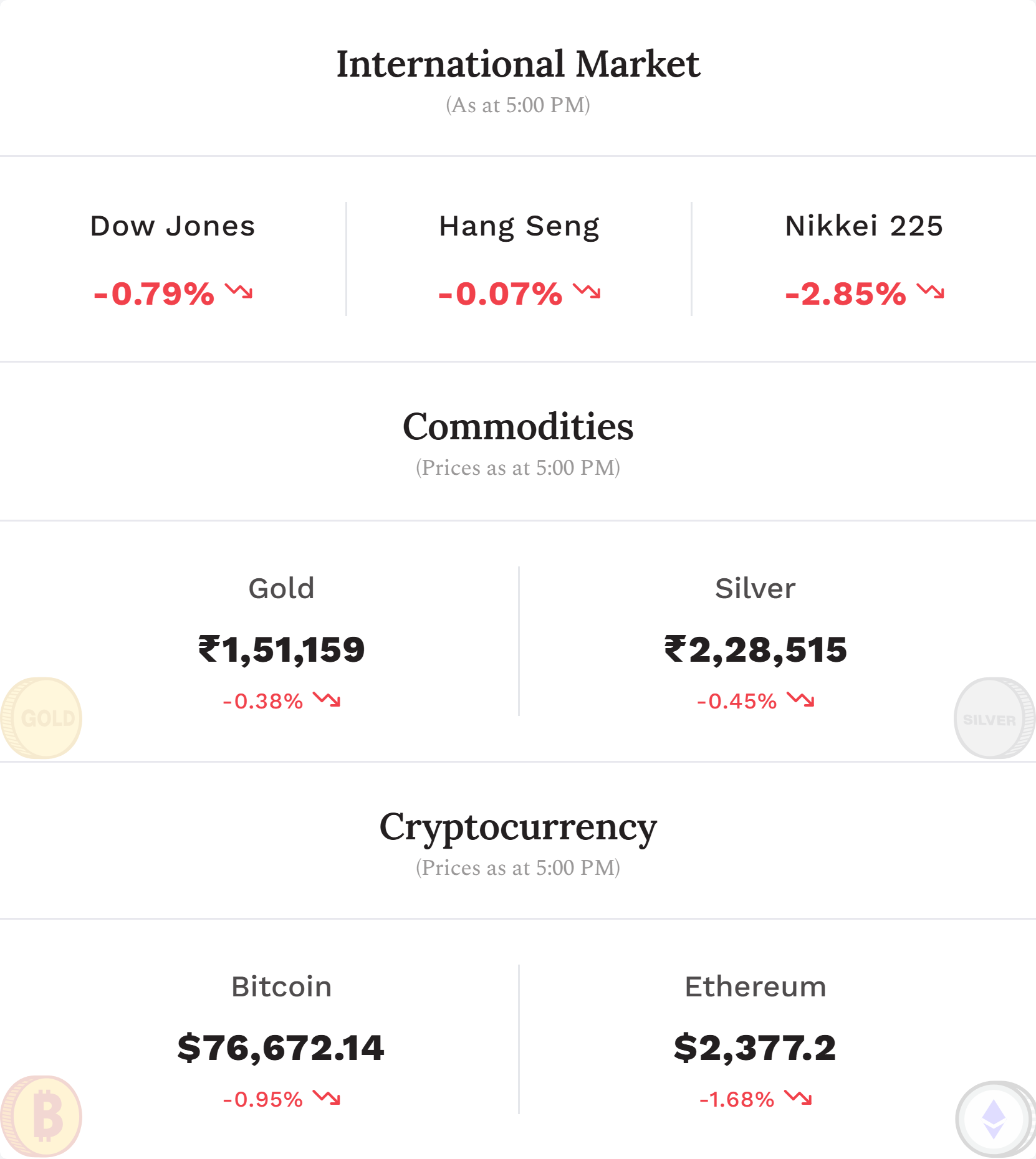
The Big Picture: Iran’s reported mining of the Strait of Hormuz has raised the risk of prolonged shipping disruptions, as mines can remain a persistent threat and require extensive clearance efforts. Brent crude remained near $95 a barrel, intensifying inflation and supply concerns.
FII/DII Activity (September 01, 2026): Foreign institutional investors remained net buyers, with FII buying at ₹1,143 crore, while DII buying stood at ₹1,847 crore. Strong domestic and foreign institutional inflows provided support to the market despite the broader selling pressure.
Watch Out For Tomorrow
IPO Corner: Rays of Belief & Deepa Jewellers IPO is Closing for subscription tomorrow, making the IPO robust sentiment.
Macro: Aus Balance of Trade (Jul) data scheduled for release Tomorrow.
Market Watch: Nifty may remain volatile as investors closely track developments around the Strait of Hormuz, Russian energy infrastructure and elevated Brent crude near $95. The index faces crucial support at 23,790, while 24,050 remains the key resistance. A break on either side could determine the next directional move.
Word of the day
Geopolitical Risk
Meaning: The possibility that political or military tensions between countries could disrupt economies, trade, markets, or supply chains.
Today’s context: Strait of Hormuz tensions and attacks on energy infrastructure increased geopolitical risk, keeping crude prices elevated and investors cautious.