

Stock News Highlights
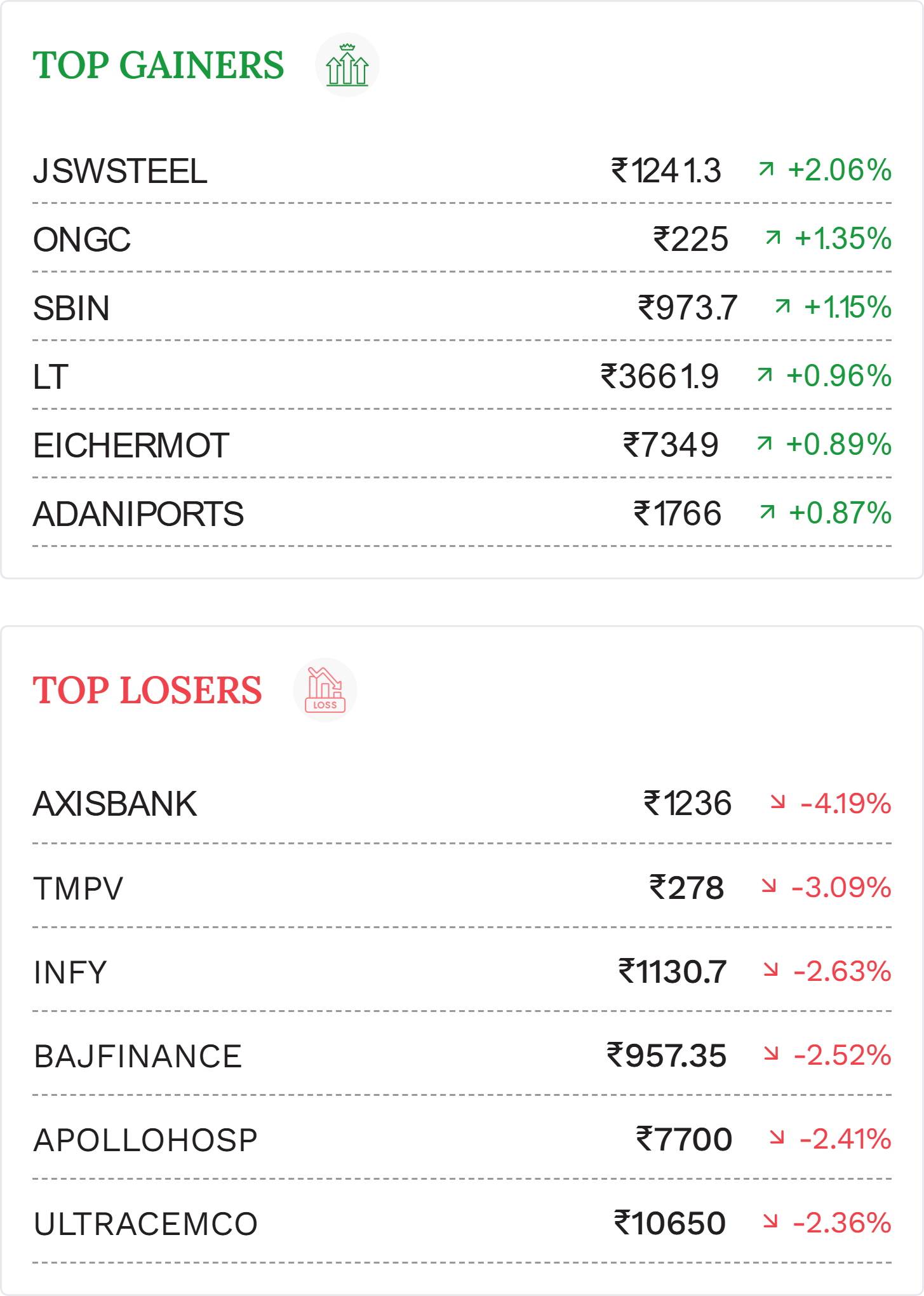
Punjab National Bank (+4.82%): Stock rallied after Q2 FY27 net profit rose 12.8% YoY to ₹5,532 crore, beating estimates, while net interest income increased 10.8% to ₹11,601 crore. Improving net interest margins, better asset quality and bullish brokerage views further boosted investor sentiment.
Axis Bank (-4.19%): Stock declined despite a 35.6% YoY profit rise to ₹7,003.3 crore, as margin pressure, higher operating expenses and cautious investor sentiment weighed on shares.
HDFC Bank (-2.31%): Stock declined despite a 4.7% YoY rise in Q2 net profit to ₹19,510 crore, as narrowing net interest margins, weaker treasury income and higher loan-loss provisions weighed on investor sentiment.
Urban Company (-9.89%): Stock declined after Q2 FY27 net loss more than tripled YoY to ₹182.48 crore despite 41.4% revenue growth, as heavy InstaHelp spending, rising expenses and dilution concerns weighed on sentiment.
Sectoral Performance
Nifty Private Bank (-1.85%): Sector declined as Axis Bank and HDFC Bank fell sharply after Q2 results raised concerns over margins and earnings growth, while Brent crude near $108, persistent FII outflows and elevated US bond yields added pressure.
Nifty Chemicals (-1.59%): Sector declined amid broad-based selling, with all constituents trading in the red, as elevated Brent crude prices near $108 and persistent geopolitical tensions heightened concerns over input costs, inflation and margins across chemical manufacturers.
Nifty FMCG (-1.44%): Sector declined amid rising raw-material costs, including palm oil and sugar, raising concerns over margin pressure and earnings growth. HUL, ITC and Nestlé India led the losses as companies faced higher input costs and limited scope for price hikes amid festive-season demand.
Nifty PSU Bank (+2.46%): Sector emerged as the only gainer in today’s session, with 9 gainers and 3 losers, supported by strong buying after Punjab National Bank reported a 13% YoY rise in Q2 net profit to ₹5,500 crore, driven by improved net interest income, higher margins and lower provisions.
Market Insights
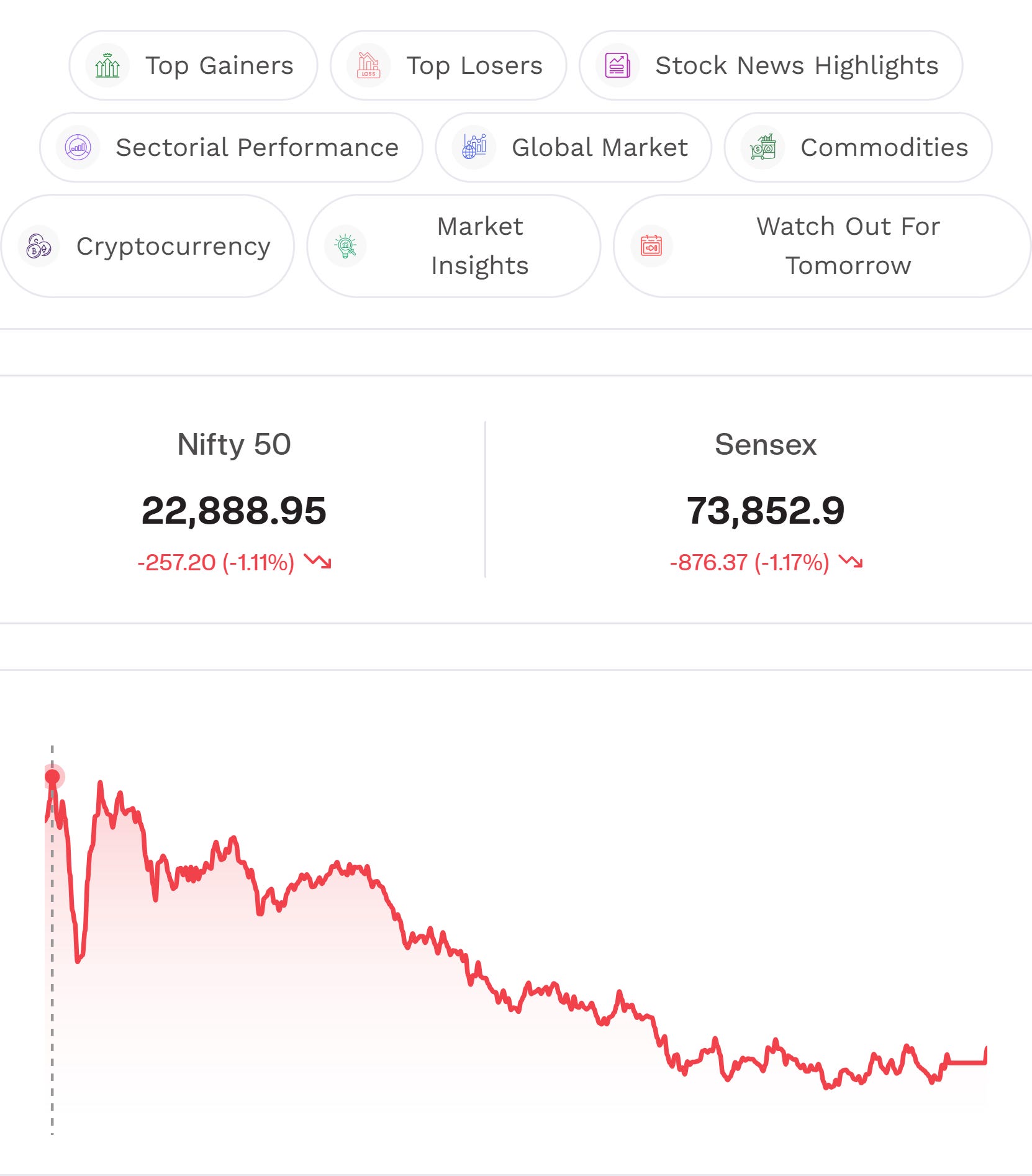
Technical Level: Nifty opened on a flat note but witnessed sharp selling pressure early in the session, facing resistance near 23,175 around the opening. Heavy initial volatility and selling pressure dragged the index lower throughout the day, with support emerging near 22,840 toward closing.
Advance-Decline Ratio: Market breadth remained sharply negative, with 846 stocks advancing against 2,717 declining, resulting in an A/D ratio of 0.31, indicating widespread selling pressure across the broader market.
The Big Picture: Finance Minister Nirmala Sitharaman said India’s deep liquidity lets foreign investors exit easily despite resilient fundamentals. FIIs have sold over $33 billion this year, while domestic mutual fund inflows continue to cushion the market. She flagged fuel, fertiliser costs and capital outflows as key risks for 2027.
FII/DII Activity (October 19, 2026): DIIs were net buyers at ₹3,201 crore, while FIIs were net sellers at ₹1,148 crore, highlighting domestic institutional support amid continued foreign selling pressure.
Watch Out For Tomorrow
IPO Corner: Paras Healthcare & JIO Platforms IPO is opening for subscription on Wednesday, making the IPO robust sentiment.
Macro: UK Unemployment Rate (Aug) data is scheduled to be released tomorrow.
Market Watch: For investors, weakness in banking stocks, elevated crude prices and sustained FII selling are weighing on sentiment, with domestic fund flows providing the only consistent support. Markets are likely to remain cautious and range-bound. Tomorrow is a market holiday, while results from Eternal and Adani Green on 21 October will be key triggers to watch.
Word of the day
Capitulation
Meaning: A point when investors give up and sell their holdings in large volumes due to fear or prolonged market declines.
Example: Heavy selling across sectors and a sharply negative advance-decline ratio indicated growing capitulation among market participants.
Why it matters: Capitulation can signal extreme bearish sentiment, but it does not guarantee that the market has reached its bottom.