

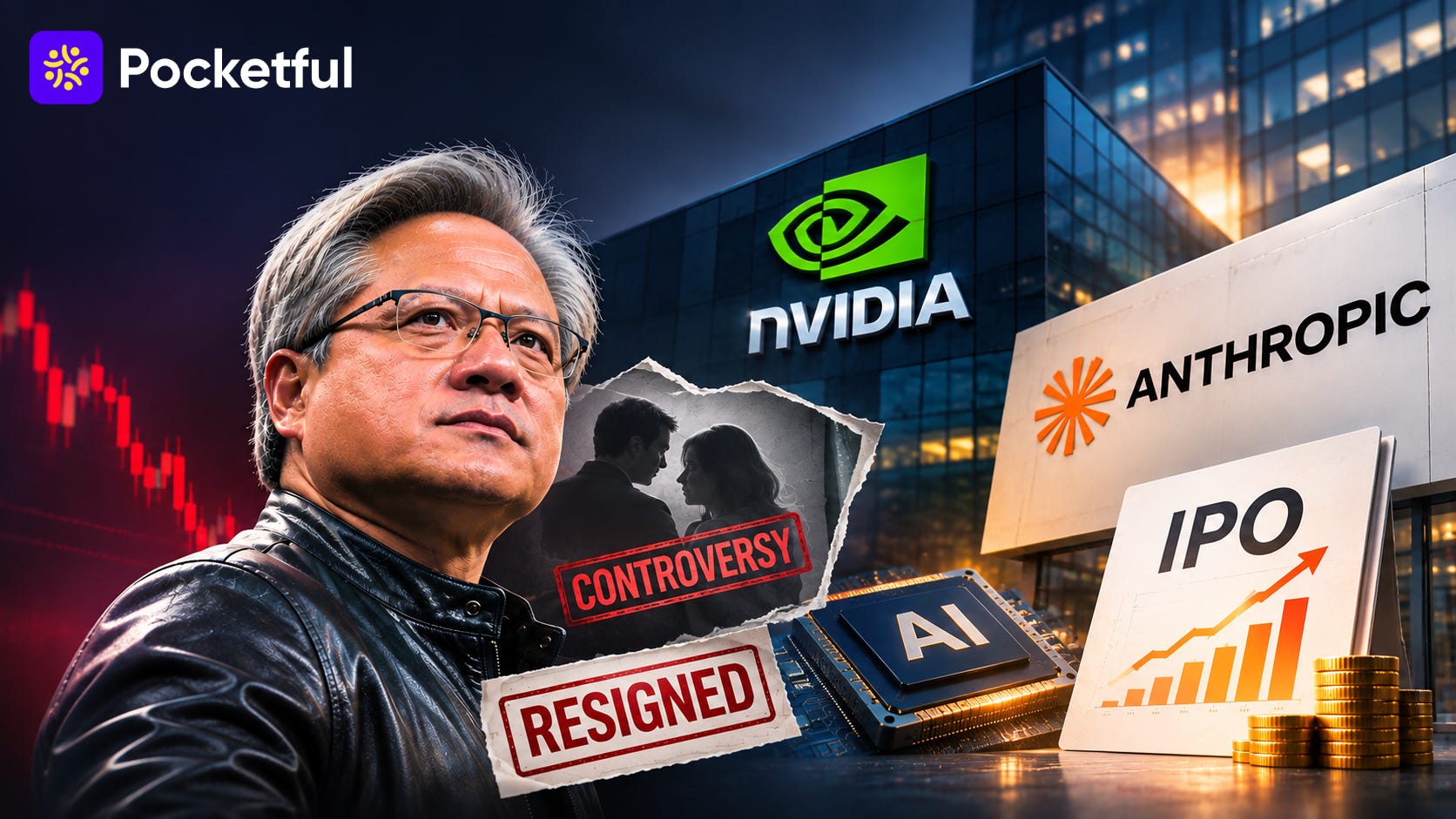
The AI boom has made Nvidia one of the world’s most powerful companies, but its latest controversy has put the spotlight on more than just chips. From Jensen Huang’s resignation and personal controversies to Nvidia’s upcoming Q3 earnings and Anthropic’s proposed mega IPO, the AI industry is heading into a crucial week.
Can strong earnings keep the AI rally alive, or are investors beginning to rethink their bets?
Nvidia Leadership Crisis What Happened to Jensen Huang
Nvidia has entered an unexpected period of uncertainty following the resignation of its co-founder and long-time CEO Jensen Huang on November 12, 2026. The development came after reports of alleged extramarital relationships and questions surrounding a businesswoman suspected by US intelligence of having links to Chinese espionage.
Huang, who co-founded Nvidia in 1993, played a central role in transforming the company from a graphics processing chip manufacturer into a global leader in artificial intelligence infrastructure. His departure has therefore raised questions about corporate leadership, investor confidence and the future direction of the AI industry.
The People at the Centre of the Controversy
Jensen Huang: The controversy began attracting attention after reports emerged about alleged relationships outside his marriage. Huang reportedly apologised to his family and Nvidia employees on November 8, acknowledging his infidelity.
Alice Huang: Another name that entered the controversy was Alice Huang, a businesswoman reportedly associated with Megaspeed International, which had business links with Nvidia. US intelligence reportedly suspected her of facilitating access to advanced Nvidia chips for Chinese companies. However, these allegations have not been independently established, and China has denied the espionage claims.
Lori Huang: Jensen Huang’s wife also came into the spotlight following the reports. The couple have been married since the 1980s and have two children. Speculation about a possible divorce and the division of their family wealth has circulated, but neither has confirmed a divorce. Any discussion about a potential division of assets remains hypothetical.
Reports also referred to an alleged relationship involving an Nvidia employee who reportedly worked under Huang. The individual has not been publicly identified in the reporting.
Jensen Huang Resigns as Nvidia CEO
On November 12, Nvidia officially announced that Jensen Huang had resigned as President, CEO and a member of its board with immediate effect.
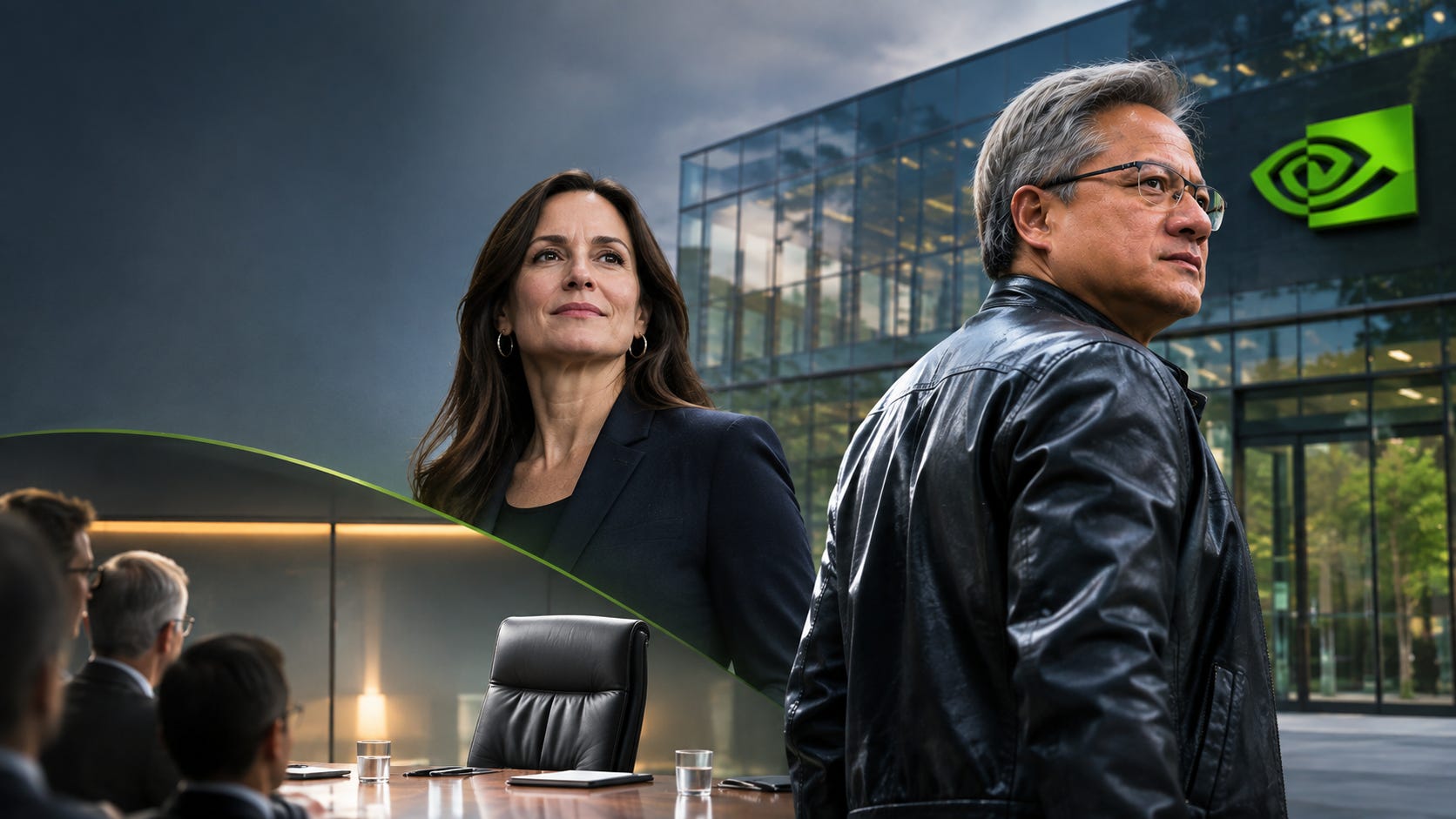
The company appointed its long-serving Chief Financial Officer Colette Kress as interim CEO while the board begins searching for a permanent successor. Harvey C. Jones was appointed as Nvidia’s first-ever board chairman.
The announcement marks a major change for Nvidia, considering Huang’s influence over its technology roadmap, business strategy and relationships with global technology companies.
What Does This Mean for Nvidia Investors?
The leadership change comes at a sensitive time for the company. Nvidia has become one of the biggest beneficiaries of global AI spending, and its chips power data centres and AI infrastructure worldwide.
According to Associated Press reporting, Nvidia shares fell 4.3% on November 12 and had declined more than 30% from their October 6 record high. The uncertainty surrounding its leadership has added pressure to an already volatile technology market.
However, investors will need to distinguish between the controversy surrounding its leadership and the company’s underlying financial performance. The upcoming earnings report will provide an important indication of whether demand for AI chips remains strong.
Upcoming Q3 Earnings That Could Move Global Markets
While Nvidia deals with its leadership transition, its upcoming Q3 FY2027 earnings could become the biggest test of investor confidence. The company is scheduled to announce its results on November 17, 2026, followed by an earnings conference call.
According to S&P Global Market Intelligence, analysts expect Nvidia’s quarterly revenue to reach approximately $109.3 billion, with its Data Centre business contributing around $101.8 billion.

Investors will closely monitor five important factors:
Revenue Growth: Whether demand for AI chips continues to accelerate.
Data Centre Business: Whether major cloud companies are increasing AI infrastructure spending.
Profit Margins: Whether higher chip demand is translating into stronger profitability.
Future Guidance: Management’s outlook for upcoming quarters and next-generation products.
Leadership Commentary: Whether interim CEO Colette Kress can reassure investors about the company’s future strategy.
A strong earnings report could help restore confidence in Nvidia. However, investors will also look for clarity on leadership succession and whether the company can maintain its growth momentum.
Other Major Q3 Earnings to Watch
Apart from Nvidia, several major US companies are scheduled to announce their quarterly results during November 16–20. These earnings will provide insights into consumer spending, retail demand and the broader US economy. like Disney, Target, Lowe’s, Walmart, TJX Companies & many more.
These results will help investors understand whether US consumers are maintaining their spending levels despite economic uncertainty. Together with Nvidia’s earnings, they could provide a broader picture of the global economy and the technology investment cycle.
Anthropic Mega IPO A New Test for the AI Boom
Just as Nvidia faces a leadership crisis, another major AI company is preparing for a potentially historic stock market debut. Anthropic, the company behind the Claude AI chatbot, has filed for a mega IPO that could become one of the biggest public offerings in the technology industry.
Founded in 2021 by former OpenAI employees, including CEO Dario Amodei and President Daniela Amodei, Anthropic has emerged as a major competitor in the AI industry. Its Claude models are increasingly being used for coding, research, enterprise automation and business applications.
Anthropic IPO Key Details
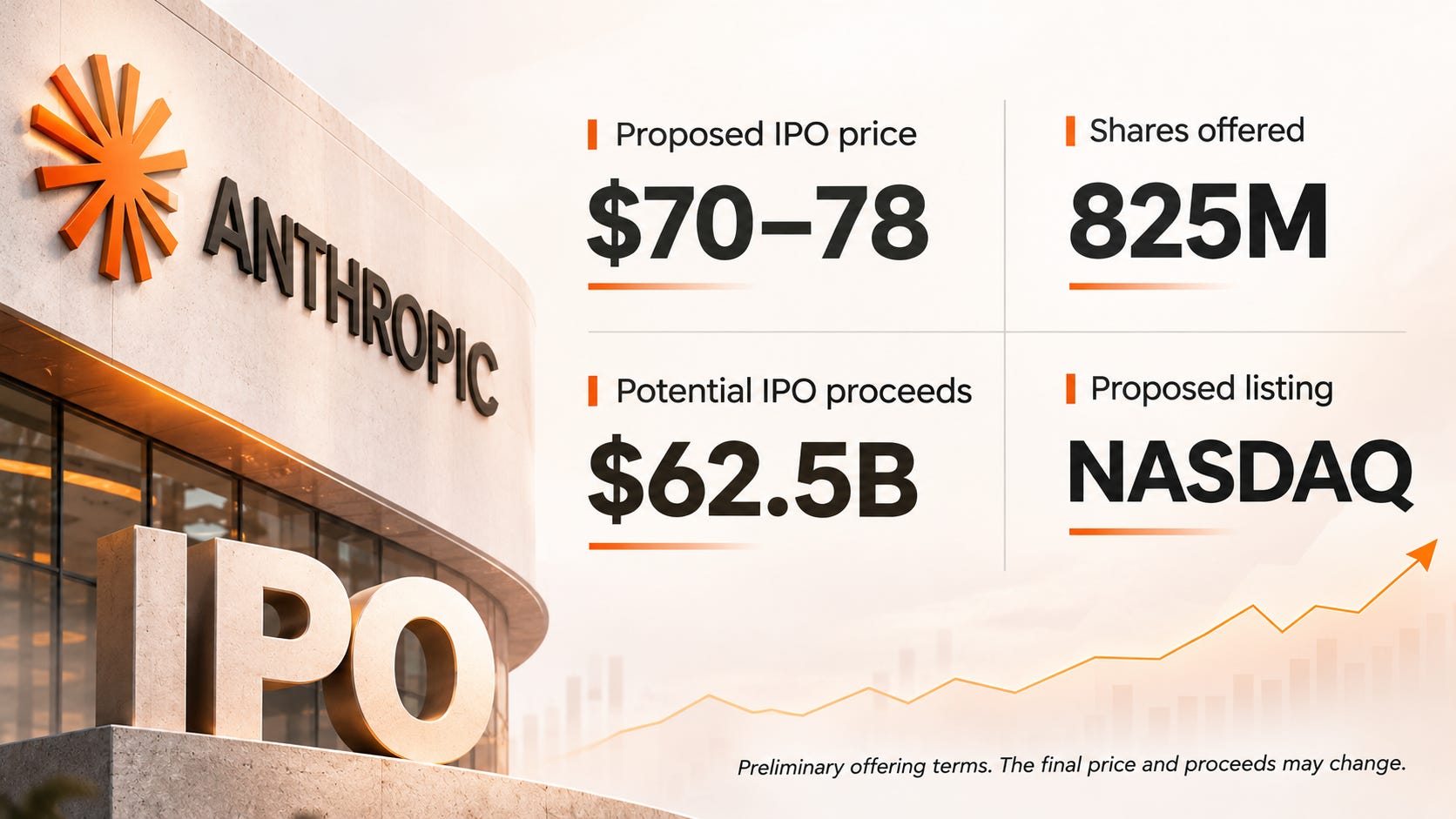
According to its preliminary prospectus filed on November 10, 2026, Anthropic has proposed the following offering:
At the upper end of the proposed price range, the offering implies a valuation of more than $1 trillion on a fully diluted basis, depending on the share-count assumptions.
Anthropic has also attracted significant institutional interest. Its prospectus describes a proposed $26 billion private placement involving major technology companies, including Nvidia, Google, AMD, Broadcom, Microsoft, Micron and TSMC.
Why Anthropic’s IPO Matters for Nvidia
Anthropic and Nvidia operate in different parts of the AI ecosystem. While Anthropic develops AI models and applications, Nvidia supplies the advanced chips and computing infrastructure needed to train and operate them.
This creates an interesting relationship between the two companies. Anthropic’s growth could increase demand for Nvidia’s computing products, while Nvidia’s technology supports the expansion of AI businesses like Anthropic.
However, the IPO also raises an important question: Are investors assigning sustainable valuations to AI companies, or are expectations running ahead of actual profitability?
Anthropic’s public listing will give investors an opportunity to evaluate its revenue growth, infrastructure costs, financial performance and long-term business potential.
A successful listing could strengthen confidence in the AI industry, while weaker investor demand could raise concerns about valuations across the sector.
The Bigger Picture
The coming week brings three major developments for the global AI industry: Nvidia’s leadership transition, its Q3 FY2027 earnings and Anthropic’s proposed mega IPO.
For investors, these events will provide important insights into whether the AI boom can sustain its momentum. Nvidia’s results will test chip demand, its leadership transition will test investor confidence, and Anthropic’s IPO will test appetite for high-growth AI businesses.
Lingo of the Week
Price Discovery
Price discovery is the process of determining a stock’s fair market value through demand and supply. It reflects the price buyers are willing to pay and sellers are ready to accept. During an IPO, price discovery helps establish an appropriate share price based on investor interest and market conditions.
Disclaimer: This article is for informational and educational purposes only and should not be considered investment advice. IPO terms and market expectations are subject to change.
Pocketful isn’t just another trading platform - we’re your partners on the journey to financial freedom.
Thank you for reading!
👀 Stay tuned. Stay diversified.
Until next time,
Team Pocketful.
Follow Us: Website
Download Our App: Available on Google Play & Apple App Store