

India’s Production Linked Incentive (PLI) scheme has changed how smartphones are made here. Big names like Apple and Samsung now build factories, make phones, and ship them to the world. This has put India on the map as an export center. Now, talk of PLI 2.0 is heating up. It could take things further, helping India not just assemble but truly manufacture phones amid tough global times. Let’s break it down simply, step by step, so anyone can follow.
What is PLI and Why Did It Start?
Imagine a government saying to companies: “Make more stuff here, and we’ll give you cash back.” That’s PLI in a nutshell. It started in 2020 for smartphones with ₹41,000 crore set aside for five years. Companies get incentives - money back - based on how much extra they produce and sell compared to a starting point year.
Why? India used to import almost all its phones. That meant money leaving the country, few jobs, and no big factories. PLI aimed to flip this. Goals are straightforward:
Boost local phone making so imports drop.
Cut prices for Indian buyers by making here.
Create tons of jobs, from factory floors to engineers.
Pull in foreign cash and companies, making India a China alternative as world supply chains shift.
It ties into Digital India - cheaper phones mean more people online, learning, working. PLI 1.0 focused on getting big fast. Small companies had to invest at least ₹50 crore to play. In return? 4-6% cashback on sales growth above the base. No free lunch—this rewarded real scale, not talk. Big players like Apple saw the math: build here, get rebates, dodge some tariffs. It worked because it matched what companies need: predictable help to offset India’s early higher costs.
Wins from PLI 1.0 – The Numbers Tell the Story
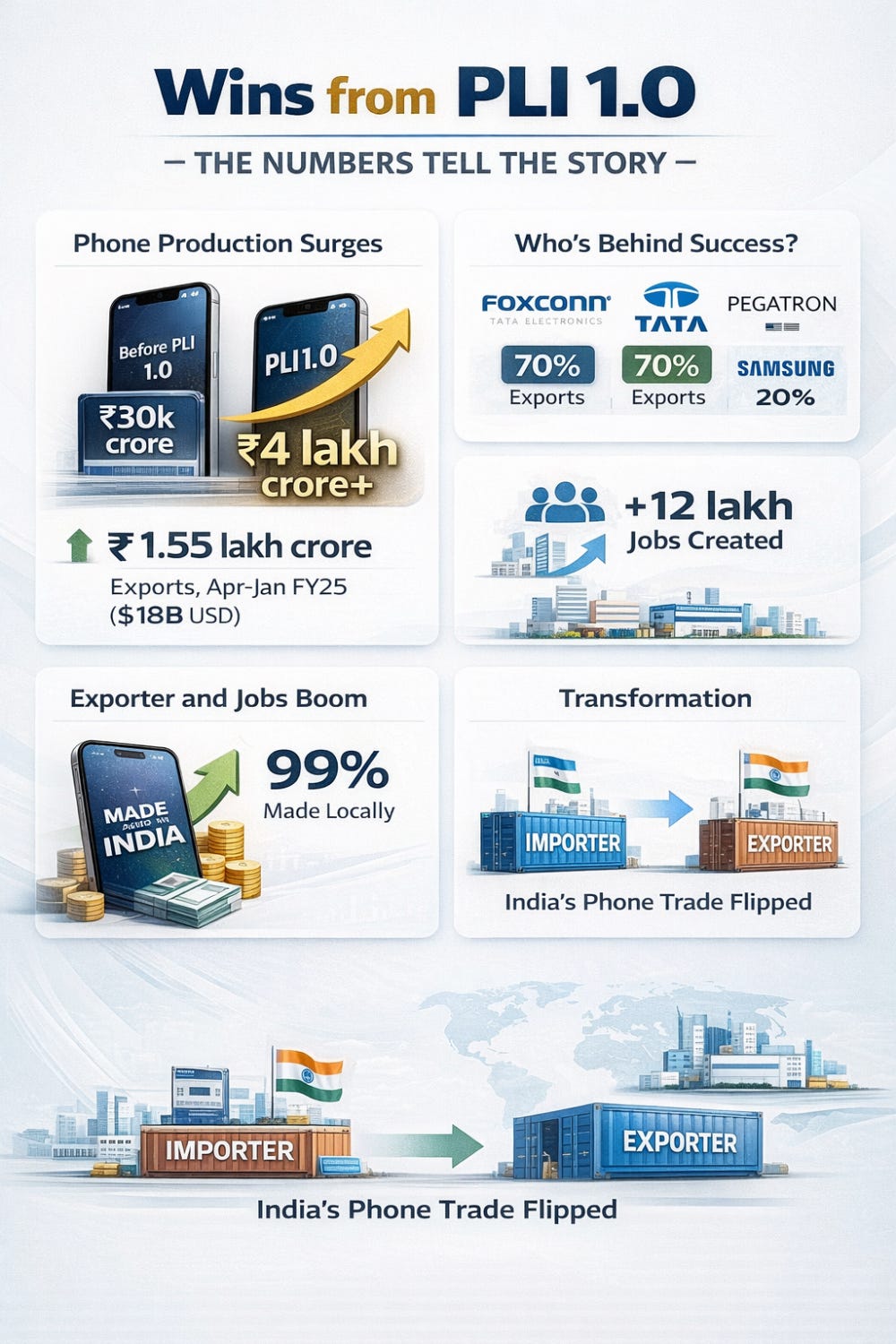
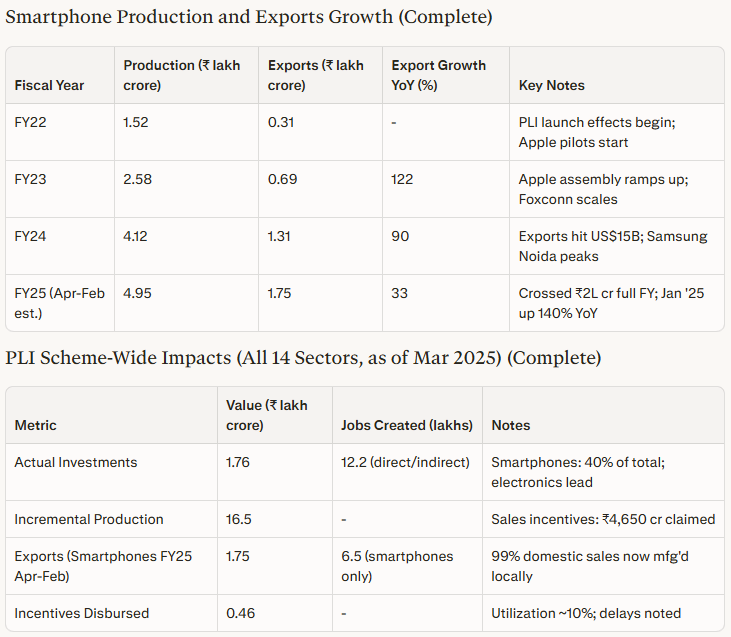
PLI 1.0 delivered big. Phone production soared from small numbers to over ₹4 lakh crore a year by FY24. Exports? From almost nothing to ₹1.55 lakh crore between April and January FY25 - that’s about $18 billion. January 2025 alone jumped 140% from the year before!
Who’s behind it? Apple’s partners: Foxconn in Tamil Nadu, Tata Electronics in Hosur, Pegatron nearby. They handled 70% of exports. Samsung chipped in 20% from its huge Noida plant. This drew giants who once ignored India. Jobs exploded - over 12 lakh direct and indirect, many in Tier - 2/3 cities like Hosur, Sriperumbudur, Noida. Women got thousands of roles in assembly lines. Foreign direct investment (FDI) flooded in, building factories, roads, power for them.
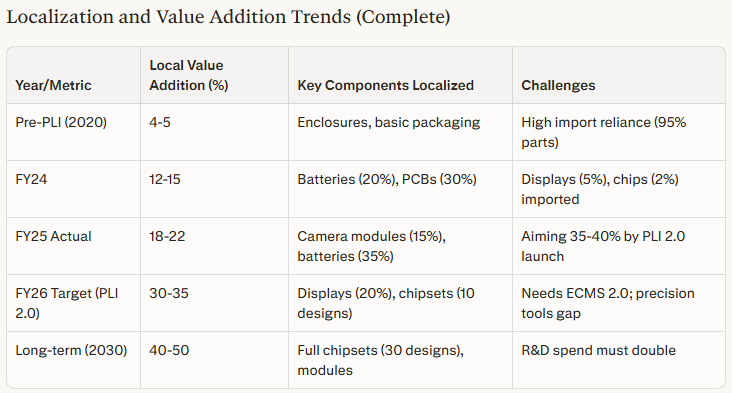
Local value addition - that’s the share of phone made with Indian parts - rose from near zero. But honestly, it was basic: putting together cases, simple testing, packing. Not screens or chips yet. Still, this built trust. Factories hummed, workers trained, suppliers learned. Exports flipped India’s phone trade from big importer to exporter. Domestic sales? Almost all now made here - 99% local production. That’s self-reliance in action, step one.
Think of everyday wins: Cheaper phones for you, jobs for your neighbor’s kid, pride in “Made in India” labels on global iPhones. PLI 1.0 proved government cash can spark private hustle.
Why Talk of PLI 2.0 Now? The World Changed
PLI 1.0 ends March 31, 2026. Perfect time to reload. But why rush? Global phone sales slowed after 2024—stuck around 1.1 billion units. Demand dip hurts everyone. Vietnam offers cheap land, no corporate tax, fast ports—stealing some thunder. China? Still king with subsidies, low costs.
India improved: Making costs fell from 18-19% higher than China to 11-14% premium. Good, but not enough alone. Minister Ashwini Vaishnaw meets company bosses often. They agree: Keep exports rolling, but push deeper—make 35-40% parts here via ECMS 2.0 (Electronics Components Manufacturing Scheme). US under President Trump (reelected 2024) adds spice - tariffs hit China, but raise part prices everywhere. India needs to grab this window.
PLI 2.0 isn’t copy-paste. It’s about high-value work. Apple plans 25% of world iPhones from India soon. Samsung eyes flagships here. Without fresh incentives, momentum stalls. With it? India climbs from assembler to real maker.
Tariff Relief: Cutting Costs Without Cutting Corners
Big headache for factories: Import taxes on parts like PCBs (circuit boards), displays, batteries—up to 20%. This pumps up costs vs China’s help. PLI 2.0 whispers lower duties, say 5-10% cuts. Foxconn, Tata, Dixon save lakhs per line. Phones get competitive.
Local winners too. More orders for Indian battery makers (Reliance building giga factories), PCB firms. ECMS gives them incentives. Catch? Cashback ties to local value—must source more here, not import everything.
Could unlock ₹50,000 crore new investments. Tricky balance: Help big assemblers without hurting baby local suppliers. Like training wheels—eases ride but pushes pedaling.
Assembly vs Real Manufacturing: The Real Gap
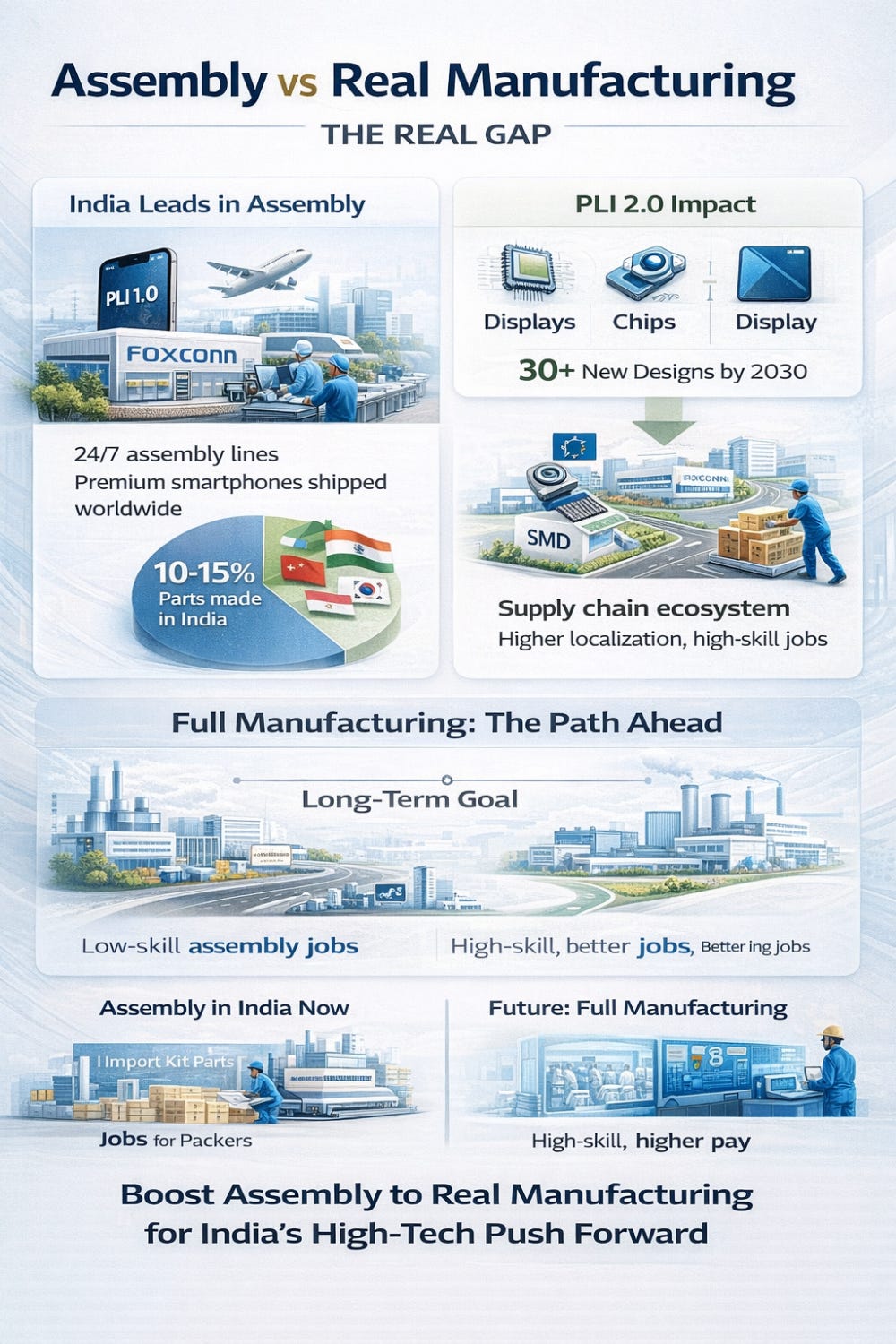
India rocks assembly. PLI 1.0 shipped premium iPhones, Galaxy S series worldwide. Sriperumbudur factories run 24/7, workers pick parts, screw, test, box—export-ready. But truth? Only 10-15% parts truly local. Rest from China, Vietnam, Korea. Critics call it “screwdriver assembly” import kits, put together, slap label.
PLI 2.0 changes game: Deeper localization. Target components, displays, chips—30 new Indian designs by 2030. Builds supplier webs: One firm makes camera modules, feeds Foxconn. Less import bills, more high-skill jobs - designers, engineers, not just packers.
Real manufacturing? Like Apple’s China magic: Layers of suppliers for tools, chemicals, R&D labs. India lags machine tools, super-clean rooms for chips. Fix that, or stay regional player, not global boss.
Everyday angle: Assembly gives jobs; full chains mean engineers earning more, towns booming long-term.
Economy Boost and Investor Wins
PLI rewrote trade books. Imports crashed - from 70% market to under 5%. FY25 exports: ₹1.68 lakh crore. We earn more than spend - surplus! 12 lakh jobs, lots for women in small towns. ₹2.5 lakh crore investments built factories, logistics, skills.
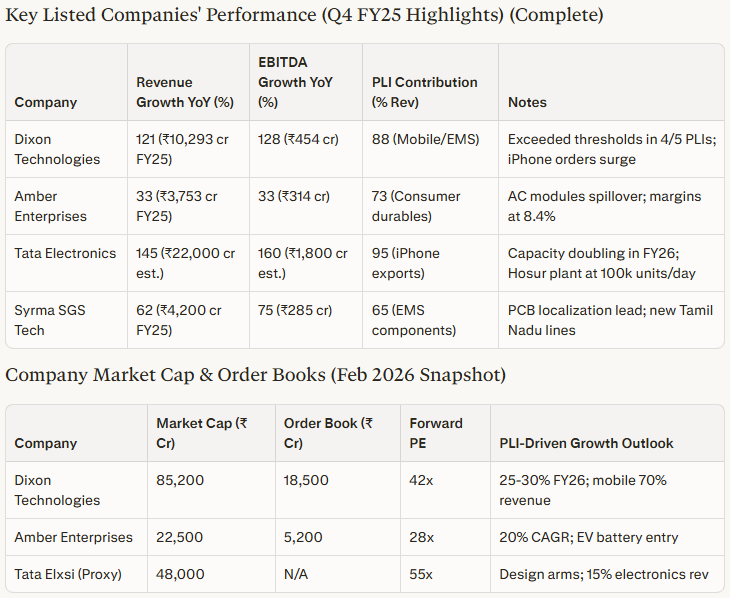
Investors smile. Dixon Technologies doubles capacity - mobile orders boom. Amber Enterprises grows AC parts, spills to phones. Tata Electronics leads iPhone push. PLI 2.0? Could grow sector 20-30% to 2028. Exports pad forex reserves - rupee stays strong. Local brands like Lava snag mid-range as Chinese pull back from tariffs.
Big picture: Electronics eyes 10% GDP by 2030. Ripples everywhere - software testing hubs, EV batteries shared, chip dreams. Multiplier magic: One phone factory lifts 10 suppliers.
Risks and Hurdles: Not All Smooth
No free ride. Global sales slump post-2024 - fixed factory costs hurt if volumes drop. Policy cliff? Subsidies end 2026 abruptly, capex giants struggle.
Vietnam nips heels -0% tax, slick ports. Inside: Payout delays - under 10% claimed despite okay. Skill shortages - workers for basic okay, advanced chips? No. Trump-era US-China twists raise part chaos.
Long win needs: R&D cash, super roads/power/water, 40%+ local parts. Else? Assembly hub, fragile to next shock.
Data Snapshot: See the Growth Yourself
India’s Big Chance
India’s at a crossroads with PLI 2.0. Blend cash help, part tax cuts, local push to match Shenzhen, Hanoi. Assembly scale is win one. Depth for jobs, exports, gains long-term as world trade rewrites.
For you: Cheaper phones, local jobs, stronger economy. Watch execution - government speed, company bets. If right, India not just hub - leader.
Conclusion: The Path Forward
PLI 2.0 promises to elevate India from assembly to true manufacturing hub. PLI 1.0 created jobs, exports, FDI - now deepen with local chips, screens via tariff relief, ECMS, skills. Fix delays, execution. Rightly done, $50B+ exports, 10% GDP, engineer towns by 2030. India shifts from chasing to hosting global supply chains.
Lingo Corner: Supply Chain Diversification
Supply chain diversification is when companies spread their manufacturing and sourcing across multiple countries instead of relying on a single nation. This reduces risk from geopolitical tensions, tariffs, pandemics, or disruptions, while improving cost efficiency, stability, and long-term resilience in global trade and production networks.
Pocketful isn’t just another trading platform - we’re your partners on the journey to financial freedom.
Thank you for reading!
👀 Stay tuned. Stay diversified.
Until next time,
Team Pocketful.
Follow Us: Website
Download Our App: Available on Google Play & Apple App Store