

A New All Time High for Silver
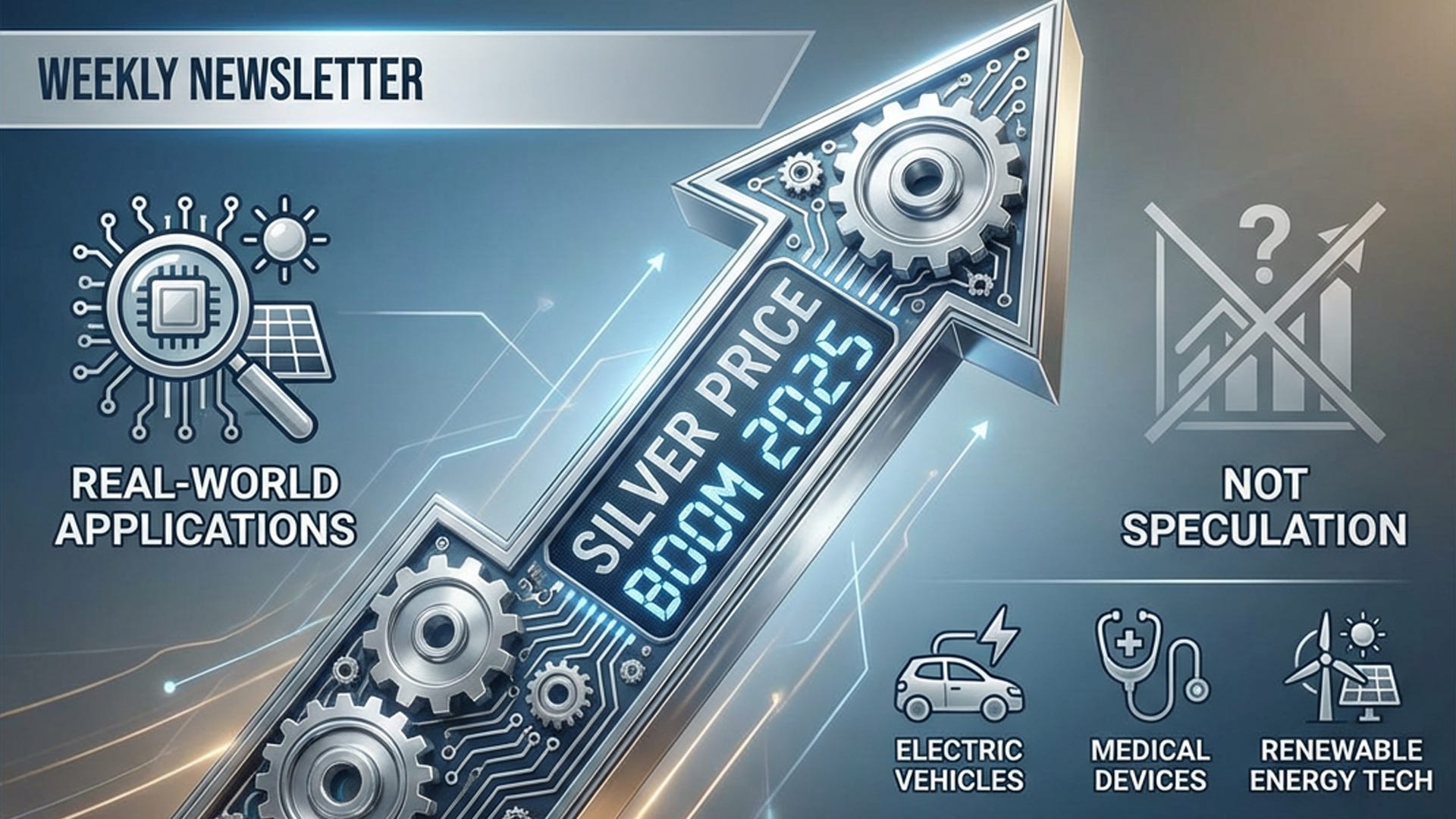
On Monday, December 1, 2025, silver opened at a stunning all time high of around $57 per ounce. The jump surprised many investors, but the reasons behind it are rooted in real global change. Unlike earlier surges fueled by fear and speculation, this rise is shaped by real industrial demand rather than shifting investor sentiment. Silver is now a key material for solar panels, electric vehicles, data centers, advanced electronics and 5G networks. Its unique properties make it nearly impossible to replace. Industries across the world are competing for the same limited supply, pushing prices upward in a much more sustainable way.
Silver’s Earlier Explosive Rallies
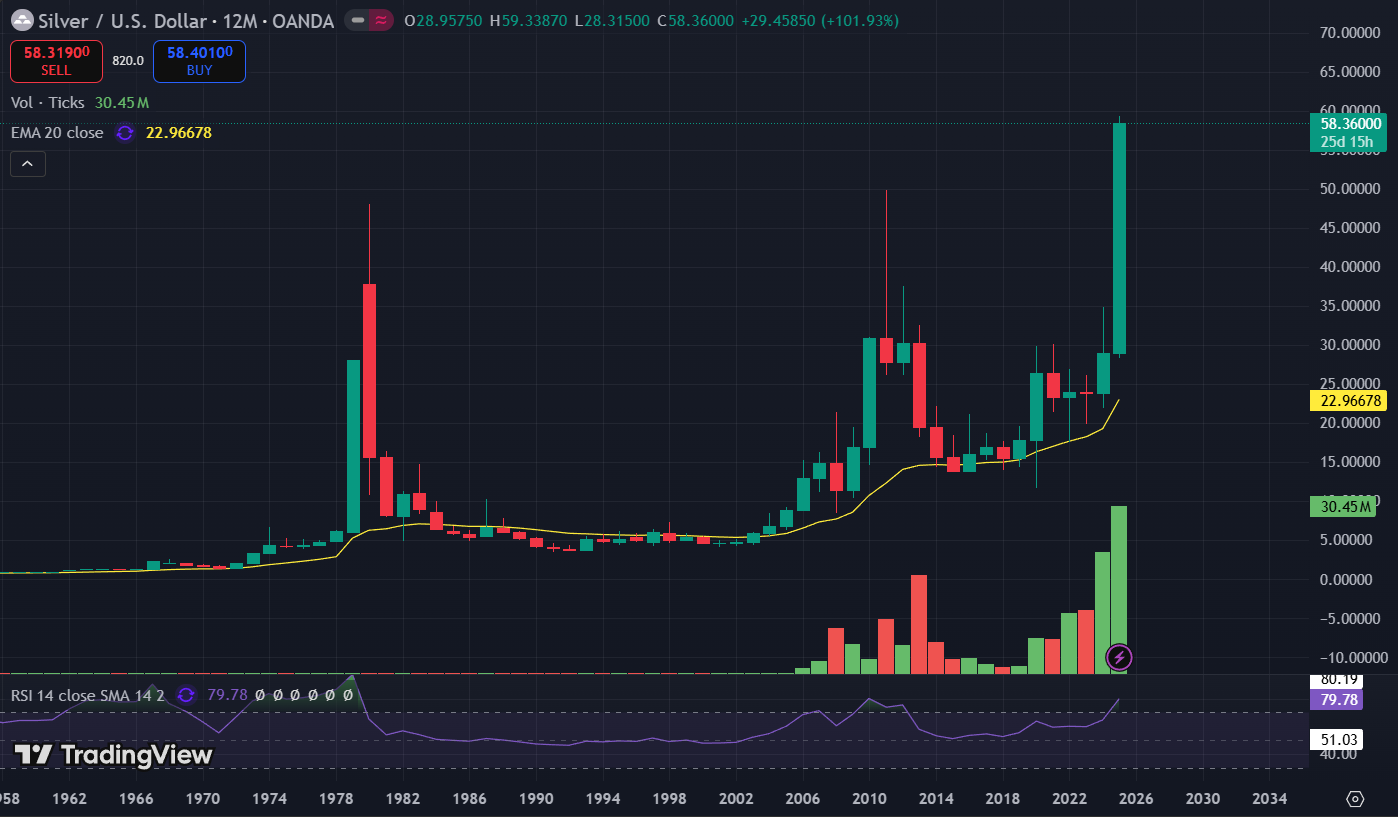
This is not the first time silver prices have shot up dramatically. Similar jumps occurred in 1980 and 2011, but those spikes were driven mostly by speculation and hoarding rather than real world consumption. In both cases, the price rise quickly collapsed once the excitement faded. Investors crowded into the metal believing prices would never stop rising, creating bubbles that eventually burst. In contrast, the 2025 rally is supported by strong industrial demand and long term supply challenges, which gives it a more stable foundation. Understanding the past helps explain why today’s move is different.
The 1980 Silver Speculation Storm The Rise of a Speculative Empire
The 1970s were a troubled decade marked by high inflation, unstable oil prices and political uncertainty. Investors, worried about the falling value of money, began turning to alternative assets for protection. Silver emerged as one of those havens, seen as a safeguard against inflation rather than an industrial necessity. This atmosphere of fear and distrust created the perfect foundation for one of the most dramatic commodity stories in financial history.
Texas oil heirs Nelson Bunker and William Herbert Hunt stepped into this environment with a powerful belief in silver’s protective value. What began as a defensive investment soon expanded into an effort to dominate the market, as they bought enormous amounts of bullion when prices hovered around four dollars an ounce. Their leveraged buying through loans and forward contracts escalated their position to near-mythic size, with many believing they controlled almost a third of the world’s deliverable silver. Prices soared, speculators rushed in and a self-reinforcing cycle of belief pushed silver toward unprecedented heights.
As prices surged, excitement spilled into the public. Families sold silverware, newspapers celebrated quick profits and traders treated silver as an unstoppable rocket. Yet none of this frenzy came from factories or technology firms. The demand was emotional rather than industrial, driven by the belief that prices would rise forever. Each jump in price attracted new buyers, creating a bubble that floated far above any real economic need for silver.
The Fall of the Silver Bubble
Regulators eventually recognized the danger in the Hunts’ heavily leveraged mountain of silver. Concerned that a sharp reversal could destabilize brokers and banks, they introduced strict trading limits in early 1980. New buying was banned while selling remained allowed, instantly shifting market psychology. With no fresh buyers, prices paused, then quickly weakened. The same speculative momentum that had pushed silver upward now accelerated its decline, exposing how fragile the entire structure had become.
The tension reached its breaking point on March 27, 1980—Silver Thursday. Silver prices crashed more than 50% in a day, plunging toward ten dollars per ounce and erasing the Hunts’ massive paper gains. Their inability to meet margin calls forced them into liquidation, sending distress through the financial system as brokers scrambled to contain the fallout. The unstoppable boom dissolved almost instantly, revealing the risks of building colossal positions on borrowed money and collective belief.
The 1980 collapse became a lasting symbol of speculative excess and its consequences. Beneath all the excitement, the market had been driven not by genuine industrial demand but by fear, leverage and momentum. When those forces reversed, the bubble burst with extraordinary speed, leaving behind one of the clearest lessons in the dangers of unchecked speculation.
The 2011 Silver Spike
The Force Behind the Post-Crisis Boom
After the global financial crisis, silver entered another dramatic surge as fear dominated the economic landscape. Banks collapsed, markets crashed and unemployment spiked, leaving confidence in the financial system dangerously weak. Governments and central banks pumped enormous liquidity into the economy, raising worries about inflation and dollar debasement. Silver, cheaper than gold yet seen as a safe refuge, benefited from this crisis psychology. Prices pushed toward fifty dollars per ounce not because of industrial shortages but because investors wanted assets outside the banking system. Even as futures and physical prices briefly diverged, global silver production was actually rising between 2009 and 2011, showing there was no real scarcity.
The rally gathered strength as everyday investors gained unprecedented access to silver. Exchange traded funds let anyone buy with a few clicks, while online communities framed silver as deeply undervalued and poised for a breakout. This enthusiasm pushed prices higher even though industrial demand—from solar panels to electronics—didn’t justify such a rapid climb. Much of the perceived shortage came from distribution delays, including the U.S. Mint struggling to secure blanks for Silver Eagles. These bottlenecks created the illusion of scarcity, while news coverage and momentum trading fueled retail excitement.
By early 2011, silver traded around twenty-seven to thirty dollars per ounce but surged through the spring on sheer emotional momentum. On April 28, it touched an intraday peak of $49.47, nearly doubling in a short span. Leveraged ETFs and futures attracted speculators betting on inflation, eurozone debt troubles, Middle East tensions and a weakening dollar. Rumors of industrial shortages added fuel, pulling both retail and institutional buyers into a rally built more on fear and momentum than fundamentals.
The Slow Return to Reality
As confidence gradually returned to global markets, the emotional force behind the silver rally began to fade. Investors shifted back into equities and other assets, removing the fear-driven support that had lifted silver to its highs. Prices slid sharply from the peak, and many retail buyers who entered late faced steep losses. What had looked like a powerful uptrend weakened rapidly once crisis psychology no longer dominated sentiment.
The decline continued as supply chain delays eased and production remained strong. The market adjusted naturally, allowing futures and physical prices to reconnect after their earlier divergence. The fall below twenty dollars per ounce reflected not a failure of silver as an asset but the unwinding of a spike that had risen too far, too fast.
With the emotional heat drained from the market, silver settled back into levels consistent with real industrial demand and broader economic stability. The 2011 episode became another clear example of how quickly momentum and fear can inflate prices—and how equally fast markets correct once those forces reverse.
The 2025 Industrial Driven Rally
Silver’s Meteoric Rise: Price Surge and Expanding Use Cases
Silver’s surge through 2024 and 2025 became one of its most powerful runs in recent decades. Prices rose from about $23 per ounce in early 2024 to $28 by year end, before exploding from $28 to nearly $57 in 2025, a remarkable 103 percent jump. This climb reflected structural deficits in the market, where booming industrial needs repeatedly outpaced stagnant mine supply. Even as manufacturers trimmed silver usage to manage costs, industrial demand remained near record territory, hovering around 665 to 680 million ounces. Solar panels, electric vehicles, semiconductors and advanced electronics kept silver deeply embedded in the clean energy transition.
A fresh layer of demand emerged from rapidly growing technologies. AI infrastructure alone is now estimated to consume 25 to 40 million ounces annually through data centers, quantum computing components and high performance cooling systems. Meanwhile, EVs, wind turbines and nanotechnology continue tightening the market, with solar projected to require 250 million ounces by 2030. Investment inflows through ETFs further amplified momentum and strained available inventories at COMEX. The combined weight of clean energy expansion, digital infrastructure and investor participation pushed silver into a fundamentally strengthened rally that shows how essential the metal has become to the modern technological landscape.
A Rally Built on Reality, Not Speculation
The rise in silver prices in 2025 is very different from the speculative bubbles of 1980 and 2011. In those years, excitement and fear drove prices to unsustainable levels. Once the emotion faded, the market collapsed. Today, silver prices are rising because the world genuinely needs more silver than it can produce. Silver has become a key ingredient in clean energy, transportation, communication and digital technology. The forces behind this rally are structural, long term and based on real consumption. As industries continue to grow, silver is likely to remain in high demand, making this rally far more lasting and meaningful than those of the past.
Lingo of the Week: Industrial deficit
Industrial deficit refers to a situation where a country’s industrial output or supply falls short of demand, often due to rising consumption, supply-chain gaps, or limited production capacity. This shortage pushes prices higher, increases import reliance, and signals that industries must expand production to meet growing economic and market needs.
Pocketful isn’t just another trading platform - we’re your partners on the journey to financial freedom.
Thank you for reading!
👀 Stay tuned. Stay diversified.
Until next time,
Team Pocketful.
Follow Us: Website
Download Our App: Available on Google Play & Apple App Store