

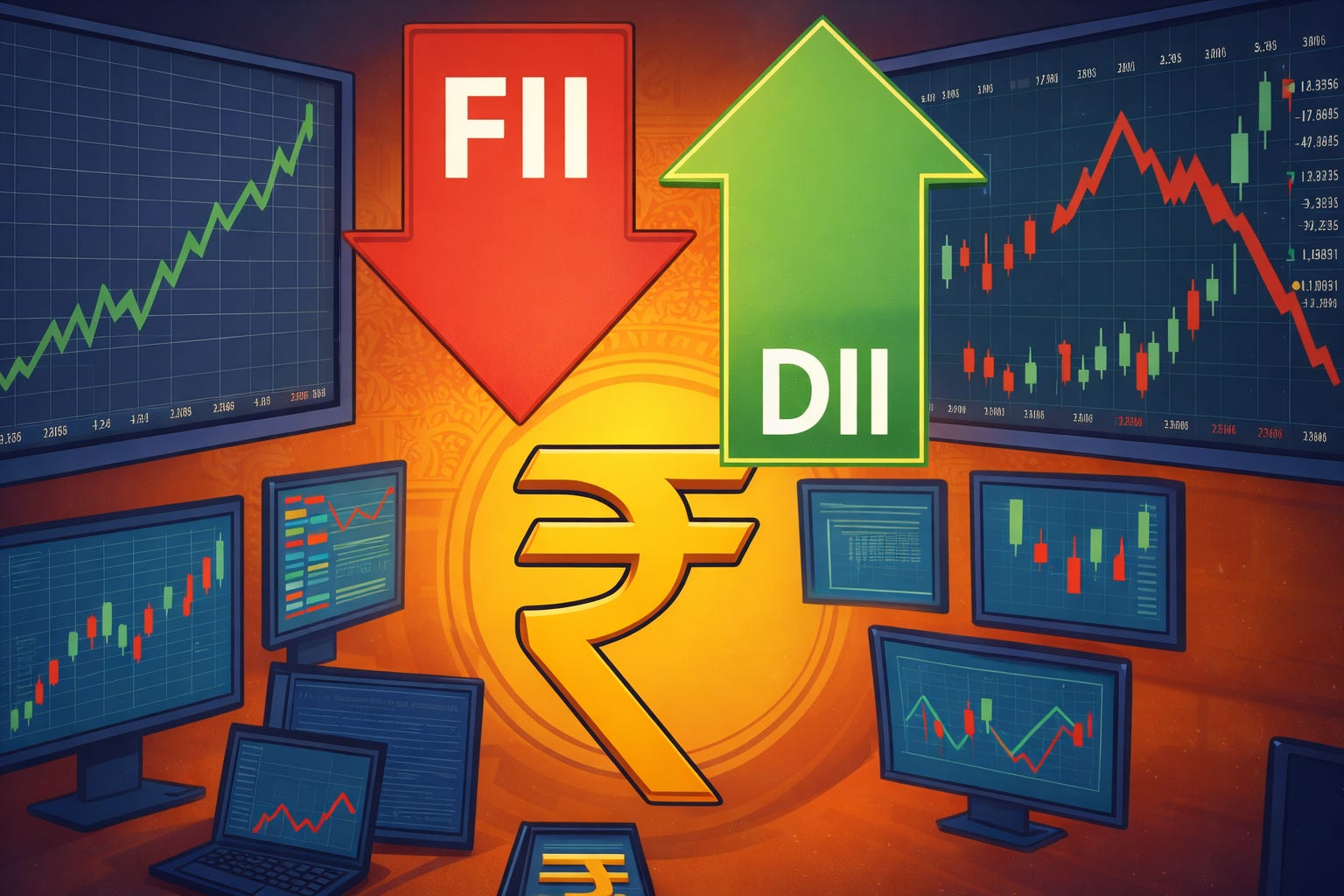
You wake up on January 1, 2026, check your portfolio, and see the news everyone’s talking about. For the first time ever, Indian investors now own more of Nifty50 than foreigners do. Domestic Institutional Investors, or DIIs—think your mutual funds, insurance companies, and pension plans—hold 24.8% of the index. Foreign Institutional Investors, or FIIs, sit at 24.3%. This flip happened quietly in the December 2025 quarter. No big market drama, just a steady takeover. Why does it matter to you? It’s like your family finally owning the house instead of renting from outsiders. Markets become more stable. Prices track India’s real growth—factories humming, jobs growing, people spending—not some foreign fund’s mood swings. This newsletter breaks it down simply, step by step, so you see how your money fits in.
The Big Flip: Who’s Driving Your Market Now?
Foreigners used to run the show. FIIs—big global funds from places like Norway or the US—poured money into India after 2001 rules opened the gates. They owned 18-20% of Nifty50 by 2010 and pushed it even higher. When they bought big, like $20 billion in 2014, the Sensex doubled fast. But when they sold, pain followed. In 2022, FIIs dumped ₹1.5 lakh crore amid rising US rates, and markets crashed 20%. Every FII data release felt like a market mover, more than company earnings sometimes.
DIIs played a different game. These are homegrown players: mutual funds collecting your SIP money, LIC handling insurance premiums, and pensions like EPFO or NPS from your salary. They bought slowly during FII panics, acting like a safety net. Now, they’ve crossed ahead. Your ₹5,000 monthly SIP joins millions of Indians channeling savings into stocks. That steady flow flipped the ownership without anyone noticing much. Markets shrugged, but the change means less wild rides tied to dollar ups or Wall Street news. India drives its own bus now.
By the Numbers: What Exactly Changed?
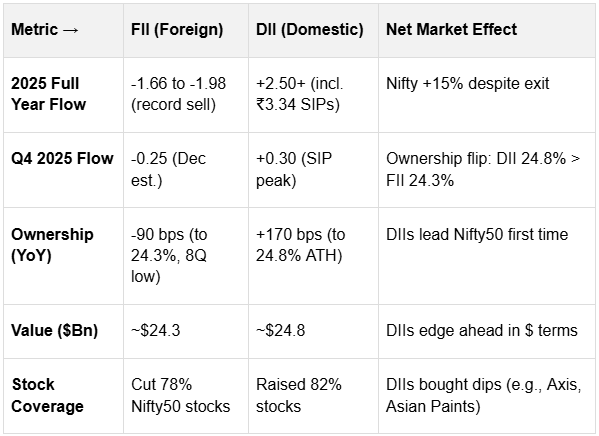
Let’s look at the simple facts from December 2025. DIIs reached their all-time high stake of 24.8% in Nifty50. FIIs fell to 24.3%, their lowest in eight quarters. In dollar terms, both control about $25 billion worth, but DIIs keep adding more. Over the full year, DIIs gained 1.7 percentage points while FIIs lost 0.9. From the prior quarter alone, DIIs added 0.3 points as FIIs shed 0.2.
Here’s the change at a glance:

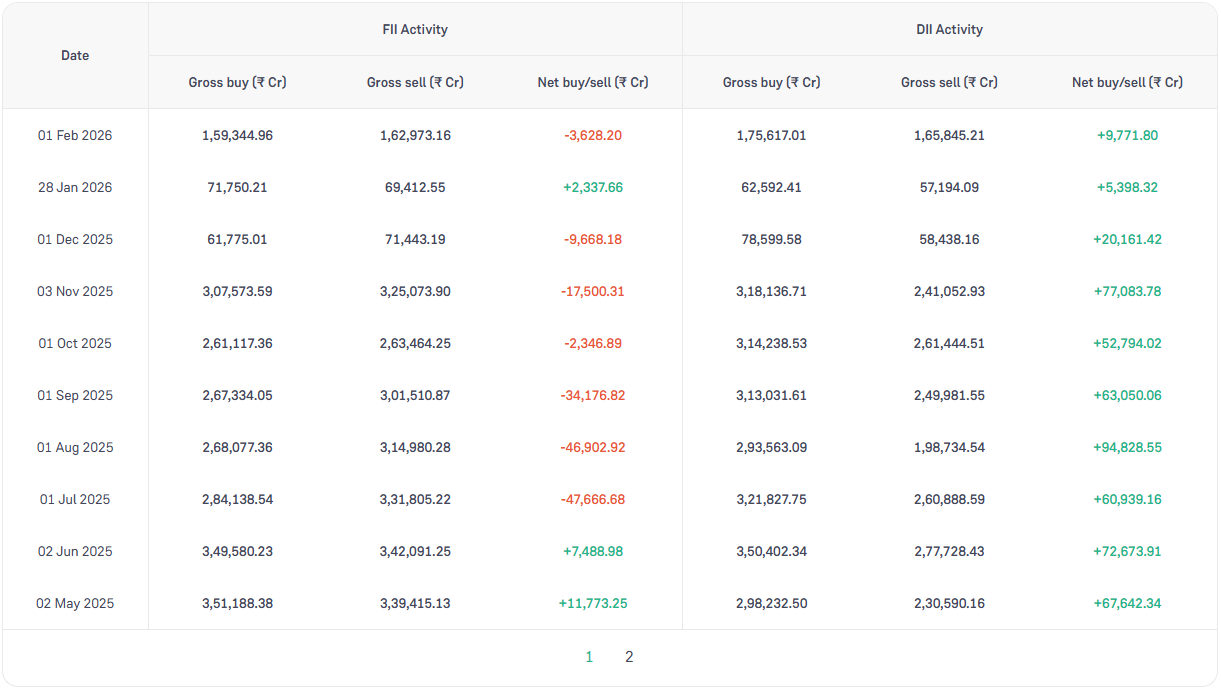
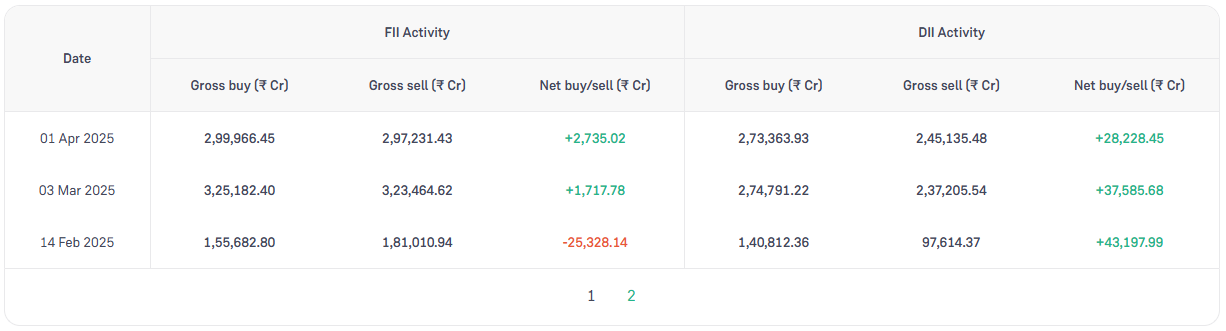
Cash tells the real story. Indians poured ₹3.34 lakh crore into SIPs through 2025—that’s like ₹9,000 crore every month without fail. FIIs sold a record ₹1.66 lakh crore, scared off by global worries. DIIs not only covered every rupee sold but bought extra. Their buying streak now spans 25 months, totaling ₹11.4 trillion. No wonder Nifty50 climbed 15% last year despite the foreign exit. These numbers come straight from shareholding reports and flow data—hard proof the shift is real and building.
Why Now? The Three Forces Behind It
Your monthly SIP habit changed everything first. Indians shifted from gold or fixed deposits to equity mutual funds. Total SIP money hit ₹3.34 lakh crore in 2025, up 35% from before. It flows rain or shine, even when markets flatten. Platforms made it easy, onboarding millions, including more women who now make up 25% of SIP investors. This created a reliable river of cash that never dries up.
Big institutions piled on next. Insurance giants like LIC raised stock allocations after their IPO. Pensions such as EPFO and NPS got government nods to put more of your salary deductions into equities - up to 15% for EPFO and 75% for NPS. Their combined firepower added billions monthly. Mutual funds alone manage ₹70 lakh crore in assets now, half in stocks.
FIIs pulled back for simple reasons. US bond yields stayed high at 4.5%, the dollar strengthened, and the rupee weakened to 86 per dollar. China looked cheaper, sucking in emerging market cash. Geopolitical noise and elections added caution. Foreigners sold big, but India’s savers - ₹45 lakh crore saved yearly - filled the gap perfectly. Domestic money proved deeper than anyone expected.
Inside the Stocks: Where the Money Flowed
DIIs didn’t spread cash blindly. They increased stakes in 82% of Nifty50 companies, or 41 out of 50. FIIs cut back in 78%, or 39 stocks. Domestics loaded up on steady names like Dr. Reddy’s Laboratories for reliable medicines that sell even in slowdowns. Asian Paints got more love because homes keep getting painted. Axis Bank drew buys as loans grew with the economy. Bajaj Auto benefited from two-wheeler demand in smaller towns. Tata Consumer Products, with everyday items like tea and salt, saw fresh investments too.
Key DII favorites:
Dr. Reddy’s (medicines)
Asian Paints (home improvement)
Axis Bank (loans)
Bajaj Auto (bikes)
Tata Consumer (daily goods)
FIIs trimmed most holdings but held on selectively to standouts like Bajaj Finance for lending growth and Bharti Airtel for data bets. This split reshaped the index. DIIs overweighted banks and consumer goods by 1.5-2 percentage points each, while underweighting global-facing sectors like IT. Stocks tied to India’s daily life and growth now carry more weight. Midcap indices show the same: DIIs own 18% versus FIIs at 12%. Your savings flow to companies mirroring 8% GDP expansion.
Why This Makes Markets Better for Everyday Investors
Higher DII ownership acts like a built-in airbag. Test case: 2025’s record FII selling worth ₹1.66 lakh crore. Nifty dipped just 5% before DIIs stepped in, pushing it up 12% from there. Compared to 2022’s 35% plunge on smaller outflows. Fear levels, measured by India VIX, dropped to 14 on average from 18 before. Daily swings shrank from 2% to calmer moves.
Prices get fairer too. Steady SIP inflows buy shares month after month, smoothing out hype or panic. Valuations settled at 21 times earnings for Nifty, down from FII-driven peaks of 28. Stocks now reflect company profits more than foreign headlines. Investor mindset shifts as well. News focuses less on “FIIs bought ₹2,000 crore” and more on SIP growth or factory output. Retail confidence builds - pauses in SIPs stay under 2% even in dips. Driving feels smoother, with fewer sudden stops.
Big Picture: How India’s Markets Finally Grew Up
Households rewrote the rules. Savings of ₹45 lakh crore yearly now send 20% to equities, up from 8%. Equity mutual fund assets hit ₹70 lakh crore, with SIPs as the engine. Women investors doubled their share. This mirrors the US, where retirement funds own 60% of stocks, or Japan’s pension giant holding 50%. India catches up fast.
Markets loosen global ties. Nifty now moves more with factory growth at 6% or government capex at ₹12 lakh crore than US jobs reports. Correlation to Nasdaq fell from 0.7 to 0.4. Reforms like NPS 2.0 speed it along. India stands alone among big emerging markets - Brazil relies on 70% FII ownership, South Africa even more. Domestics lead bluechips here first. By 2030, DIIs could stabilize $200 billion in flows. Your savings power a self-reliant bull market.
Watch Out: The Four Traps Still Ahead
Domestic strength has blind spots. Crowds chase hot midcaps trading at 35 times earnings or PSUs on capex hopes, risking bubbles if flows slow. The world hasn’t vanished - $90 oil or rupee at 90 per dollar could squeeze profits 10-15%. FIIs hold $800 billion in firepower; their sudden return sparks 20% spikes. SIPs face tests too - a 10% market drop might pause 20% of flows if confidence wavers.
Strong buffers exist. RBI sits on $700 billion reserves. Fiscal deficit glides to 4.5%. Keep 10% cash for dips. Overall, risks feel manageable compared to full FII dependence. Balance keeps the dawn bright.
Your Money Moves: Simple Steps to Win
Long-term investors gain from DII floors under prices. Focus where they buy: banks like HDFC or ICICI, consumer names like HUL or Nestle, infra leaders like L&T. Ramp up SIPs for rupee-cost averaging toward 12-15% yearly returns. Traders should check daily DII block deals on BSE and monthly SIP assets from AMFI - these beat FII data for signals. Midcaps ride domestic steam best.
Quick portfolio wins:
25% DII favorites (banks/consumer)
20% cyclicals (infra/metals)
10% cash (buy dips)
5% gold (rupee hedge)
Adjust your portfolio smartly. Check AMFI reports every 15th - if DII stakes rise, the bull strengthens.
Lingo Corner: “bps” (Basis Points)
Basis points, or bps, measure tiny percentage changes in finance. One bp equals 0.01%, so 100 bps = 1%. DIIs gained 170 bps YoY in Nifty50 - that’s a 1.7% ownership jump from foreigners. Track bps in shareholding data (released 15th monthly) to spot trends fast. FII dips often mean DII gains. Simple tool for smart investing.
Pocketful isn’t just another trading platform - we’re your partners on the journey to financial freedom.
Thank you for reading!
👀 Stay tuned. Stay diversified.
Until next time,
Team Pocketful.
Follow Us: Website
Download Our App: Available on Google Play & Apple App Store