

On June 12, 2026, financial history was made.
After years of speculation and anticipation, SpaceX finally entered public markets. Within hours, investors rushed to own a piece of the company, pushing its valuation beyond $2 trillion and making Elon Musk the first trillionaire in history.
The headlines focused on the wealth. The debates focused on the valuation. Critics questioned whether any company could justify such a price tag.
But those conversations miss the real story.
SpaceX didn’t become one of the world’s most valuable companies because it builds rockets. It became one of the world’s most valuable companies because it fundamentally changed the economics of an industry that had barely evolved for decades. The IPO wasn’t simply a public listing it was Wall Street’s vote of confidence in a future where space becomes a commercial platform rather than a government project.
To understand why investors were willing to assign a multi-trillion-dollar valuation to SpaceX, we need to go back to a time when the company was fighting for survival.
From Near Bankruptcy to the Biggest IPO in History
In 2008, Elon Musk faced the most difficult period of his career. Tesla was running out of money, the global financial crisis was shaking markets around the world, and SpaceX had just suffered three consecutive launch failures. Investors were losing confidence, cash reserves were shrinking, and both companies appeared to be heading toward collapse.
At one point, Musk reportedly had enough money left to save either Tesla or SpaceX, but not both.
Most entrepreneurs would have chosen the safer path. Musk chose neither. Instead, he continued funding both businesses, betting everything on the belief that they could eventually reshape their industries.
The gamble nearly failed.
Then, in September 2008, SpaceX successfully launched Falcon 1 into orbit. The mission changed everything. NASA awarded the company contracts, investor confidence returned, and SpaceX gained the credibility it needed to continue growing.
What followed over the next seventeen years was one of the most remarkable business stories of the modern era. A company that once struggled to survive eventually became the dominant force in commercial space, culminating in one of the most anticipated IPOs in market history.
The Innovation That Changed the Economics of Space
For decades, launching rockets was an expensive and inefficient process. Governments accepted the costs because they had strategic objectives, but private companies found it difficult to build sustainable businesses around such economics.
The problem was surprisingly simple.
Every rocket was essentially disposable.
After completing a mission, billions of dollars worth of equipment would fall into the ocean or burn up in the atmosphere. Imagine if airlines threw away an aircraft after every flight. Air travel would be impossibly expensive.
That was effectively how the space industry operated.
SpaceX realized that the future of space exploration depended not on building bigger rockets but on making them reusable. This idea became the foundation of the company’s strategy and eventually its greatest competitive advantage.
When Falcon 9 demonstrated successful landings and reusability, the economics of the industry changed forever. Launch costs that once seemed unavoidable suddenly began falling at an extraordinary pace.
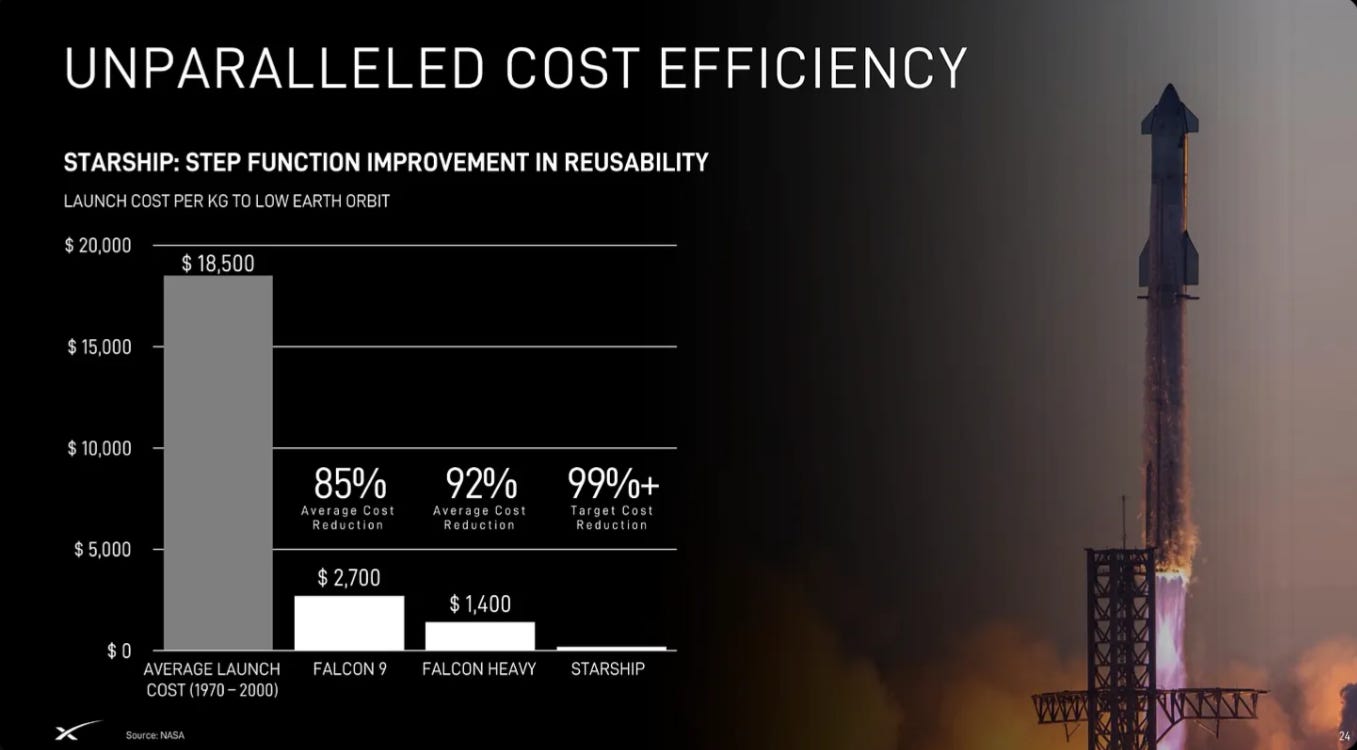
Historically, launch costs reached nearly $18,500 per kilogram of payload sent to low Earth orbit. Falcon 9 reduced those costs dramatically. Falcon Heavy pushed them even lower. Starship now aims to bring costs down to levels that would have sounded impossible just a decade ago.
This wasn’t merely an engineering breakthrough.
It was an economic breakthrough.
And economic breakthroughs are often what create the world’s most valuable companies.
Building the World’s Only Reusable Rocket Fleet
A great innovation matters only if it can be executed consistently.
This is where SpaceX separated itself from competitors.
While many companies talked about reusability, SpaceX built an operational system around it. Falcon 9 evolved into one of the most reliable launch vehicles ever created, completing hundreds of successful missions. Falcon Heavy expanded payload capacity while maintaining reusability. Starship represents the company’s most ambitious project yet, with the potential to carry unprecedented amounts of cargo at dramatically lower costs.
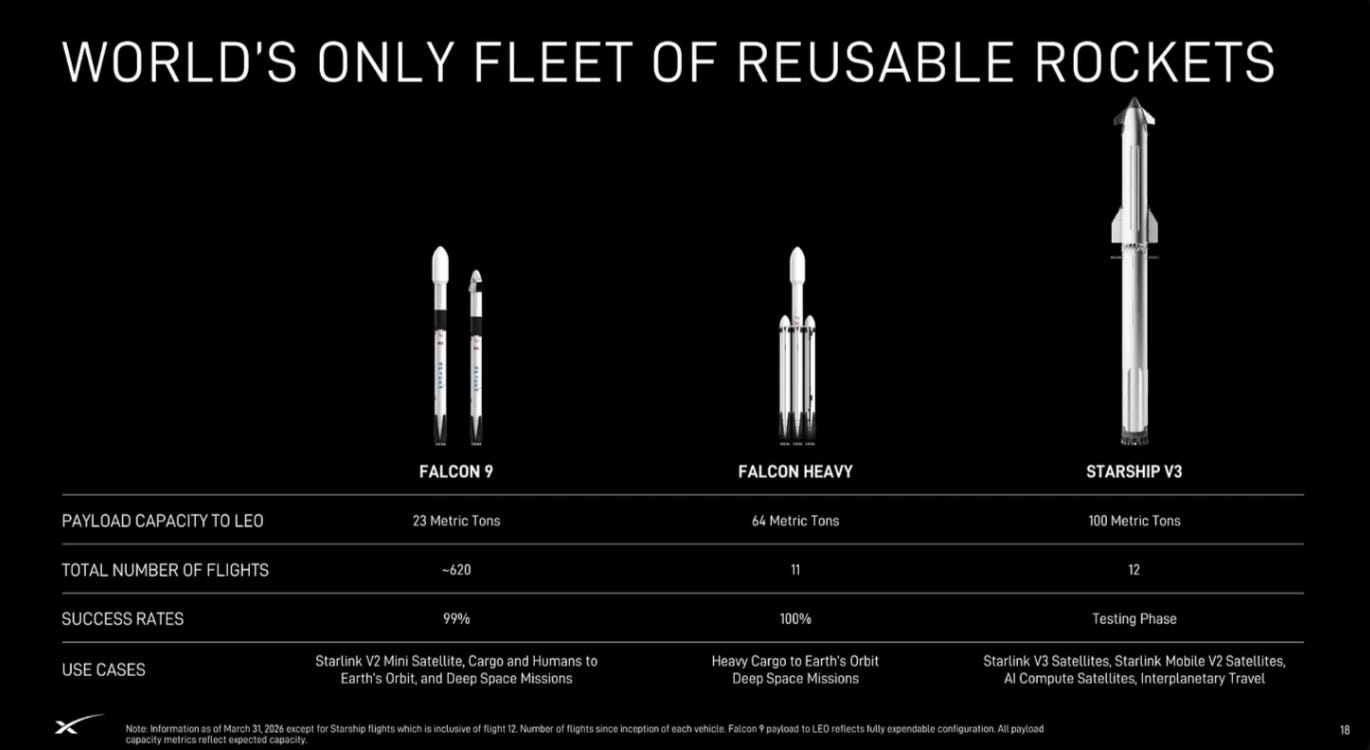
The importance of this fleet extends beyond technology. Reusability allows SpaceX to launch more frequently, lower costs further, gather more operational data, and improve reliability faster than rivals.
Every successful launch strengthens the company’s competitive position.
Every landing widens the gap.
By the time competitors achieve similar capabilities, SpaceX may already be operating several generations ahead.
That dynamic helps explain why investors view the company as more than just another aerospace business.
Why SpaceX Is More Than a Rocket Company
Many people still think of SpaceX as a launch company.
Investors see something entirely different.
The most valuable part of SpaceX may not be its rockets at all. It may be Starlink.
Starlink has quietly become one of the largest satellite internet networks ever created. By placing thousands of satellites into orbit, SpaceX has built a communications infrastructure capable of serving customers in regions where traditional broadband networks struggle to operate.
This matters because launch services generate project-based revenue.
Starlink generates recurring revenue.
Recurring revenue is one of the most attractive characteristics a business can possess. It creates predictability, improves scalability, and often commands significantly higher valuations in public markets.
Beyond Starlink, SpaceX has also expanded into government contracts, defense applications, satellite deployment, astronaut transportation, deep-space missions, and emerging opportunities linked to artificial intelligence infrastructure.
Increasingly, the company resembles a combination of an aerospace giant, a telecommunications provider, a defense contractor, and a technology platform.
That combination is extraordinarily rare.
And investors are willing to pay a premium for rare assets.
Why Investors Valued SpaceX at More Than $2 Trillion
The biggest question surrounding the IPO is straightforward.
Why would investors pay more than $2 trillion for SpaceX?
The answer lies in a concept known as optionality.
Traditional valuation methods focus on current earnings and existing businesses. SpaceX forces investors to think differently because much of its value comes from future opportunities rather than present-day profits.
Investors see opportunities in global connectivity through Starlink. They see opportunities in military communications, orbital infrastructure, satellite-based computing networks, lunar logistics, and potentially even interplanetary transportation.
In other words, investors are not valuing what SpaceX is today.
They are valuing what SpaceX could become.
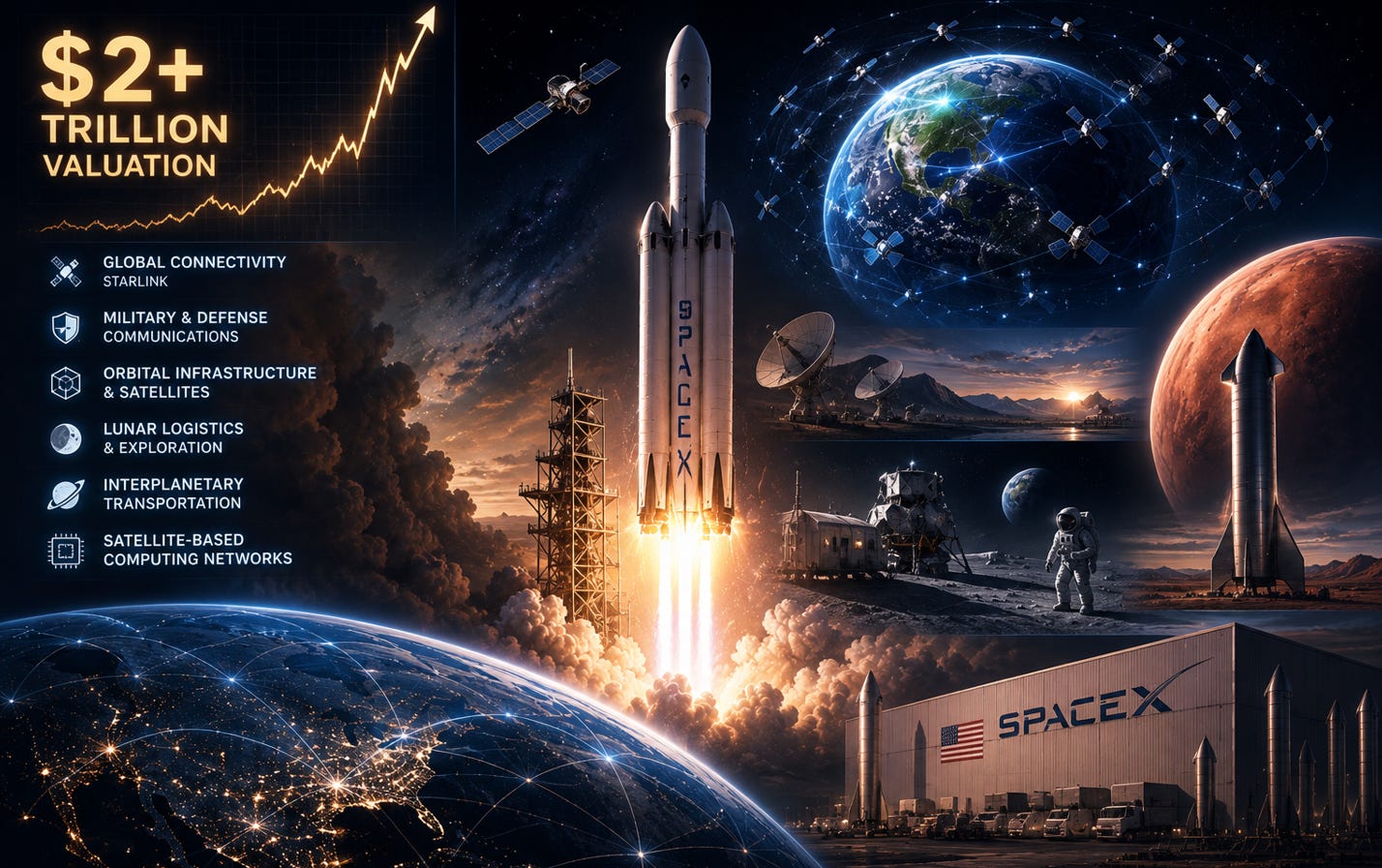
This explains why comparisons to traditional aerospace companies often fall short. Boeing and Lockheed Martin compete within existing markets. SpaceX is attempting to create entirely new ones.
Of course, such expectations carry risks. Ambitious visions do not always become reality. Competition, regulation, execution challenges, and technological setbacks remain important considerations.
Yet history shows that transformational companies often appear expensive before they become dominant.
Amazon looked expensive.
Tesla looked expensive.
Netflix looked expensive.
Investors buying SpaceX are making a similar bet—that the company’s future opportunities will ultimately justify its extraordinary valuation.
The Bigger Lesson for Investors
The story of SpaceX is about far more than rockets or even space itself.
It is a story about how value is created.
The most successful companies rarely win by competing on the same terms as everyone else. Instead, they change the rules of the game. They reduce costs dramatically, unlock new demand, and create opportunities that previously didn’t exist.
SpaceX achieved exactly that.
By making rockets reusable, it transformed access to space. By building Starlink, it created a new category of global connectivity. Through Starship, it is attempting to make large-scale space transportation economically viable.
Whether the company ultimately justifies its valuation remains uncertain.
What is certain is that it has already changed an industry forever.
The IPO may have made Elon Musk a trillionaire, but the real achievement was creating a business that forced investors to rethink the possibilities of an entire sector.
Final Thoughts
In 2008, SpaceX was fighting for survival. In 2026, it became the company that helped create the world’s first trillionaire.
That transformation wasn’t driven by financial engineering or market speculation. It was driven by innovation, execution, and a relentless focus on solving one of the biggest economic challenges in modern industry.
The market didn’t assign a $2 trillion valuation to SpaceX because it launches rockets.
It assigned that valuation because investors believe SpaceX is building the infrastructure for humanity’s next economic frontier.
Lingo of the Week
Optionality
Optionality is the value investors assign to a company’s future opportunities beyond its current business. It reflects the potential for new products, markets, technologies, or revenue streams that may emerge over time. Companies with high optionality often command premium valuations because investors believe their future possibilities could be significantly more valuable than their present-day earnings.
Pocketful isn’t just another trading platform - we’re your partners on the journey to financial freedom.
Thank you for reading!
👀 Stay tuned. Stay diversified.
Until next time,
Team Pocketful.
Follow Us: Website
Download Our App: Available on Google Play & Apple App Store