

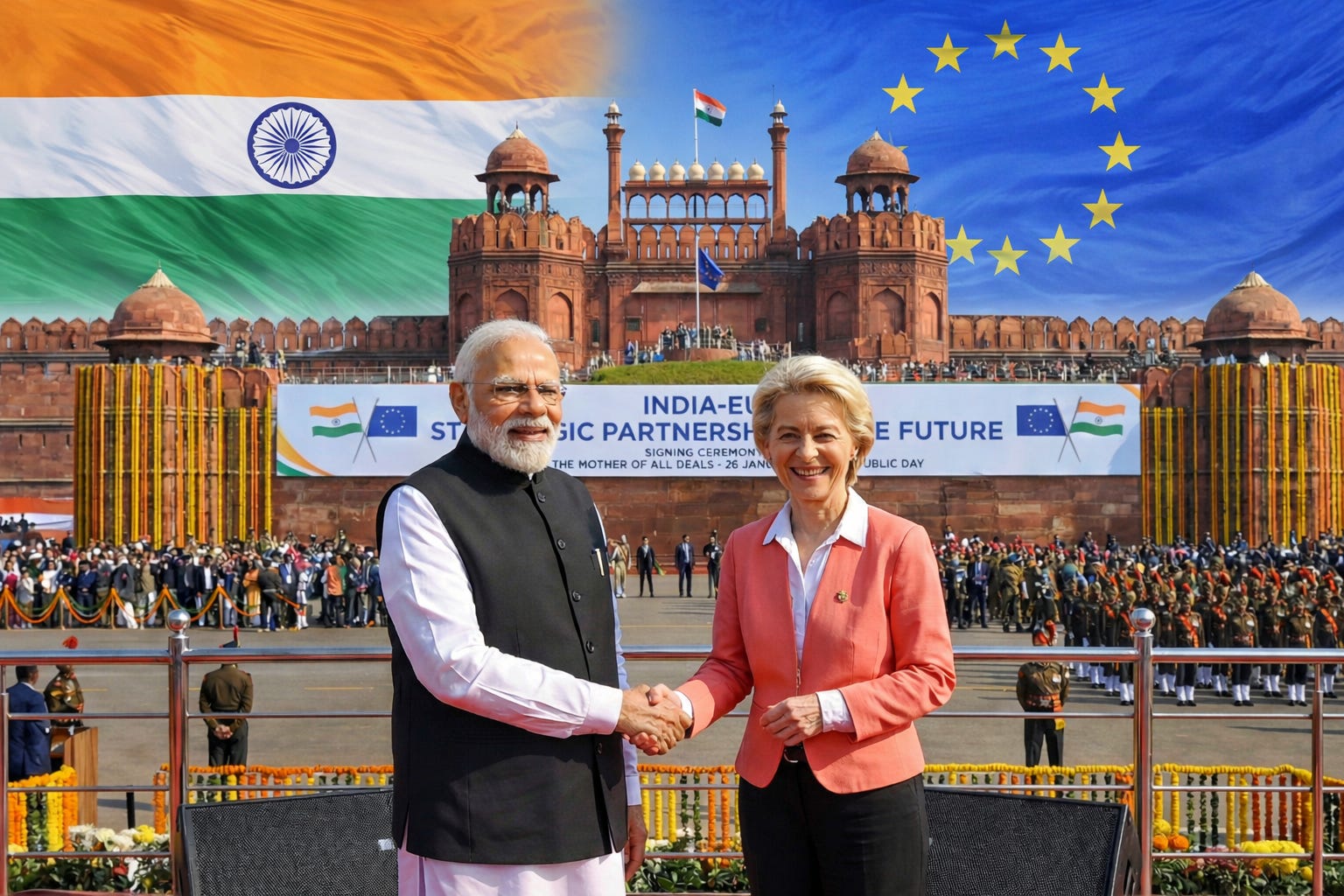
In the world of global money and big decisions, timing matters more than anything else. For almost twenty years, a trade agreement between India and the European Union felt like a distant dream. Investors saw it as something that looked good on paper but would never really happen. Files moved slowly between offices in Brussels and New Delhi. Talks dragged on. Nothing seemed urgent.
That phase has now ended.
As European leaders prepare for what could be a historic announcement around India’s Republic Day, the mood has completely changed. This is no longer being discussed as a routine trade agreement. European Commission President Ursula von der Leyen on Tuesday said the European Union is close to finalising a Free Trade Agreement (FTA) with India, describing it as what some have called the “Mother Of All Deals”.
The reason is simple. The world around them is becoming unstable. This agreement is no longer just about European cars being sold in Indian cities or Indian clothes reaching European stores. It is about protection. Two large economic powers are coming together to shield themselves from growing global risks.
The United States has become unpredictable in its trade policies. The US dollar is increasingly used as a political tool. China has turned into a difficult and risky supply chain partner. Europe feels exposed. India has been cautious for years.
Together, India and the European Union represent more than 25% of the global GDP and serve nearly two billion consumers. By working together, they create a safer space for trade investment and long term growth.
For investors, this shift is important. Money is slowly moving away from places that feel uncertain or hostile. It is flowing toward a new area that offers stability and balance. The partnership between India and Europe is becoming that new center.
This moment shows why India’s patience has paid off and why this deal could shape global investing for years to come.
The Long Wait How India Refused a Bad Deal and Won Time
To truly understand how big this deal is, we first need to understand why it failed for so many years. Talks between India and the European Union began in 2007 with the simple aim of reducing trade barriers. But by 2013, negotiations had completely broken down, with both sides walking away frustrated.
For a long time, Western financial media blamed India for this failure. India was described as stubborn and uncooperative. It was criticized for refusing to open sensitive sectors such as dairy and agriculture to European companies. This narrative made it appear as if India was blocking progress without reason.
A major point of conflict was Europe’s insistence on applying its own labor and environmental standards to India. These laws were designed for rich, developed economies with high incomes and strong social support systems. Europe expected India to adopt the same strict rules, even though India was still a low income and developing economy.
India pushed back because applying such strict laws too early could slow growth, raise costs for small businesses, and reduce job creation. From India’s perspective, these demands did not reflect fairness. They acted as hidden trade barriers that would make Indian products less competitive before the country had reached Europe’s level of development.
Looking back, what was labeled as obstruction now looks more like foresight.
Indian leaders were carefully watching how the global system was changing. Under Prime Minister Modi, India made a deliberate choice to wait. While many countries rushed into unequal trade deals just to remain in the good books of powerful Western nations, India refused to act in haste.
The logic was simple. Praise from foreign leaders fades quickly. Personal relationships change with elections. Trade agreements, however, are permanent and difficult to undo once signed.
Indian policymakers also understood early that the idea of a rules based order often favored Western interests. It was not always balanced or neutral. By walking away from bad deals in the past, India protected its strategic autonomy and economic leverage.
Today, the situation has reversed. Europe is returning to the table not to lecture India, but to work with it as an equal partner. Old bureaucratic hurdles are disappearing, replaced by political urgency. Both sides now recognize a clear reality. In today’s world, the cost of isolation is far higher than the cost of compromise.
The Economic Prize: Market Magnitude in a Post-Tariff World
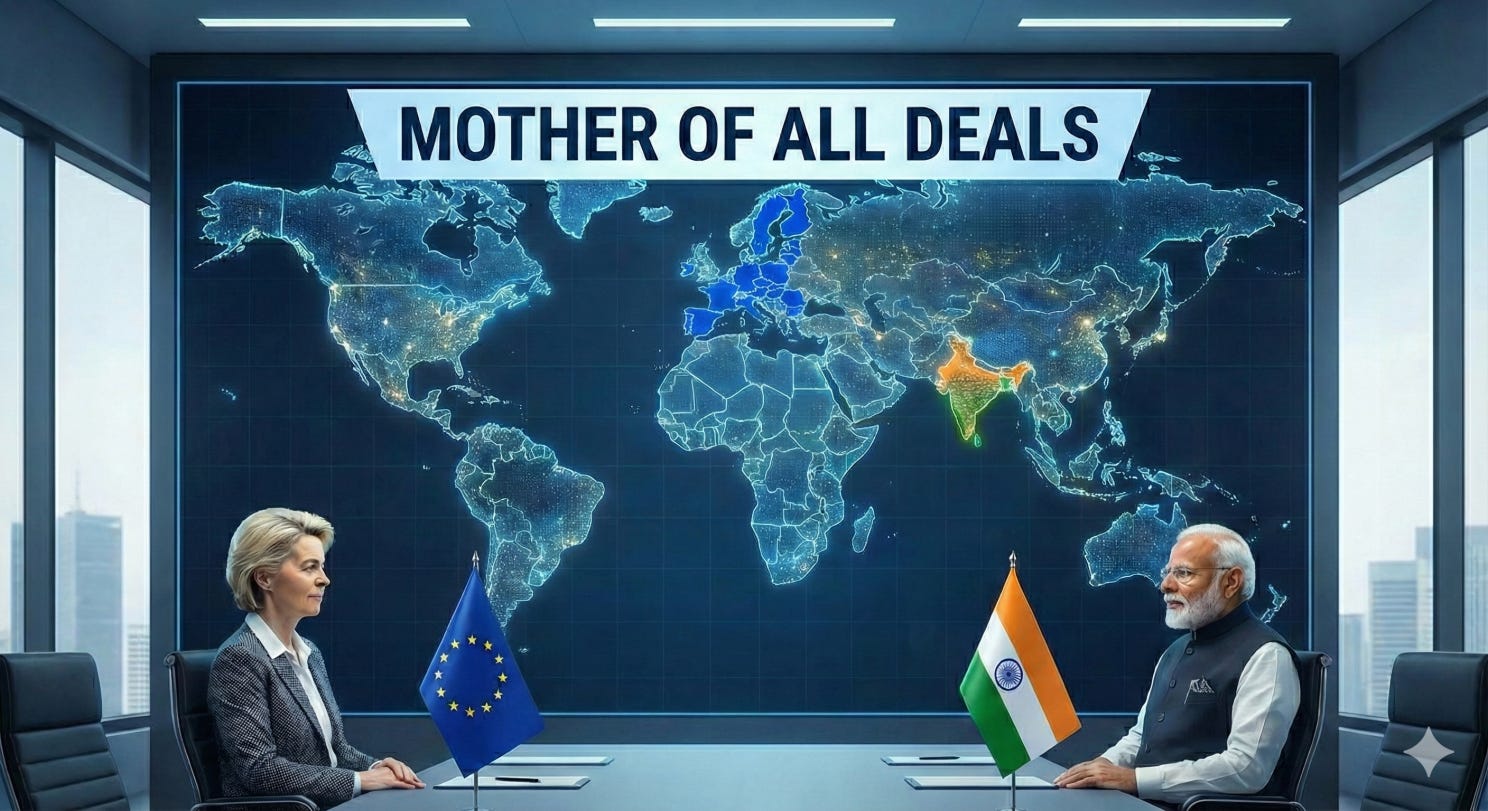
If we remove politics and focus only on money and numbers, the economic logic of this deal becomes very powerful. What is taking shape is the linking of the world’s largest unified market, the European Union, with one of the fastest growing large economies in the world, India. That combination alone has the potential to reshape global trade.
For India, the biggest gain is clear and straightforward. It is tariff free access to Europe. Today, Indian exporters compete with countries like Bangladesh and Vietnam that already enjoy special trade benefits in European markets. Many Indian products lose price competitiveness not because of quality, but because import duties make them more expensive.
A trade agreement would remove these barriers. Indian textiles, leather goods, engineering products and pharmaceuticals would be able to enter Europe without additional taxes. This is especially important at a time when the United States is openly discussing broad tariffs on imports. India needs a stable and predictable market where trade rules are not suddenly changed. Europe can provide that stability.
For the European Union, the main attraction is the Indian consumer. Many European economies are mature and slow growing. Their populations are aging, and domestic demand is limited. India offers something very different. It has a young population, rising incomes, and a fast expanding middle class.
European companies see long term opportunity in this growth. They are particularly interested in reducing India’s high import taxes on automobiles, alcohol, and industrial machinery. These sectors represent future demand that Europe cannot easily find within its own borders.
Why India Read the Future Correctly While Europe Looked Backward
One of the most interesting parts of this global shift is how differently Europe and India reacted to the rise of Donald Trump and the idea of America First. This difference in thinking explains why India now holds a stronger position in negotiations.
European leaders believed that long standing ties with the United States would protect them. They trusted shared values past alliances and NATO history to keep economic relations safe. That belief turned out to be wrong.
When the United States imposed tariffs on European steel and aluminum and later pulled European companies toward America with subsidies, Europe was taken by surprise. It had depended too much on an emotional idea of Western unity that no longer guided US policy.
India looked at the same situation very differently. Indian policymakers quickly understood that Donald Trump was not an accident. He represented a deeper change in American thinking. The United States was becoming more focused on its own interests and less concerned about old partnerships.
Indian leaders also understood that friendly gestures and public events were only for show. Big rallies and warm meetings created good images but did not guarantee fair trade deals. Praise from Washington could disappear overnight.
Because of this clear thinking, India avoided mistakes that Europe made. It did not rush to open its markets or reduce tariffs just to please another country. It stayed friendly but protected its own interests.
Now Europe is slowly reaching the same conclusion. It is realizing that the old rules based system often favored Western powers and offered limited protection. As a result, Europe is turning to the India approach. It wants clear and practical deals instead of vague promises. And it is turning to India because India understood this new reality much earlier.
The Democratic Pivot: Why India is the Only Viable Alternative to China
If the United States is becoming too unpredictable, a natural question arises. Why does Europe not simply rely more on China, especially when supply chains are already in place?
The answer lies in what many investors now call the democracy premium.
European companies and investors are under growing pressure to reduce their dependence on China. This pressure comes from regulators, political leaders, and public opinion. Relying too heavily on one authoritarian system has started to look dangerous, not efficient. Sudden policy changes in China can shut down entire industries without warning, putting billions of dollars at risk.
At the same time, Europe knows it cannot replace China with smaller countries alone. Nations like Vietnam or Bangladesh are helpful, but they are not big enough. Replacing a continent sized supplier requires another economy of similar size.
India is the only country that fits this requirement.
India offers what China does in scale. It has a huge workforce, a large domestic market, and growing industrial capacity. But it operates very differently. India is a democracy. Its decisions may be slow, but they are visible. Laws can be debated, challenged, and appealed.
Unlike China, where entire sectors can be cracked down overnight, India works through institutions and courts. This makes sudden shocks less likely and long term planning easier.
There is also a deeper shift happening. While parts of the West are reacting emotionally to losing their old advantages, India is behaving calmly and responsibly. It presents itself as a rising power that respects contracts and international systems.
For European investors, this trade deal offers something rare. It provides China-like growth opportunities without China-like political risk. It shows that Europe now prefers a slower but predictable democracy over a fast but unpredictable autocracy.
The Financial Rebellion: De-Dollarization and the “8 Trillion Dollar Risk”
While trade headlines focus on goods, the deeper shift is unfolding in global bond markets. The Mother of All Deals is not just about exports and imports. It is about moving capital early, before financial stress in the global system becomes impossible to ignore.
Bond markets are sending a clear warning. Long term US Treasury yields have risen close to five percent, signaling that investors now see higher risk in holding American government debt. Confidence in the traditional safety of US bonds is weakening.
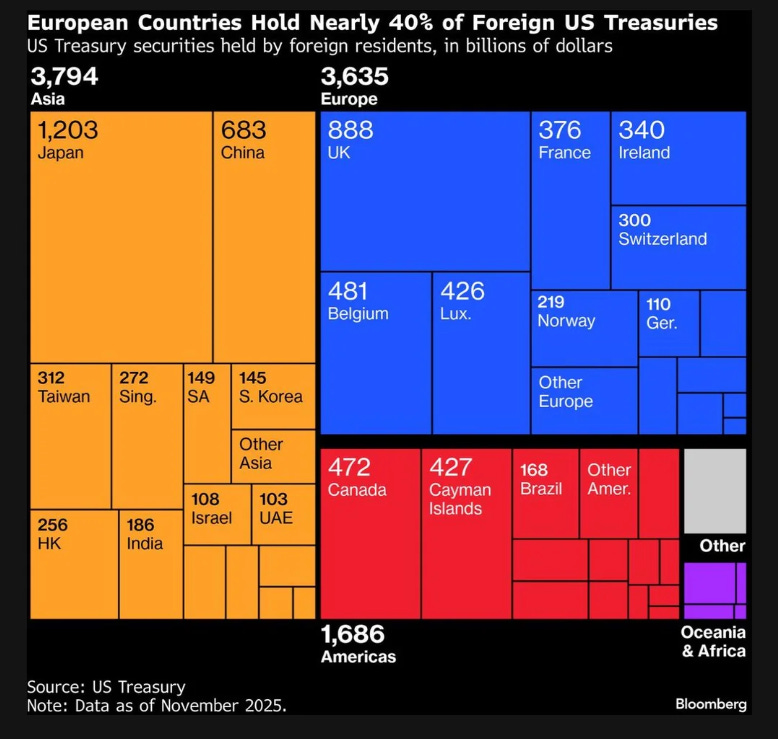
Europe is especially exposed to this shift. It holds around 8 trillion dollars in US financial assets. What was once considered the safest place to store capital is now starting to look risky over concentration.
The United States depends heavily on foreign money to fund its budget deficit, requiring roughly 800 billion dollars each year. If Europe redirects even a small part of this capital toward India, US borrowing costs could rise sharply. This gives Europe quiet leverage, even without taking dramatic action.
In a world where finance is increasingly used as a strategic tool, heavy exposure to one currency becomes a weakness as much as a strength. Institutional investors are already reacting, with some European pension funds exiting US Treasuries due to rising debt and political uncertainty.
Japan adds further pressure. Long term Japanese bond yields have reached levels not seen in decades. This encourages Japanese investors to keep money at home rather than buying US debt, reducing demand for American bonds.
As the United States needs more funding, its most reliable buyers are slowly stepping back. Europe sees this shift clearly and is searching for safer long term alternatives.
The India Europe partnership offers such an option. It provides a place to redirect capital into a growing and stable economy. This deal is not only about trade. It is a hedge against growing instability at the heart of the global financial system.
Geopolitics of Respect: The “TACO” Moment and the Greenland Pivot
Europe is moving quickly to finalize a trade deal with India because its relationship with the United States has become unpredictable. Trade decisions in Washington increasingly depend on personal bargaining and sudden shifts. For Europe, this makes long term economic planning difficult, as tariff threats can appear and disappear without warning, creating uncertainty for businesses and investors.
This uncertainty was clear during a recent market rally. The S&P 500 rose by 1.2 percent after President Trump withdrew tariff threats against Denmark and seven other European countries. Analysts called it a TACO moment, meaning Trump Again Chickens Out. The rally reflected short term relief, not renewed trust.
The deeper issue was diplomatic damage. Trump justified the withdrawal by mentioning a loose future framework involving Arctic security. NATO Secretary General Mark Rutte later clarified that Greenland sovereignty was never discussed. Still, the episode showed that the US was willing to threaten tariffs of 10%-25% on close NATO allies over a Greenland related dispute.
Greenland is becoming more valuable as ice melts due to global warming. It holds rich natural resources and offers control over Arctic sea routes, which could become shorter global trade paths. Strategically, the Arctic also helps the US monitor Russia and China. While these goals may be logical for Washington, using tariff threats against allies shocked Europe.
A close ally had been treated as leverage in a real estate style negotiation. Public statements reinforced the feeling that Europe was viewed less as a partner and more as a target for pressure whenever interests diverged.
On Tuesday, a Danish pension fund AkademikerPension Plans exited a 100 million dollar investment in US Treasuries, a small amount globally but a powerful signal. It suggested that under the America First approach, allies could be treated as financial leverage rather than partners.
This volatility has made the India Europe trade agreement urgent. Europe cannot build its future on a partner whose trade policies change overnight. India offers predictability and respect. It does not demand sovereignty concessions or use threats. For Europe, India now stands out as the stable and equal long term partner.
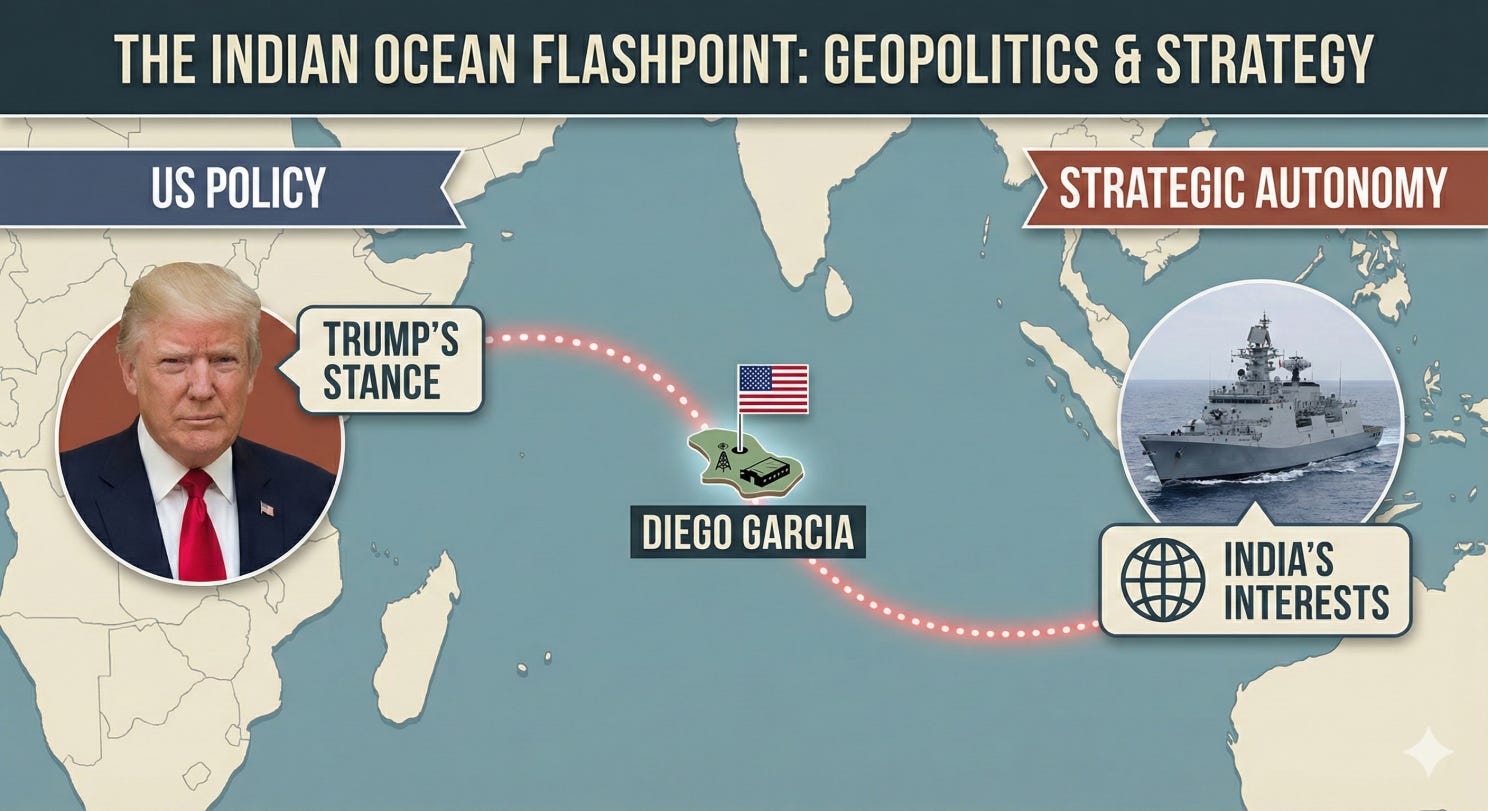
The Indian Ocean Flashpoint: Diego Garcia, Trump, and Strategic Autonomy
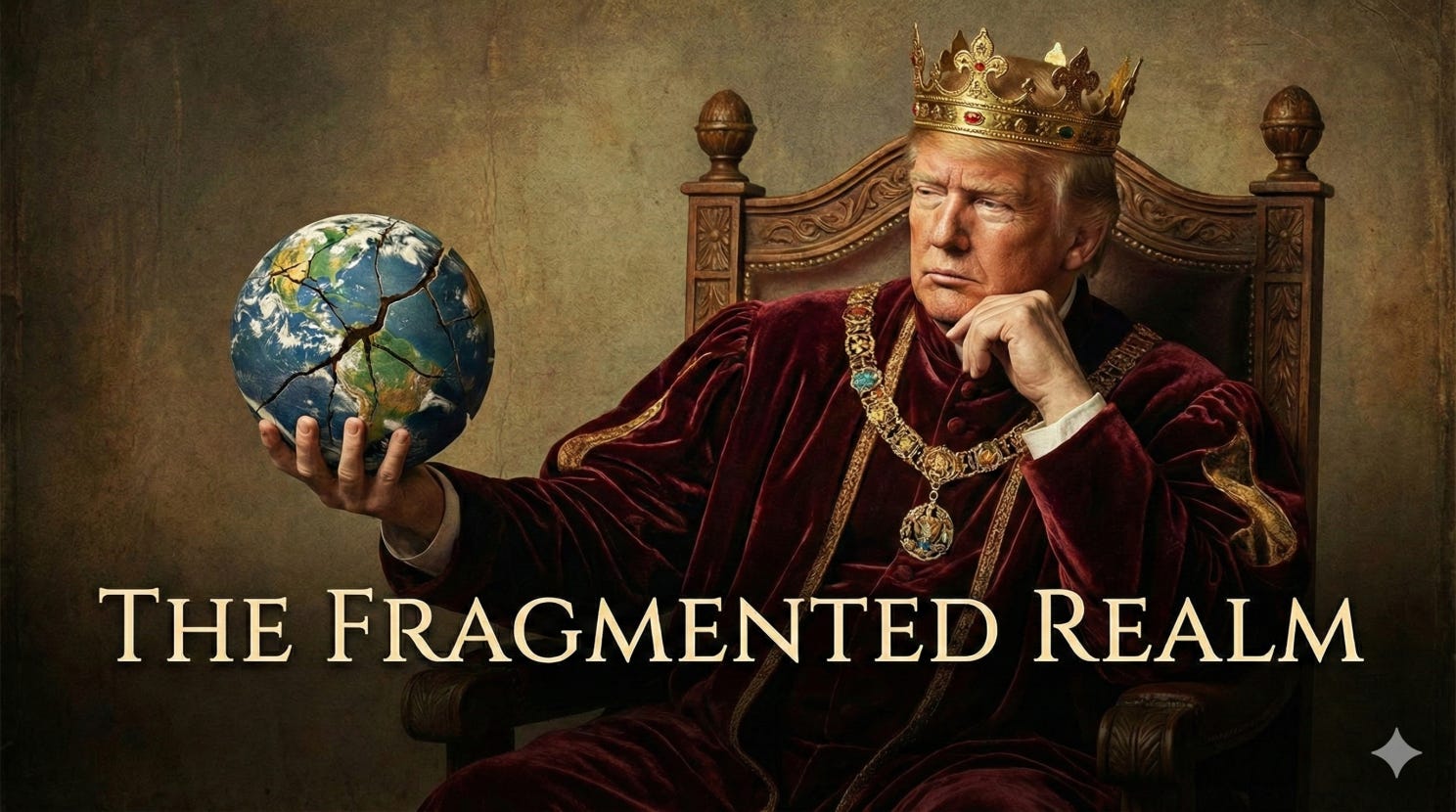
The growing tension between Europe and the United States is no longer limited to the Arctic or Greenland. It is now extending into the Indian Ocean. This widening focus is forcing Europe to confront a difficult reality. US strategic pressure is global in nature, and it often prioritizes military dominance over diplomacy or international agreements.
This shift is clearly visible in the dispute over the Chagos Islands, which host the Diego Garcia military base. The United Kingdom recently agreed to return sovereignty of the islands to Mauritius while leasing back the base for security use. The deal was supported by the United Nations and the International Court of Justice and was widely seen as a victory for international law.
The White House reaction changed the tone dramatically. Donald Trump openly criticized the agreement, calling it weakness and warning that it could allow China to expand its influence in the Indian Ocean. This response revealed a deeper mindset. Washington was less concerned with legal resolution or regional stability and more focused on maintaining absolute military control.
The pattern is important. Greenland represented US interest in Arctic control as ice melts and new routes open. Diego Garcia represents control of the Indian Ocean, one of the world’s most critical trade corridors. In both cases, the US showed a willingness to pressure allies and undermine agreements to secure strategic chokepoints.
India stands at the center of this tension. It remembers 1971, when the US used Diego Garcia to pressure India during the war with Pakistan. That experience shaped India’s insistence on strategic autonomy.
Today, India supports the return of sovereignty to Mauritius and prefers regional stability led by trusted partners. It does not seek dominance but balance.
For Europe, this contrast is striking. As the US extends military pressure from the Arctic to the Indian Ocean, India appears as a steadier and more reliable partner. This strengthens the EU’s belief that securing future trade routes requires deeper partnership with India rather than dependence on an increasingly aggressive United States.
Navigating the “Fine Print”: Carbon Taxes, Visas, and Standards
The success of the India-EU “Mother of All Deals” relies less on geopolitical headlines and more on resolving complex “fine print” details. As negotiators near a potential announcement around January 26, 2026, the agreement’s durability hinges on three sensitive friction points: carbon taxes, visas, and investment protections.
A major hurdle is the EU’s Carbon Border Adjustment Mechanism (CBAM), which India argues unfairly penalizes its developing industries. A likely compromise involves India accepting greener standards in exchange for European technology transfer to modernize its energy and manufacturing sectors.
Labor mobility remains equally critical. India is aggressively seeking easier visa access for its IT and service professionals. While Europe is politically cautious regarding migration, its aging population creates a genuine need for skilled Indian workers, incentivizing a deal.
Investment safeguards are also being overhauled, with the EU demanding a dedicated court system to protect its companies in India. The final pact is expected to be strategic but asymmetric: India may lower tariffs on European luxury cars in return for “data adequacy” status, granting Indian IT firms seamless access to European markets.
Ultimately, this deal serves as a geopolitical shield. By prioritizing predictability over pressure, India and the EU are locking in a stable partnership designed to weather an increasingly uncertain global trade environment.
Conclusion: A New Axis of Power
The India EU Free Trade Agreement is being called the Mother of All Deals not because it is complicated, but because of what it signals. It marks the birth of a new axis of power in the global economy.
For nearly twenty years, the world followed a simple structure. The West led by the United States consumed and financed growth, while China acted as the global factory. That structure is now breaking. The United States has turned inward, using trade and its currency as tools of pressure. China has also turned inward, struggling with slowing growth, deflation, and an aging population.
Out of this fracture, the India EU corridor is emerging. This partnership is not based on ideology or sentiment. It is built on necessity. Both sides understand that real strategic autonomy is impossible without diversified trade, capital, and supply chains.
For investors, the message is straightforward. The announcement expected around India Republic Day could lead to a fresh re rating of Indian manufacturing companies and European capital goods firms. This deal changes long term growth assumptions.
Capital flows matter even more. As European pension funds and insurers slowly reduce exposure to the trillions locked in US assets, that money must find a new home. A meaningful share of it is likely to move toward India markets, especially platforms like
The old order is fading. The Mother of All Deals is not just a trade agreement. It is the blueprint for what comes next.
Lingo of the Week - Democracy Premium
Democracy Premium - It is the extra value investors place on countries where power is limited by institutions, laws, and courts rather than individuals. Policy changes happen slowly and transparently, reducing the risk of sudden shocks like bans or capital controls. This predictability protects long-term investments. In a volatile global environment, investors increasingly prefer stable democracies, even if short-term returns are lower, because durability and rule of law safeguard capital over time.
Pocketful isn’t just another trading platform - we’re your partners on the journey to financial freedom.
Thank you for reading!
👀 Stay tuned. Stay diversified.
Until next time,
Team Pocketful.
Follow Us: Website
Download Our App: Available on Google Play & Apple App Store