

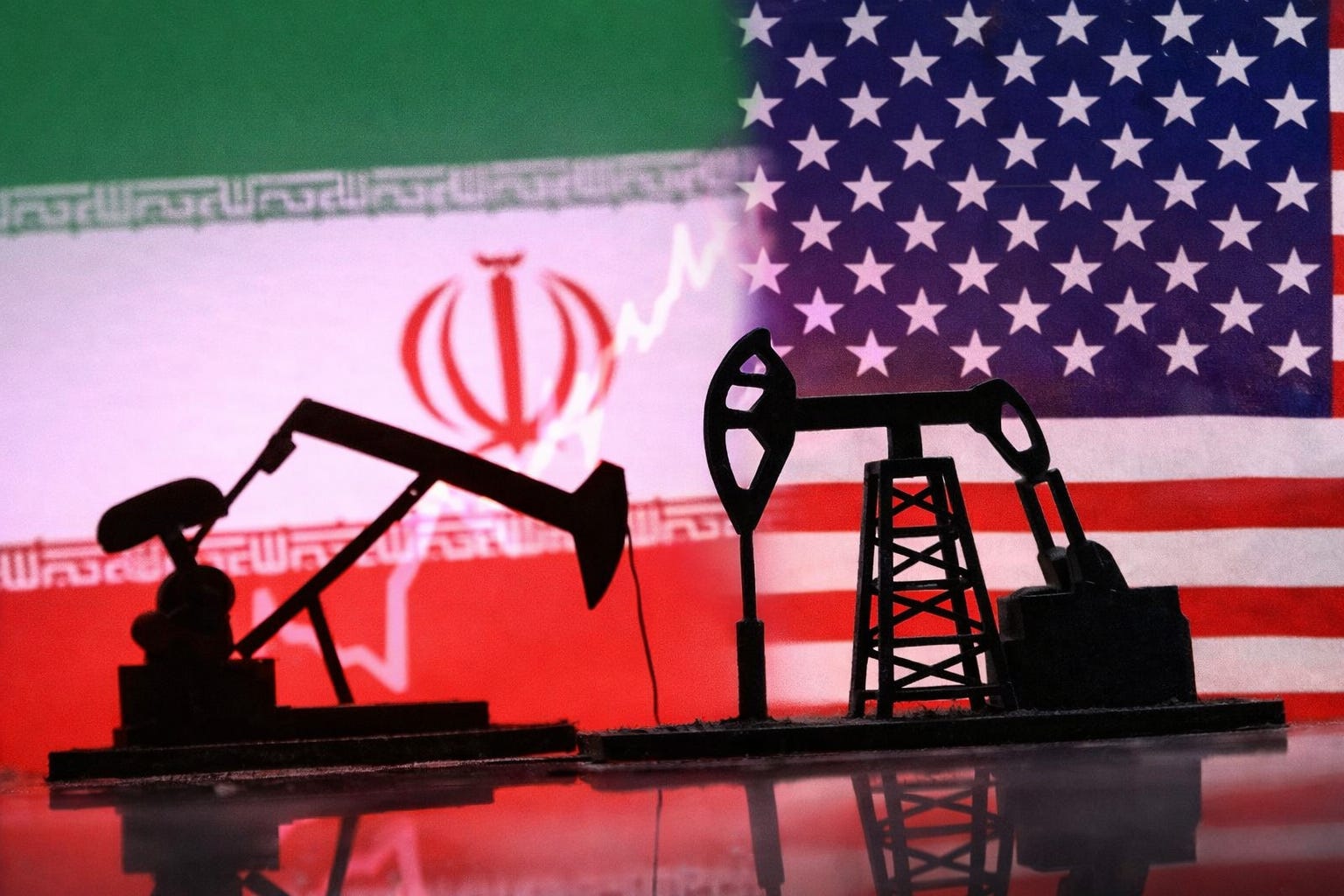
There are moments in financial markets when sudden volatility has little to do with corporate earnings, economic data releases, or central bank decisions. Instead, the trigger comes from developments far outside the financial world. An investor may open their portfolio one morning to see global stock markets falling, oil prices surging sharply, airline stocks declining, and currencies weakening against the US dollar. The immediate question becomes: what changed overnight?
Often, the answer lies thousands of kilometers away in geopolitics.
Geopolitical tensions have always been one of the most powerful forces shaping financial markets. When conflicts emerge in strategically important regions, investors begin reassessing risk almost instantly. Markets react not only to current events but also to the potential consequences those events may bring.
The latest tensions involving the United States, Israel, and Iran are a clear reminder of how geopolitical developments can ripple across the global economy. Although the conflict is geographically centered in the Middle East, its financial impact extends far beyond the region. Oil markets respond quickly, shipping routes face uncertainty, currencies fluctuate sharply, and investors become more cautious toward risk assets such as equities. To truly understand the market reaction, it is important to look beyond headlines and examine the transmission channels through which geopolitical shocks affect the global economy. These channels typically include energy prices, trade routes, currency movements, supply chains, and investor sentiment.
Why Geopolitical Conflicts Move Financial Markets
Financial markets are deeply interconnected with global politics and trade. While economic indicators and corporate performance usually drive market trends, geopolitical developments can trigger sudden shifts in investor behavior. Whenever military tensions rise, investors begin asking a simple but important question: could this conflict disrupt economic stability?
Conflicts create uncertainty across several critical parts of the global economy.
These include: Energy supply, Global trade routes, Inflation expectations, Economic growth projections & Currency stability; Even when the economic damage is not immediate, uncertainty itself can trigger strong reactions in financial markets. Investors dislike uncertainty more than almost anything else. When the future becomes difficult to predict, markets tend to price in higher risk premiums. This often leads to a temporary shift away from risky assets toward safer investments.
Historically, geopolitical conflicts have pushed investors away from equities and into assets perceived as safe havens. These typically include gold, government bonds, and the US dollar. During periods of heightened geopolitical stress, gold often rises because investors view it as a store of value that is independent of political or economic systems. Government bonds from stable economies also attract capital because they are considered relatively secure. The current tensions involving Iran are particularly sensitive due to geography. The Middle East remains one of the most critical energy-producing regions in the world. Several of the world’s most important oil shipping routes pass through the region.
Because of this, even the possibility of disruption can influence global markets.

Oil Prices: The First Market to React
Whenever geopolitical tensions rise in the Middle East, crude oil markets are usually the first to react. Energy traders closely monitor developments in the region because a large portion of global oil production and transportation flows through nearby waters. Any threat to these supply routes can immediately affect global energy prices.
Iran sits close to the Strait of Hormuz, one of the most strategically important energy corridors in the world. This narrow waterway connects the Persian Gulf to the Arabian Sea and serves as a key route for oil exports from several major producers.
Nearly 20 percent of global oil shipments pass through the Strait of Hormuz.
Because of this immense strategic importance, even a small risk of disruption in the region can cause oil prices to move sharply higher.
In the latest escalation of tensions, Brent crude prices surged nearly 14 percent, rising above 84 dollars per barrel as traders began pricing in geopolitical risk.
Importantly, oil markets often react to potential disruptions, not just actual ones. Even if oil supply remains stable, the mere possibility that shipments could be delayed or blocked can push prices higher.
Oil prices matter because energy costs influence almost every sector of the global economy.
When crude prices rise:
• Transportation becomes more expensive • Manufacturing costs increase • Inflationary pressures build • Corporate profit margins shrink
Industries that rely heavily on fuel are usually the first to feel the impact. Airlines, logistics companies, chemical manufacturers, and shipping firms tend to experience immediate cost pressures when oil prices spike. Higher oil prices can also slow economic growth by reducing consumer spending power and increasing business costs.
Global Equity Markets React to Rising Risk
As oil prices surged and geopolitical tensions intensified, global equity markets began reacting quickly. Investors across the world started reassessing the broader economic impact of rising energy prices and potential disruptions to global trade.
Major indices in the United States experienced selling pressure as investors reduced exposure to risk assets.
The S&P 500 and the Dow Jones Industrial Average both faced declines as traders shifted toward safer investments amid geopolitical uncertainty.
European markets also showed signs of caution. Benchmark indices such as the FTSE 100 in the United Kingdom and Germany’s DAX weakened as investors monitored developments in the Middle East closely.
Asian markets were particularly sensitive to rising oil prices because many economies in the region rely heavily on imported energy.
In South Korea, the KOSPI index experienced volatility as technology giants such as Samsung Electronics and SK Hynix faced selling pressure from global investors.
Japan’s Nikkei 225 also moved lower as investors trimmed their exposure to equities and shifted toward defensive assets.
These reactions are typical during geopolitical shocks. When uncertainty rises, investors often reduce exposure to stocks and increase allocations to safer assets such as government bonds or gold.
This capital reallocation can create short-term volatility across global markets.
Why India Is Particularly Exposed
For India, tensions in the Middle East carry significant economic implications. India is one of the world’s largest energy consumers, but the country relies heavily on imported crude oil to meet its energy needs.
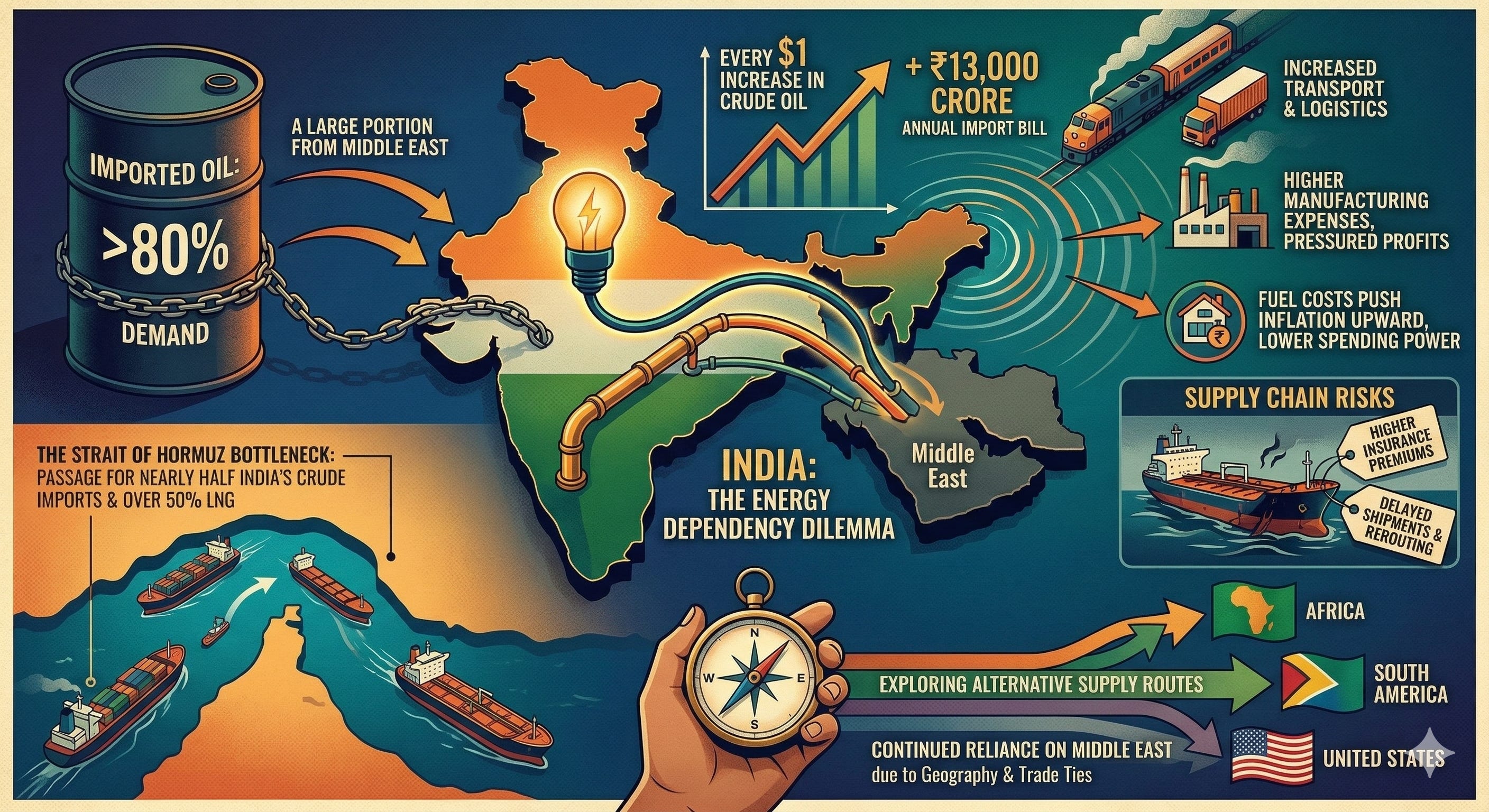
More than 80 percent of India’s crude oil demand is met through imports, with a large portion coming from Middle Eastern producers. Additionally, nearly half of India’s crude imports and more than 50 percent of its liquefied natural gas shipments pass through the Strait of Hormuz.
This means that any disruption in the region could directly affect India’s energy supply and economic stability. Even small changes in crude oil prices can significantly impact India’s economy. Economists estimate that every one-dollar increase in crude oil prices raises India’s annual import bill by roughly ₹13,000 crore. Higher oil prices can create several ripple effects across the economy.
Transportation and logistics costs increase, manufacturing expenses rise, and companies may face pressure on their profit margins. At the same time, higher fuel costs can push inflation upward, affecting household spending power. The situation is further complicated by supply chain concerns. Tankers traveling through the region often face higher insurance premiums during periods of geopolitical tension. Shipping companies may also reroute vessels or delay shipments, increasing delivery times and transportation costs.
To reduce these risks, Indian refiners have already begun exploring alternative supply routes from regions such as Africa, South America, and the United States. However, replacing Middle Eastern oil entirely is not easy because of geographic proximity and established trade relationships.
Impact on the Indian Stock Market
Indian financial markets reacted quickly to the surge in oil prices and rising geopolitical uncertainty. Benchmark indices ended the week lower as investor sentiment weakened. The Sensex fell 1.37 percent, closing at 78,918.90, while the Nifty 50 declined 1.27 percent to settle at 24,450.45.
Several factors contributed to the decline.
Higher crude prices raised concerns about inflation and corporate costs. At the same time, foreign investors began reducing exposure to emerging markets, leading to capital outflows. Currency markets also reflected the shift toward safety. The Indian rupee weakened sharply, falling 42 paise to 91.50 against the US dollar as investors moved funds toward safer currencies. Despite weakness in benchmark indices, broader markets displayed relatively better resilience.
The Nifty Midcap 100 declined by around 0.6 percent, while the Nifty Small cap 100 slipped only 0.1 percent during the week. However, the market correction still resulted in a significant loss of investor wealth. Nearly ₹3 lakh crore in market capitalization was wiped out in a single trading session, highlighting how quickly geopolitical shocks can affect financial markets.
Certain sectors tend to be more sensitive to rising oil prices.
Sectors that may face pressure: Airlines • Paint companies • Chemical manufacturers • Logistics firms
These industries rely heavily on fuel or oil-derived inputs, making them vulnerable to rising energy costs. On the other hand, some sectors can benefit from higher crude prices.
Sectors that may gain: Oil exploration companies • Upstream energy producers • Oilfield services firms For example, companies involved in oil exploration and production often see improved profitability when crude prices rise.
Inflation Risks and the Road Ahead
Despite the recent surge in crude oil prices, India’s inflation outlook remains relatively stable for now. Retail inflation stood at 2.75 percent in January, which is significantly below the Reserve Bank of India’s medium-term target of 4 percent.
This gives policymakers some room to absorb external shocks. Economists estimate that a 10 percent increase in crude oil prices could raise inflation by around 40 to 60 basis points if the entire cost is passed on to consumers. However, India currently has several buffers that may help limit the immediate impact.
Strategic petroleum reserves provide roughly 70 to 75 days of oil supply, offering temporary protection against potential supply disruptions. In addition, oil marketing companies sometimes absorb short-term cost increases rather than immediately passing them on to consumers.
The government also has flexibility through fuel tax adjustments. A significant portion of petrol and diesel prices in India consists of taxes, which means authorities can reduce tax rates temporarily if crude prices rise sharply. Even if higher crude prices are fully passed through to consumers, analysts estimate that petrol prices may increase by only ₹3 to ₹4 per litre in the short term. This suggests that inflation pressures could remain relatively contained unless oil prices rise dramatically or remain elevated for an extended period.
What Investors Should Watch
For investors, geopolitical events introduce a layer of uncertainty that is difficult to predict.
However, there are several key indicators that market participants will closely monitor in the coming weeks. The most important factor will be oil prices. If crude prices continue rising sharply, the impact on global inflation and economic growth could intensify. Another critical factor will be developments around the Strait of Hormuz. Any disruption to shipping routes could cause further volatility in global energy markets. Investors will also track movements in the US dollar, global bond yields, and capital flows between emerging markets and developed economies. If tensions ease, markets could stabilise relatively quickly, as geopolitical risk premiums tend to fade once uncertainty declines. However, if the conflict escalates or persists for a prolonged period, global and Indian markets may continue experiencing elevated volatility. For long-term investors, geopolitical shocks often create temporary turbulence rather than permanent economic damage. Markets historically recover once tensions stabilise and economic fundamentals regain focus. But in the short term, events far from financial centres can still send powerful waves through global markets.
Lingo Corner: Safe Haven Assets
Safe haven assets are investments that tend to retain or increase their value during periods of market uncertainty or economic instability. When geopolitical tensions, inflation fears, or market volatility rise, investors often shift their money from riskier assets like stocks to safer options such as gold, government bonds, or the US dollar to protect their capital.
Pocketful isn’t just another trading platform - we’re your partners on the journey to financial freedom.
Thank you for reading!
👀 Stay tuned. Stay diversified.
Until next time,
Team Pocketful.
Follow Us: Website
Download Our App: Available on Google Play & Apple App Store