

The Union Budget 2026 comes at a turning point for India’s economy. In earlier years, budgets were often about managing crises such as slow growth, high inflation, or rising fiscal stress. This time, the situation is different. The economy is relatively stable, growth is steady, and government finances are improving. Because of this, expectations from the Budget are higher and more nuanced, especially from investors.
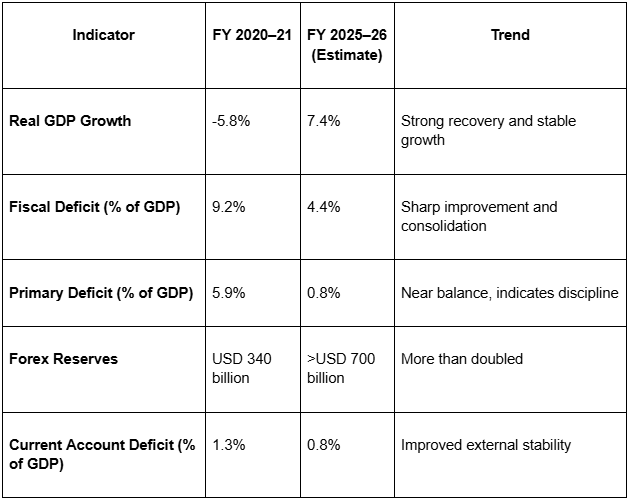
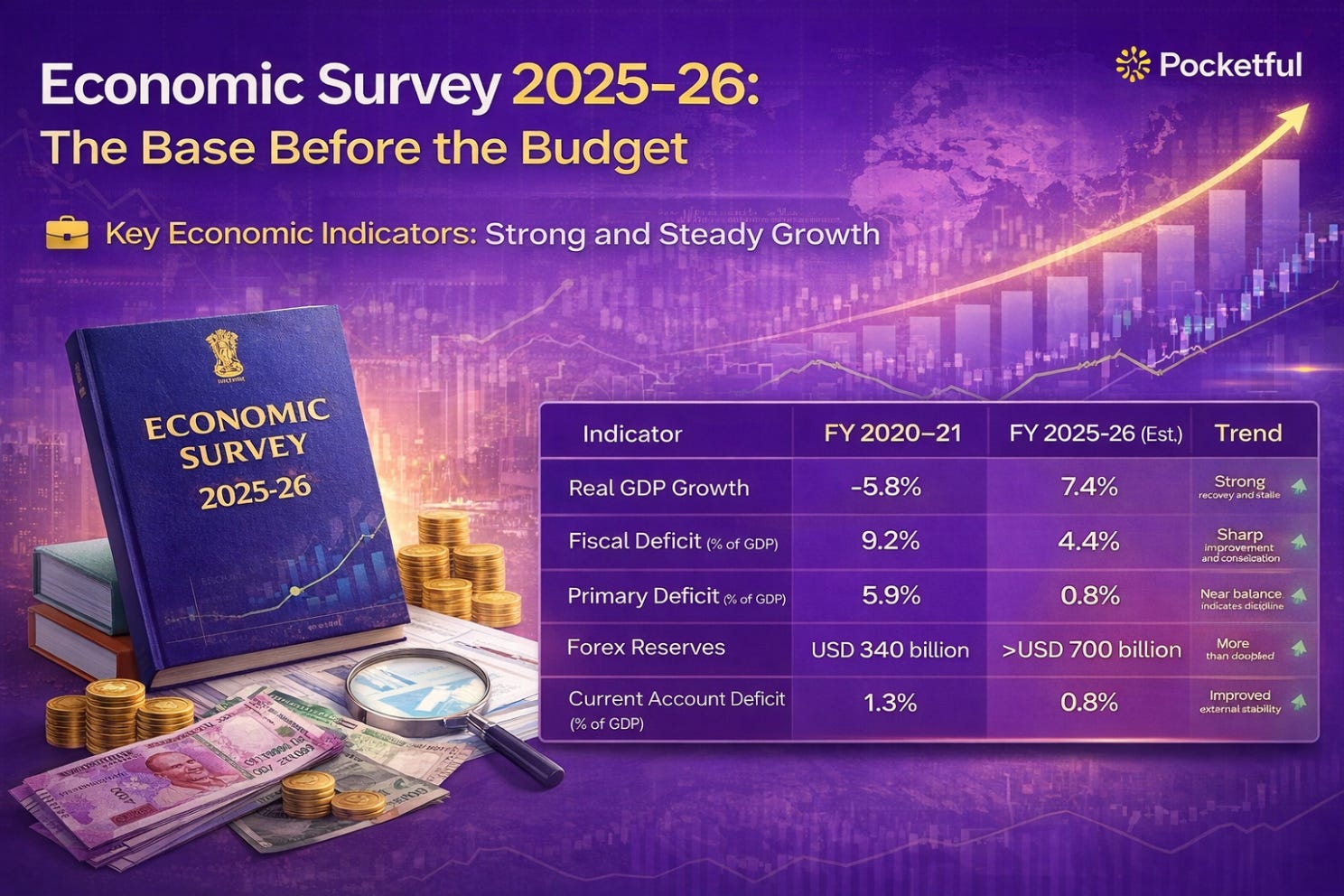
The Economic Survey 2025 26 has already set a positive tone. India’s real GDP growth for FY 2026 is estimated at around 7.4 percent, which is stronger than earlier projections. Inflation has cooled sharply, touching near historic lows. The fiscal deficit is expected to decline to about 4.4 percent of GDP, showing continued discipline in government spending. This combination of growth and control is uncommon and gives policymakers more flexibility.
However, investors are not relaxed. Tax collections have not grown as strongly as expected, which suggests that nominal growth may be softer beneath the surface. Global risks such as trade tensions, geopolitical uncertainty, and currency volatility continue to affect exports and capital flows. Even positive developments like the India EU Free Trade Agreement will benefit only those sectors that are operationally ready.
For investors, Budget 2026 is less about short term giveaways and more about long term direction. Markets will focus on policy clarity, stability in tax rules, sector priorities, and the seriousness of structural reforms. Credibility, not announcements, will shape investor confidence.
Economic Survey 2025-26: The Base Before the Budget
Before trying to understand what the Union Budget may announce, it is essential to first look at the overall health of the economy. The Economic Survey serves this purpose. It acts as a report card that reviews how the economy has performed over the past year and highlights the trends that will shape future policy decisions.
Despite a challenging global environment marked by trade tensions, geopolitical conflicts, and economic uncertainty in many regions, India’s economy has continued to grow at a steady pace. According to the Economic Survey, real GDP growth for FY 2025 26 is estimated at around 7.4 percent. For FY 2026 27, growth is expected to remain strong in the range of 6.8 to 7.2 percent. These numbers place India among the fastest growing large economies in the world.
For investors, the quality of growth matters as much as the number itself. The Survey points out that growth is largely driven by private consumption and private investment rather than excessive government spending. This means households are spending more, companies are expanding capacity, and businesses are confident about future demand. Such demand led growth is generally more stable and sustainable over the long term.
Another important takeaway from the Survey is the improvement in fiscal discipline. During the pandemic, government spending increased sharply to support the economy, pushing the fiscal deficit to about 9.2 percent of GDP. Over the past few years, the government has steadily reduced this gap.
The fiscal deficit is now close to 4.4 percent of GDP, while the primary deficit has fallen to around 0.8 percent. Lower borrowing reduces pressure on interest rates and allows banks to lend more freely to companies and individual borrowers.
Revenue stability has also strengthened. The share of direct taxes such as income tax in total government revenue has increased from about 52 percent before the pandemic to nearly 59 percent now. At the same time, the number of people filing income tax returns has risen from 6.9 crore to over 9.2 crore.
This widening tax base provides the government with steady income without raising tax rates. In addition, GST collections remain stable at around 2 lakh crore per month, giving policymakers confidence to focus on simplification rather than frequent tax changes.
Income Tax Expectations: Relief for the Middle Class
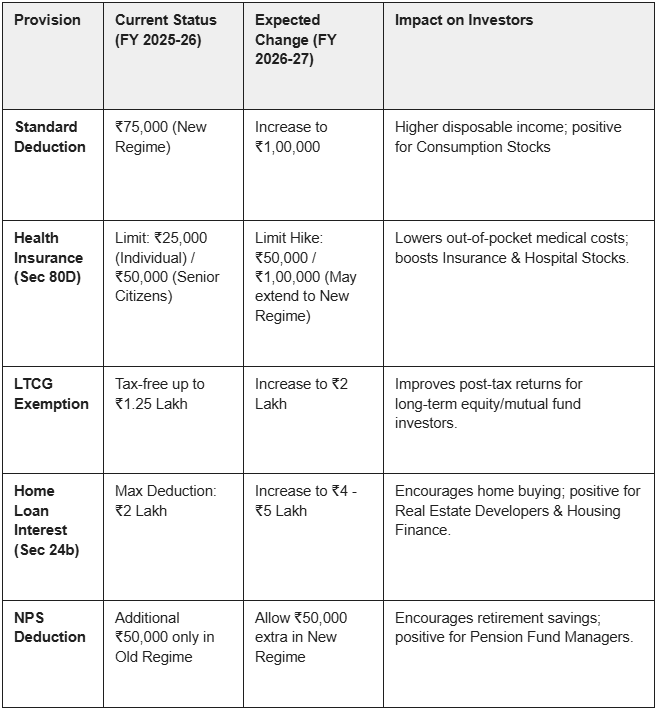
The Union Budget 2026 is expected to provide meaningful relief to salaried taxpayers by increasing the standard deduction to around INR 1 lakh. At present, the deduction is INR 50,000 under the old tax regime and INR 75,000 under the new tax regime. With inflation raising the cost of housing, food, and healthcare, these limits are increasingly seen as insufficient.
A higher standard deduction would directly increase take home income without adding complexity, as it does not require any documentation. Higher disposable income can also support consumer spending and boost demand driven sectors.
At the same time, the Budget is expected to bring clarity on the future of the old and new tax regimes. Over 72 percent of taxpayers have already opted for the new regime, showing a preference for simplicity over multiple deductions. Instead of introducing new tax slabs, the government may focus on stability and fewer changes. There is discussion around allowing limited deductions in the new regime, such as health insurance, NPS contributions, and home loan interest, to make it more balanced. For senior citizens, separate slabs or targeted rebates are also being considered. Clear policy direction will help households plan savings and investments with confidence.
There is growing demand for enhanced deductions under Section 80D as health insurance premiums continue to rise, particularly for senior citizens who face higher medical costs. Many taxpayers also seek clearer incentives and better alignment within the new tax regime so that shifting to it feels beneficial without losing essential protections or adding uncertainty to long term financial planning.
India’s ageing population is creating new financial challenges for retirees. The Budget may increase the interest income exemption for senior citizens from 50,000 rupees to 1 lakh rupees to offset inflation. Special tax slabs or rebates are also being discussed to protect pension income. Stronger incentives for NPS under the new tax regime could improve retirement savings. Recognizing assisted living and home care as healthcare expenses may further ease the financial burden on families.
Real Estate and Housing Finance
The real estate and housing finance sector is moving away from speculation towards stability and sustainable growth. One major expectation in Budget 2026 is an increase in the affordable housing price limit in metro cities from 45 lakh rupees to around 65 lakh rupees, reflecting current market realities. There is also demand to raise home loan interest deduction limits to ease EMI pressure for homebuyers.
Industry bodies have suggested widening the definition of affordable housing by increasing the interest subvention eligibility cap from 25 lakh rupees to 35 lakh rupees and introducing multiple price and size brackets to account for differences across cities. Including REITs under Section 80C is also being discussed, which would allow small investors to participate in real estate without purchasing property directly. Incentives for green and energy efficient buildings may further support sustainable urban development and improved liveability.
Infrastructure and Capital Expenditure
Infrastructure spending is expected to remain the backbone of India’s growth strategy in Budget 2026, with total capital expenditure likely to cross 12 lakh crore rupees. Roads and highways may receive around 2.8 to 2.9 lakh crore rupees, with a stronger focus on faster project completion rather than just new announcements. The emphasis is expected to shift towards quality execution, modern construction technologies, mechanisation, and structured training linked to highway projects.
There is also growing attention on long term maintenance to avoid the build and neglect cycle. Higher spending on operations and maintenance, including performance based contracts, may gradually increase the share of lifecycle costs.
Procurement reforms could move away from lowest cost bidding towards performance and value based outcomes. In parallel, the government may encourage new financing tools such as guarantees, insurance, and infrastructure bonds to attract long term domestic and global capital. Railways, metros, and port projects are also expected to see sustained support.
MSMEs and Small Business Support
MSMEs play a critical role in job creation and consumption, and Budget 2026 is expected to address long standing challenges faced by small businesses. Key expectations include expansion of CGTMSE credit guarantees to reduce collateral requirements, simpler quarterly GST filing for micro enterprises, and strict enforcement of the 45 day payment rule to improve cash flows. AI based customs clearance for small value shipments may help exporters, while simpler labour compliance and predictable inspections can reduce operational uncertainty.
Founders and startups are watching for deeper structural reforms rather than headline announcements. Although MSME credit outstanding has crossed 25 lakh crore rupees, access remains uneven, especially in rural and semi urban areas. With NBFCs dominating last mile lending, startups are seeking steadier and cheaper capital through structured refinance mechanisms and stronger priority sector support to enable long term scale.
Manufacturing and Make in India 2.0
India’s manufacturing push is entering a new phase often referred to as Make in India 2.0. The focus is no longer only on attracting factories, but on ensuring that manufacturing is efficient, technology driven, and globally competitive. The government’s approach is shifting from expansion at any cost to productivity and quality led growth.
A key change is the move from blanket subsidies to milestone based incentives. Under this model, companies will receive financial support or tax benefits only after meeting clearly defined production or efficiency targets. This ensures that public funds are directed toward businesses that actually deliver results, rather than those that only commit on paper.
The Budget is also expected to support the adoption of advanced technologies such as artificial intelligence, automation, and digital manufacturing tools. These technologies help reduce waste, improve quality, and raise productivity, allowing Indian manufacturers to compete with global players.
To help smaller factories keep pace, a National MSME Competitiveness Platform is being discussed. This system would assess how technology ready a business is and offer targeted support for upgrades instead of generic incentives. Alongside this, continued investment in logistics and supply chains aims to ensure faster movement of raw materials and finished goods through better infrastructure and digital tracking.
Agriculture and Rural Development
A key focus is likely to be the development of production clusters supported by Farmer Producer Organisations. Strengthening FPOs can improve farmers’ access to working capital, enable better post harvest processing infrastructure, and provide market intelligence and professional management support. This helps farmers move beyond raw produce sales and capture higher value.
There is also growing emphasis on protecting Indian agriculture from global trade risks. With the possibility of higher US tariffs, policymakers are expected to focus on market diversification so that farm exports are not dependent on a few countries.
Another important priority is climate resilience. Budget support is expected for regenerative farming practices, climate resilient seeds, and stronger risk protection mechanisms such as improved crop insurance. In addition, funding the national scale up of digital public infrastructure for agriculture can improve access to credit, insurance, and markets, making farming more efficient and future ready.
Education and Skill Development
India has a major advantage in the form of a young population, but this advantage will translate into growth only if people have the right skills. Budget 2026 is expected to place strong emphasis on education, training, and employability to convert this demographic strength into real economic value.
One key expectation is a reduction in GST on upskilling courses from the current 18 percent to around 5 percent. This would make courses in areas like coding, data analytics, and finance more affordable, encouraging students and working professionals to upgrade their skills. There is also focus on expanding AI and machine learning apprenticeships in regional languages so that talent from small towns and non English backgrounds is not left out of the technology shift. Digital universities and online degrees are being promoted to make quality education accessible without the need to relocate to large cities. In addition, education funding may increasingly be linked to learning outcomes and job readiness, ensuring institutions focus on skills that actually improve employability.
Defence, Space, and Aerospace
India’s defence strategy is moving decisively from being a large importer to becoming a global manufacturer of defence equipment and advanced technologies. Defence production has crossed ₹1.5 lakh crore, while exports have reached a record ₹23,000 crore, with the government targeting ₹50,000 crore in exports by 2029. Budget 2026 is expected to increase defence capital expenditure by around 20 percent, signalling a stronger push towards domestic manufacturing and modernisation.
The focus is shifting from basic assembly to high value deep technology areas such as drones, electronic warfare, robotics, and aerospace systems. Expansion of PLI schemes may support this transition, along with higher funding for research and development. Additional support for space startups, granting infrastructure status to the space sector, and tax incentives for aircraft maintenance and repair could help position India as a regional defence and aerospace hub.
Renewable Energy, Green Energy and Electric Vehicles
The renewable energy sector is expecting Budget 2026 to play a decisive role in accelerating India’s clean energy transition. Industry participants are looking for clear and stable policy support that encourages domestic capacity creation across renewable power, energy storage, and electric mobility. A key expectation is higher budgetary allocation for local manufacturing of renewable technologies, along with incentives that support automation, robotics, and high efficiency solutions to improve global competitiveness.
The electric vehicle ecosystem is also seeking targeted support. Industry stakeholders are calling for more focused EV subsidies, including specific incentives for electric two wheelers to drive mass adoption. There is strong demand to rationalise GST across the EV value chain by bringing all EV components under a uniform 5 percent rate. This would lower costs and support affordable Make in India electric vehicles. Greater policy focus is also expected on the full EV value chain, including raw material sourcing, battery cell manufacturing, recycling infrastructure, and charging networks.
Beyond EVs, experts anticipate customs duty rationalisation to support domestic manufacturing. This includes lower duties on critical raw materials used by MSMEs, electronics, green energy, and semiconductors, along with selective increases in duties on finished imports to promote local production. Analysts also expect stability in corporate tax rates, combined with targeted incentives for startups, green infrastructure, digital systems, and advanced manufacturing sectors.
Digital Economy and Technology
India’s digital push is expected to gain further support in Budget 2026 through funding and regulatory clarity. A proposed ₹10,000 crore PLI scheme may boost domestic electronics manufacturing and reduce import dependence. The government is also focusing on deeper digital integration in healthcare and governance to improve service delivery. Simplifying ESOP taxation could help startups attract and retain talent. With rising UPI usage, stronger data security measures and easier KYC processes are expected to ensure safe digital payments and smoother access to financial services.
Markets, Capital Gains, and Retail Investors
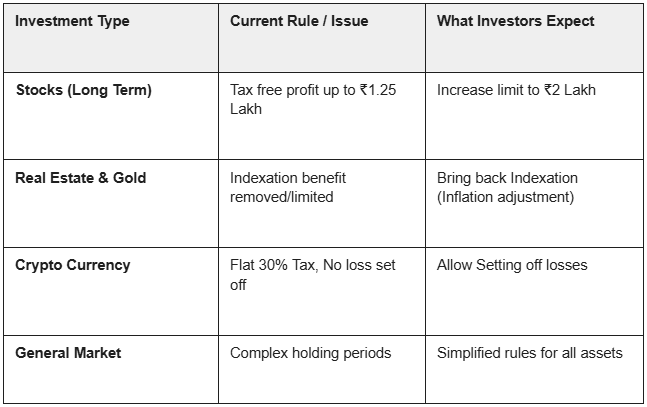
Retail investors value stability and clear rules over frequent changes. In Budget 2026, expectations include a higher long term capital gains exemption to encourage long term investing, reconsideration of indexation benefits for real estate and gold, clearer crypto tax rules including loss set off, and balanced securities transaction tax to keep market participation affordable.
India EU Free Trade Agreement and Sector Impact
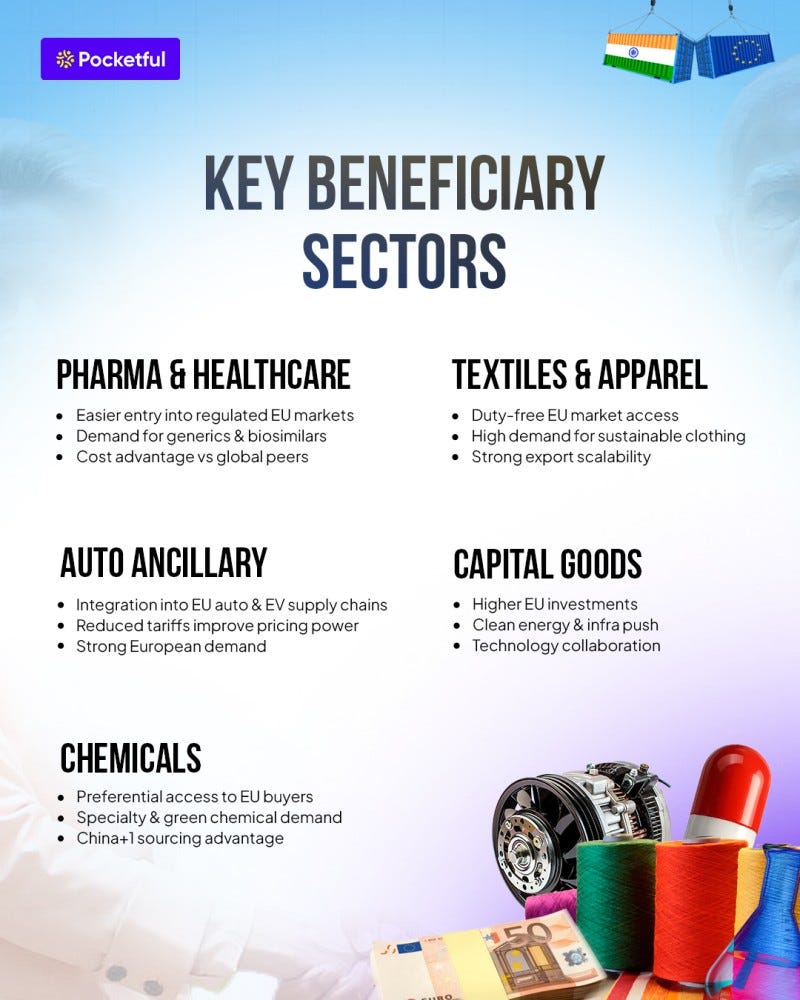
While the Union Budget shapes domestic demand, India’s recent progress on the India–EU Free Trade Agreement adds a powerful global growth lever. The European Union, a bloc of 27 high income countries, is one of India’s largest trading partners with strong demand for manufactured goods and services. Lower or zero tariffs under the FTA can make Indian exports far more competitive in this market.
This becomes especially important at a time when global trade faces uncertainty due to higher tariffs from the United States. Investors expect the government to use Budget 2026 to strengthen sectors that are likely to benefit from the EU deal, helping offset potential export pressure from US trade actions.
Sectors such as textiles and garments, auto components, specialty chemicals, pharmaceuticals, and IT services stand to gain the most. Reduced duties can improve export volumes, capacity utilisation, and profit margins for companies already compliant with EU quality and environmental standards. Cheaper access to European capital goods and technology can further enhance productivity.
For investors, the key expectation is targeted policy support in the Budget, such as export incentives, infrastructure support, and easier compliance, to help these sectors scale quickly and capture global demand. The focus will be on converting trade agreements into real earnings growth and job creation.
A Sensible Approach for Investors
With the Union Budget, sector expectations, and global trade developments all unfolding at once, it is natural for investors to feel overloaded with information. Budget Day often triggers sharp and emotional market reactions, but these short term price movements rarely determine the long term future of a company or an industry.
Markets frequently overreact to Budget announcements. Stocks can decline even when the underlying business remains strong, and history shows that many such companies recover and deliver solid returns in the years that follow. A single trading session does not alter core fundamentals such as demand conditions, earnings potential, balance sheet strength, or management quality.
For beginner investors, the right approach is to remain patient and balanced. Holding a mix of domestically driven businesses such as banks and infrastructure companies, along with export oriented firms that benefit from global demand, helps create stability across economic cycles. This reduces dependence on any one policy outcome.
Budget 2026 is expected to focus on policy clarity, continuity, and targeted relief rather than dramatic announcements. Supported by a strong Economic Survey backdrop, the government is in a position to fine tune growth drivers instead of managing crises. Predictable taxes, disciplined spending, continued infrastructure investment, and deeper global integration through trade agreements such as the India–EU FTA together support long term earnings growth.
Rather than reacting to headlines or day to day volatility, investors are better served by using the Budget as a guide to policy direction and structural trends. Long term wealth is built by staying invested in quality businesses and understanding the economic story behind the numbers.
Lingo of the Week – Policy Credibility Premium
Policy Credibility Premium is the extra trust investors place in economies where budgets reinforce consistency, fiscal discipline, and reform continuity. In Budget 2026, credibility matters more than giveaways—predictable taxes, controlled deficits, and clear long-term direction reduce risk and attract patient capital in uncertain global conditions.
Pocketful isn’t just another trading platform - we’re your partners on the journey to financial freedom.
Thank you for reading!
👀 Stay tuned. Stay diversified.
Until next time,
Team Pocketful.
Follow Us: Website
Download Our App: Available on Google Play & Apple App Store
Wow, the part about nominal growth potentially being softer beneath the surface really hit home, it's such a crucial detail when looking at the bigger picture. You’ve articulated the investor perspective so clearly, I just hope those structual reforms get the serious attention they need to really build that long-term credibility.